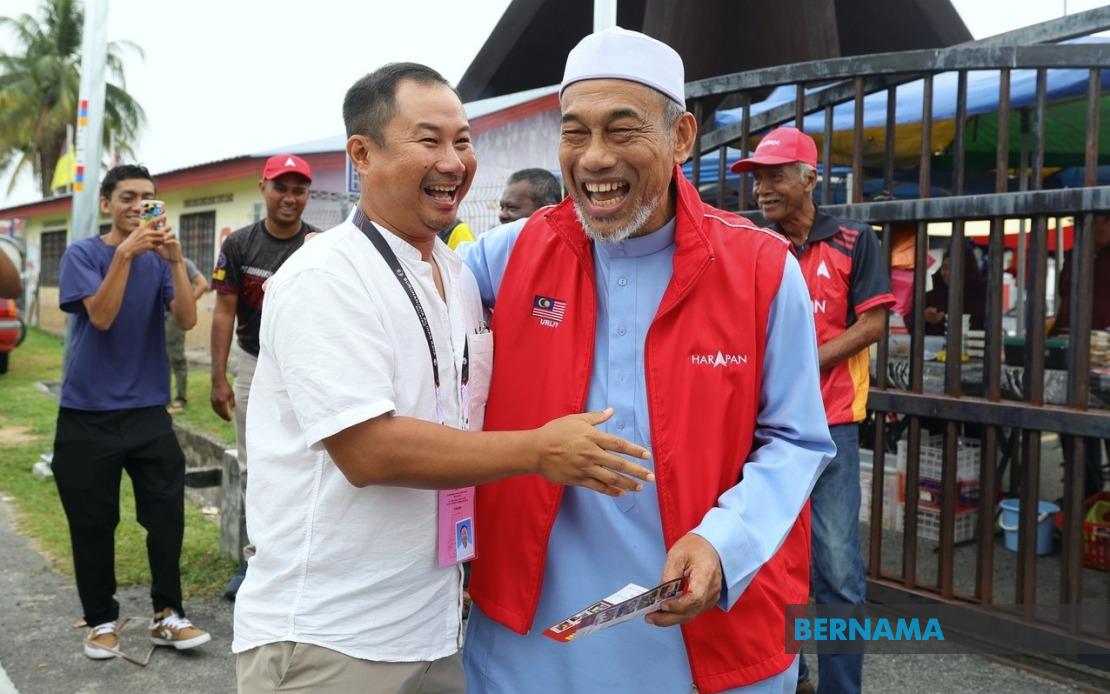
Datuk Bakri Sawir, the Pakatan Harapan candidate defending the Klawang state seat, is placing considerable faith in his experience as a two-term assemblyman to carry him through the upcoming Negeri Sembilan state election. With the 16th state assembly election set for August 1, the 67-year-old incumbent is approaching his campaign on familiar ground: a demonstrated commitment to direct engagement with constituents and a service-oriented philosophy refined across two previous terms since 2018.
The foundation of Bakri's electoral strategy rests on what he describes as a people-centric methodology that has shaped his representation since first entering the state assembly six years ago. Rather than adopting a conventional constituency office approach, he has made a deliberate choice to conduct extensive door-to-door outreach, bringing assistance and attention directly to residents' homes. This hands-on model, he contends, distinguishes his tenure from competitors who may visit their constituencies sporadically, often appearing only when elections approach. The modest voter population of Klawang—fewer than 14,000 registered electors—has allowed him to cultivate what he characterises as meaningful relationships across the constituency, a personal connection that forms the core narrative of his campaign pitch.
Bakri's accessibility strategy extends beyond campaign rhetoric into a stated lifestyle choice. He has maintained permanent residence within the Klawang constituency since becoming assemblyman, a deliberate positioning that enables him to remain visible and responsive to residents on an ongoing basis rather than operating from an external base. This decision reflects a particular interpretation of constituency service in which representation becomes an embedded, continuous presence rather than a periodic obligation. He frames this as a competitive advantage in the current election, suggesting that his lived proximity to the community gives him inherent insight into local needs and concerns that visiting representatives cannot replicate.
The spiritual and philosophical dimension Bakri brings to his political engagement is notable. He articulates his vision of politics as an act of devotion and spiritual commitment rather than a purely transactional exercise. This framing—positioning political service as a pathway to paradise—reflects a values-driven approach to representation that appeals to specific constituencies within the electorate who view political engagement through a moral and religious lens. Simultaneously, Bakri demonstrates philosophical flexibility by acknowledging that not all voters will support him and expressing respect for diverse political preferences, a stance that suggests confidence in his position without dismissing opposition entirely.
Looking beyond the immediate election, Bakri has articulated an agenda of unfinished developmental ambitions for Klawang. Most prominently, he references a long-standing proposal to establish Universiti Malaysia Negeri Sembilan within the Jelebu district, a higher education institution intended to strengthen human capital development and professional opportunities for residents. While acknowledging that current fiscal constraints have complicated this objective, Bakri indicates he intends to pursue the vision if returned to office, framing it as part of a broader commitment to long-term constituency development rather than electoral grandstanding.
More immediately achievable are several infrastructure and tourism-related projects Bakri has prioritised. A Rest and Recreation Area facility under development in Tembun, Hulu Klawang represents the type of practical project Bakri emphasises—one that promises tangible economic benefits for local communities. He frames improved stopover facilities as essential infrastructure that can catalyse tourist expenditure and create employment opportunities for residents engaged in hospitality and service sectors. This represents a pragmatic development philosophy focused on projects with demonstrable economic multiplier effects rather than symbolic gestures.
The transformation of Bukit Tajali into a recreational park featuring diverse leisure and adventure tourism activities constitutes another plank of Bakri's developmental agenda. Combined with expanded agrotourism initiatives centred on the historical British Memorial Stone in Jelebu, these proposals suggest a multi-faceted tourism development strategy intended to position Klawang and the broader Jelebu district as destination attractions. This approach reflects contemporary thinking about rural economic diversification through heritage and leisure tourism, sectors that can generate revenue while utilising existing natural and historical assets.
The Klawang contest itself features a three-way competitive dynamic that complicates Bakri's path to re-election. His Perikatan Nasional challenger, Danni Rais, aged 38, brings different generational and political positioning, while Muhammad Adib Musa of Bersatu at age 25 represents the youngest candidate in the race. The presence of three distinct candidates suggests a polarised electoral environment where Bakri cannot rely on straightforward binary competition but must instead defend his position against divided opposition or risk vote fragmentation within his own support base.
The broader electoral context involves 889,490 registered voters eligible to participate across Negeri Sembilan, a significant electorate comprising ordinary voters, military personnel and spouses, and police officers voting early on July 28. The state assembly's dissolution on June 5 initiated a compressed campaign period culminating in the August 1 polling date. For a 67-year-old incumbent in a relatively modest constituency, Bakri's re-election prospects ultimately depend on whether his demonstrated service record and grassroots accessibility prove sufficiently compelling to overcome the combined challenge of two well-positioned opponents and the inevitable electoral dynamics that accompany incumbent defence.
Bakri's campaign strategy reflects a particular model of constituency representation that prioritises continuous accessibility, personal service delivery, and visible commitment to local development over centralised party messaging or ideological positioning. Whether this ground-level approach, refined through two previous election cycles, provides sufficient electoral insurance in a three-cornered contest will become apparent when Negeri Sembilan voters cast their ballots in early August. His reframing of political service as spiritual commitment and his emphasis on practical, tourism-led economic development projects suggest a candidate confident in his foundational relationship with constituents, yet operating within a more competitive electoral environment than his previous two victories.

