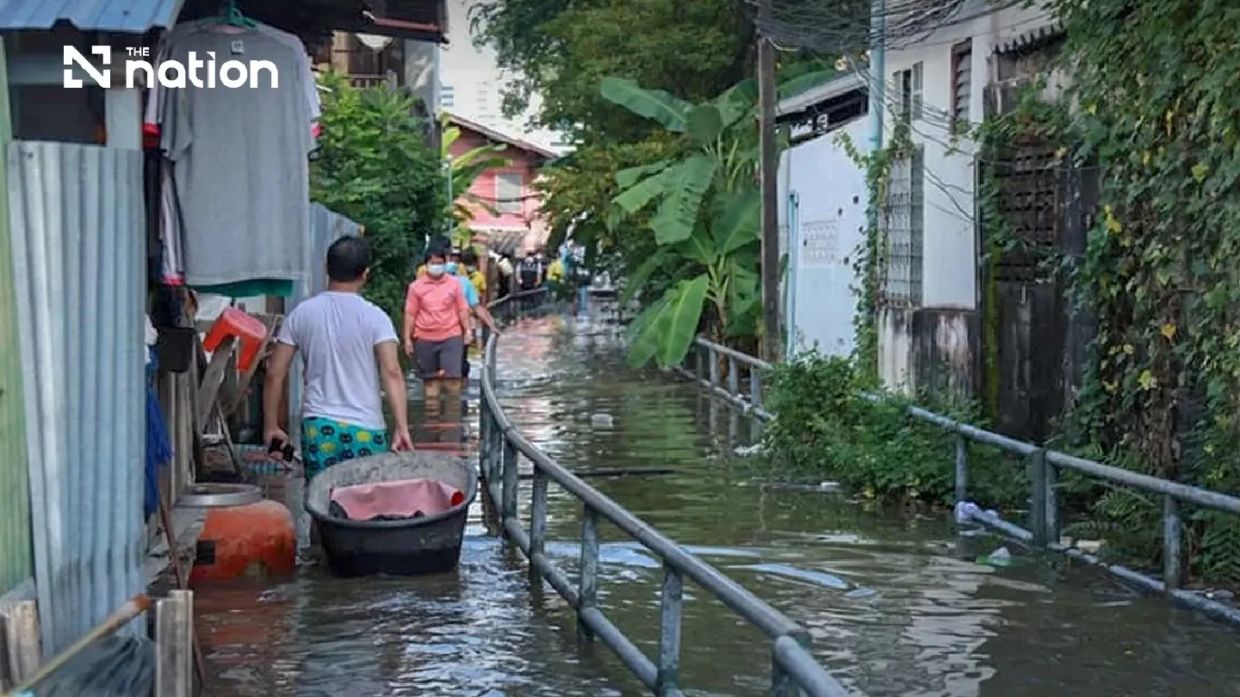
Thailand's Department of Disaster Prevention and Mitigation (DDPM) has issued a formal alert covering Bangkok and six adjoining central provinces—Pathum Thani, Nonthaburi, Nakhon Pathom, Samut Sakhon, Samut Songkhram and Samut Prakan—due to anticipated high-tide conditions expected to persist throughout a week-long window. The monitoring period spans from Monday, July 13 through Sunday, July 19, with meteorological data indicating that elevated sea levels will be particularly pronounced between 6pm and 10pm each day during this stretch. The warning reflects concerns that abnormally high tides may overwhelm existing flood mitigation infrastructure in the Chao Phraya River delta region, where population density and economic activity concentrate heavily.
Director-general Theerapat Kachamat announced the precautionary measures on Saturday, July 11, based on intelligence compiled from the Royal Thai Navy's Hydrographic Department. This coordination between civilian disaster authorities and naval technical expertise underscores the seriousness with which Thai officials regard tidal phenomena in the crucial Bangkok metropolitan zone. The Hydrographic Department's assessment focused specifically on water elevation dynamics around Phra Chulachomklao Fort and surrounding stretches of the Chao Phraya, a historical vantage point long used for monitoring the river's behaviour during monsoon seasons and spring tides.
The anticipated mechanism of flooding involves seawater pushing upstream through the river's lower reaches, preventing normal freshwater drainage and causing cumulative water buildup in tributary systems and canal networks. Such scenarios create cascading inundation across zones nominally protected by permanent flood barriers as well as informal communities that lack formal defences. Low-lying residential clusters, particularly informal settlements on riverbanks and in outlying areas beyond engineered protection, face elevated vulnerability during the forecast window. The DDPM's analysis suggests that the combination of high tides with ongoing monsoon-season precipitation could compound flood risk significantly.
Geographically, the alert identifies specific vulnerable zones within each jurisdiction. In Pathum Thani, the Mueang Pathum Thani and Sam Khok districts warrant particular monitoring. Nonthaburi's exposure centres on Mueang Nonthaburi, Pak Kret and Bang Kruai districts, areas that experience recurrent flooding during seasonal high-water periods. Nakhon Pathom's Bang Len, Nakhon Chai Si and Sam Phran districts have likewise demonstrated susceptibility. Samut Songkhram, positioned at the river-delta interface, faces blanket risk across all its administrative divisions. Samut Prakan's Mueang Samut Prakan, Phra Samut Chedi, Phra Pradaeng and Bang Bo districts represent critical exposure points where agricultural lands, residential zones and commercial riverside establishments coexist precariously.
Provincial authorities received explicit instructions to disseminate public alerts widely, targeting business operators and resident populations in high-risk precincts. The messaging strategy emphasises real-time monitoring and situational awareness rather than reactive emergency response. Provincial governors and local administrators must coordinate with private-sector stakeholders, including operators of floating restaurants, riverside commerce establishments and construction contractors engaged in riverbank reinforcement projects. Such enterprises face operational disruption if high waters materialise, and advance notice allows them to implement contingency measures protecting equipment, inventory and personnel.
The alert represents a manifestation of Thailand's incremental shift toward proactive disaster communication, leveraging digital platforms to reach broader audiences. The THAI DISASTER ALERT mobile application provides residents with timely notifications, enabling households to make autonomous protective decisions rather than relying solely on formal evacuation orders. This technology-mediated approach reflects recognition that official warnings must reach diverse populations across dispersed geographical areas within narrow time windows when water levels surge unexpectedly.
For Malaysian observers and regional analysts, the Thai flooding situation carries relevance insofar as climate-driven weather patterns increasingly affect Southeast Asian river systems synchronously. Rising sea levels and intensifying monsoon dynamics threaten the Mekong, Chao Phraya and other transnational waterways simultaneously, suggesting that tidal and precipitation anomalies observed in Thailand may foreshadow conditions affecting Malaysian estuaries and coastal zones. The Thai authorities' institutional response—emphasising inter-agency coordination, public communication and technological deployment—offers methodological precedents for comparable Southeast Asian disaster governance structures.
The scope of the alert extends beyond immediate flood risk to encompass broader infrastructure resilience questions. Bangkok's continued vulnerability to tidal inundation despite decades of seawall construction and flood-barrier development reveals persistent gaps between engineered defence systems and actual water dynamics. The DDPM's repeated need to issue seasonal alerts suggests that permanent solutions remain elusive, and that adaptive management—adjusting land use, reinforcing defences incrementally and improving early-warning systems—constitutes the realistic governance pathway forward.
Citizens experiencing flood-related emergencies can activate support mechanisms through multiple channels. The LINE messaging platform accepts incident reports through the dedicated account @1784DDPM, while the 24-hour hotline 1784 processes requests for urgent assistance. This redundancy in communication pathways reflects lessons learned from previous disasters when single-channel systems became overwhelmed. The integration of mobile messaging with traditional telephone infrastructure creates overlapping safety nets accessible to populations with varying technological adoption levels.
The week-long alert period coincides with the broader monsoon season, when weather volatility complicates forecasting precision. Officials acknowledge inherent uncertainty in predicting exact flood magnitudes, motivating the precautionary stance of issuing warnings despite ambiguity regarding whether projected tidal peaks will materialise catastrophically or prove manageable through existing infrastructure. This cautious posture reflects a recognition that false alarms carry costs—public fatigue with warnings reduces compliance in subsequent alerts—but that failure to warn during genuine emergencies exacts exponentially higher human and economic tolls. The Central Disaster Prevention and Mitigation Command's coordination through the DDPM establishes a unified command structure capable of mobilising resources across multiple provincial jurisdictions should conditions deteriorate rapidly.

