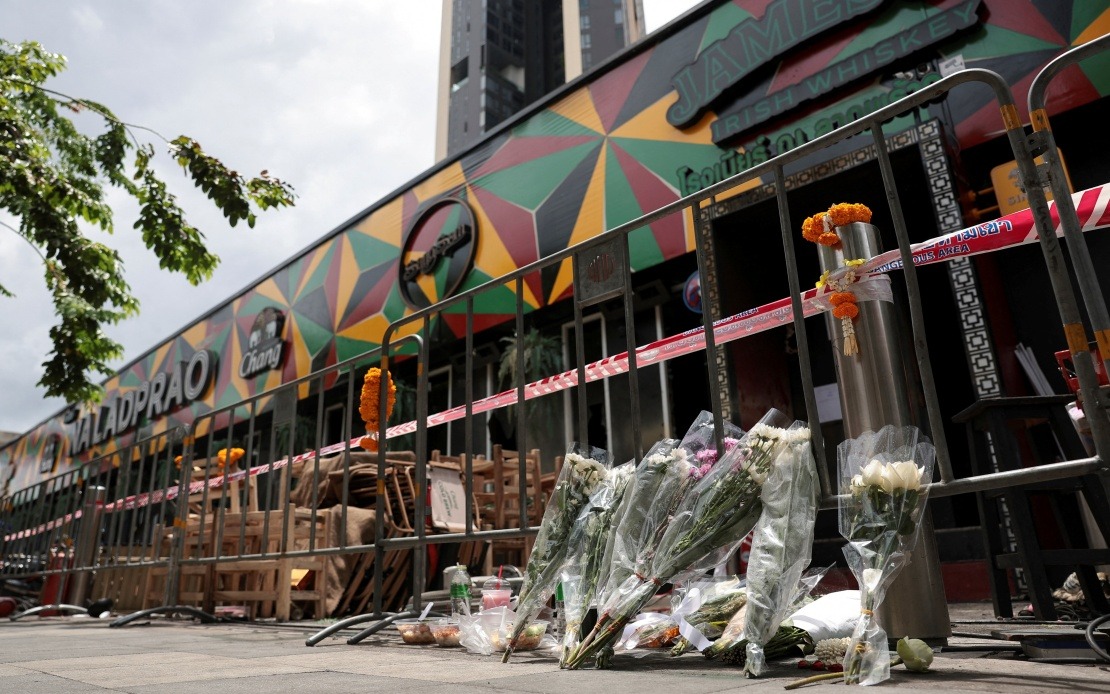
The death toll from a devastating fire that swept through a Bangkok nightspot on Monday evening has climbed to 32 after two seriously injured patients died while receiving hospital treatment, according to announcements from Thai health authorities on Wednesday. The Bangkok Emergency Medical Centre, commonly referred to as the Erawan Centre, confirmed that the latest fatalities occurred at Paolo Kaset Hospital and Nopparat Rajathanee Hospital, bringing the total number of people who have died from injuries sustained at the venue to five individuals. Medical officials said the two Thai victims, whose conditions had been deemed critical following the initial incident, ultimately could not be saved despite treatment efforts.
The Erawan Centre disclosed that as of Wednesday morning at 10 am, the total number of people treated for injuries from the blaze had reached 79. Of this figure, 44 patients had been well enough to leave hospital care, whereas 30 remained admitted for continuing treatment. Among those still hospitalised, 15 occupied intensive care unit beds, indicating the severity of burn injuries and smoke inhalation sustained by many survivors, while another 15 were recovering in standard hospital wards.
The fire originated shortly before midnight on Monday at Rong Beer Na Lat Phrao, an entertainment establishment located in Bangkok's Chatuchak district. The rapid spread of flames through the venue highlighted serious structural and safety deficiencies at the premises. Initial investigations by authorities have identified several potential contributing factors to the disaster, with blocked or inaccessible emergency exits emerging as a primary concern. The interior of the establishment featured highly combustible materials that accelerated the fire's progression through the space, while electrical system failures are also being examined as a possible cause of the initial ignition.
The catastrophic nature of this incident has reverberated at Thailand's highest levels of government. Thai Prime Minister Anutin Charnvirakul responded swiftly on Tuesday by issuing directives to the Ministry of Interior to initiate comprehensive inspections of buildings and entertainment venues throughout the country. This nationwide safety audit represents an attempt to identify and remediate similar hazards at other locations before they result in comparable tragedies. The inspection framework brings together the Bangkok Metropolitan Administration, local administrative organisations operating in provincial areas, the Department of Public Works and Town & Country Planning, the Royal Thai Police, and various other government agencies with relevant jurisdiction and expertise.
The coordination across multiple government departments underscores the scale of concern generated by the Bangkok incident. Bangkok Metropolitan Administration officials are tasked with examining venues within the capital, while local administrative organisations will scrutinise establishments in outlying areas. The inclusion of the Department of Public Works and Town & Country Planning reflects recognition that building code violations and inadequate infrastructure planning may have contributed to the severity of casualties. Police involvement in the inspection process signals that potential criminal negligence or violations of safety regulations will be investigated in parallel with the technical examination of the physical premises.
The implications of this disaster extend well beyond Thailand's borders. For Malaysian readers and business operators in Southeast Asia, the Bangkok fire serves as a stark reminder of the critical importance of rigorous safety compliance at entertainment venues. Similar establishments throughout Malaysia, including nightclubs, karaoke bars, pubs, and music lounges, should scrutinise their own emergency exit arrangements, interior fire safety measures, and electrical systems in light of what transpired in Bangkok. The tragic loss of life—particularly if many victims were young people enjoying an evening out—resonates across the region's hospitality and entertainment industries.
The blocked emergency exits identified in preliminary investigations particularly warrant attention from Malaysian venue operators and regulators. Many establishments in Malaysia operate in older buildings where exits may be inadequate or improperly maintained. Fire safety inspections by local authorities such as municipal fire departments should be treated as mandatory rather than routine bureaucratic exercises. Operators who discover deficiencies must prioritise remediation over operational convenience or cost considerations. The Bangkok incident demonstrates that cutting corners on safety infrastructure, whether through design flaws or neglectful maintenance, can directly translate into mass casualties within minutes.
The presence of highly flammable interior materials at Rong Beer Na Lat Phrao raises questions about building material standards and enforcement. Many venues throughout Southeast Asia utilise wooden furnishings, foam seating, and synthetic fabrics that ignite readily and produce toxic smoke. Regulatory authorities in Malaysia and neighbouring countries should examine whether current material standards adequately address fire safety, particularly in spaces where occupancy density is high and evacuation pathways may become congested during emergencies. Enhanced requirements for fire-retardant materials in public entertainment spaces would represent a meaningful response to such disasters.
The electrical fault theory being investigated in Bangkok also carries relevance for the broader region. Ageing electrical infrastructure in older buildings presents a chronic risk in Malaysian cities and towns, particularly in establishments that have undergone multiple renovations and modifications without comprehensive rewiring. Electrical audits should form part of regular maintenance protocols at all hospitality venues. The installation of modern fire detection and suppression systems, coupled with routine testing of these systems, could mitigate the consequences of fires that do originate from electrical sources.
Thai authorities' decision to conduct nationwide inspections represents a proactive governmental response aimed at preventing similar incidents. Malaysian regulators and local authorities should consider whether comparable nationwide safety audits of entertainment venues would be warranted domestically. A coordinated, systematic review of fire safety compliance across the country could identify high-risk establishments before tragedy strikes. This approach would be considerably less costly in human and economic terms than responding to preventable disasters.
The Bangkok fire also highlights the critical importance of staff training and emergency preparedness at hospitality venues. Employees at entertainment establishments should receive regular training in evacuation procedures, fire extinguisher usage, and basic life support. Many casualties in such incidents result not only from the immediate effects of fire and smoke but also from panic and confusion during evacuation. Clear evacuation procedures, well-marked exit routes maintained free of obstructions, and staff who can direct patrons calmly during emergencies can significantly reduce death tolls.
The ongoing investigation into the Bangkok incident will likely yield additional findings regarding both the proximate cause of the fire and the systemic failures that permitted such a high casualty count. Malaysian businesses and authorities should monitor developments in this investigation closely and extract lessons applicable to the local context. The loss of 32 lives in a single incident represents a preventable tragedy, and the region's hospitality and entertainment industries have a collective responsibility to ensure that similar circumstances do not arise in their own establishments. Strengthened enforcement of existing safety codes, upgrading of substandard infrastructure, and cultural shifts toward treating fire safety as a paramount operational priority should be the lasting legacy of this disaster.

