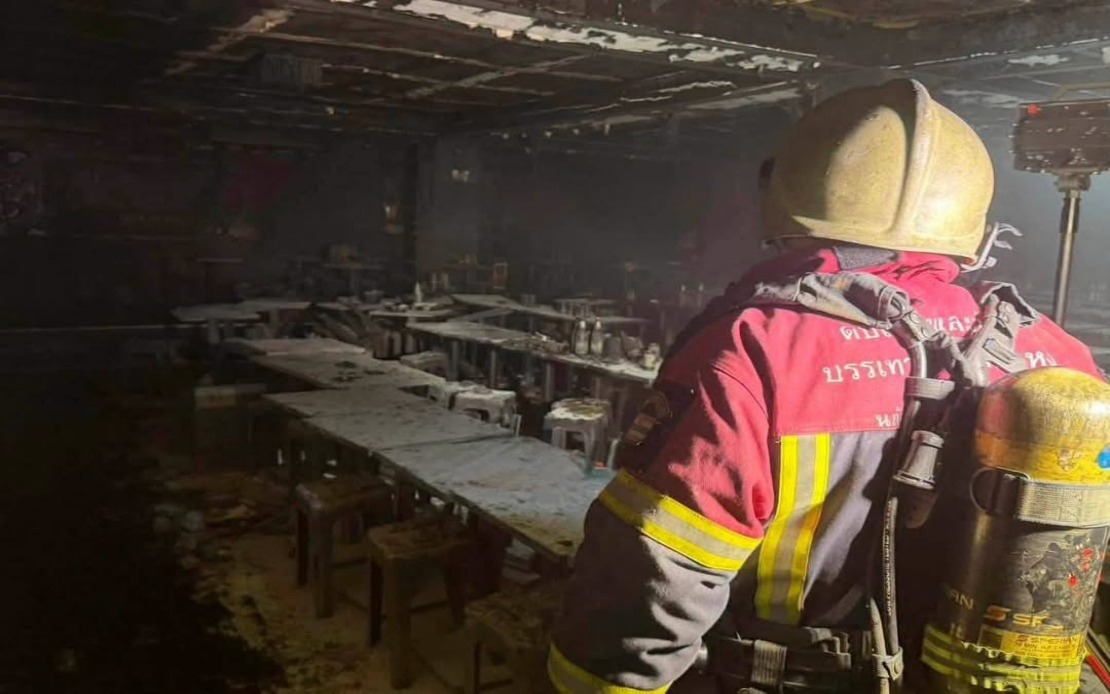
A catastrophic fire swept through a bar in Bangkok's Lat Phrao area within Chatuchak district early Monday morning, claiming at least 27 lives and leaving 18 others wounded in what ranks among Thailand's deadliest fire incidents in recent years. Bangkok Governor Chadchart Sittipunt arrived at the scene shortly after 2:40 am and confirmed that the blaze erupted after midnight, with the precise origin still under investigation by police and forensic specialists. The Bangkok Metropolitan Administration has secured the site for detailed forensic examination to establish how the fire began and what circumstances allowed it to spread so rapidly and fatally.
The death toll comprised nine men and 18 women, according to the BMA's Department of Disaster Prevention and Mitigation. Among the injured, eight sustained critical injuries, seven moderate wounds, and three minor ones. Preliminary findings suggest that smoke inhalation was the primary cause of death for most victims, though definitive conclusions await completion of forensic autopsies and the broader investigation. The rapid and devastating nature of the incident has raised immediate questions about building safety standards and emergency preparedness in Bangkok's entertainment venues.
Governor Chadchart noted that initial observations revealed flames spread with alarming speed through the ceiling area, while paradoxically, most plastic furniture inside remained substantially intact. This pattern suggests the fire's intensity was concentrated in structural elements rather than spreading uniformly, possibly indicating an electrical or overhead source. The concentration of damage above the premises raised concerns about potential construction materials or insulation that may have accelerated the blaze.
A troubling aspect of the investigation involves reports that several victims were discovered near an emergency exit on the building's left side, where obstructions may have prevented escape. The governor cautioned that conclusions should not be drawn prematurely, but he indicated that officials would scrutinise whether evacuation routes had been blocked or impeded. This potential failure to maintain clear emergency exits represents a critical safety violation that could prove central to understanding the high casualty count.
The BMA has committed to comprehensive inspections covering the bar's operating licence, safety standard compliance, the number and accessibility of emergency exits, the clarity of exit signage, and whether evacuation pathways were obstructed by furniture or other impediments. Such reviews typically expose systemic negligence in Bangkok's nightlife establishments, where profit often takes precedence over patron protection. The findings will likely prompt broader regulatory reviews across the city's entertainment sector.
Prime Minister Anutin Charnvirakul visited the scene Monday morning and spoke with a musician who was performing when the fire began. The musician's account proved illuminating: he described an initial electrical switchboard fire, followed immediately by explosions and rapid smoke spread that forced panicked evacuations. This testimony from an eyewitness present at the moment of ignition provides authorities with a preliminary working theory, though confirmation requires detailed technical investigation of the electrical systems.
The speed with which conditions became untenable underscores how quickly enclosed nightlife venues can become death traps when safety measures fail. Within moments of the electrical fire's onset, the musician reported explosions followed by choking smoke that forced everyone toward exits simultaneously. In such circumstances, any obstruction or lack of clearly marked routes becomes fatal; patrons disoriented by smoke cannot navigate complex spaces or find alternative exits. The crush of people attempting simultaneous escape often proves as lethal as the fire itself.
For Malaysian observers and regional safety officials, this tragedy echoes concerns raised following similar incidents across Southeast Asia, where rapid urban development of entertainment districts has sometimes outpaced safety infrastructure improvements. Bangkok's Chatuchak district, like many thriving commercial areas in major Southeast Asian cities, has experienced explosive growth in bars, clubs, and entertainment venues catering to both locals and tourists. Without rigorous enforcement of safety codes and surprise inspections, venues can gradually compromise escape routes through renovation, overcrowding, or poor maintenance.
The incident will likely trigger renewed scrutiny of electrical safety standards in Thai buildings, particularly older structures converted into entertainment venues. Aging wiring and overloaded circuits represent common hazards in Southeast Asia's rapidly evolving commercial spaces, where cost-cutting on infrastructure often accompanies rapid business expansion. Investigators will examine whether the bar's electrical systems had been professionally maintained and whether permits were in place for any recent renovations.
Governor Chadchart emphasised that families should monitor official updates through coordination centres as victim identification continues. The process of identifying 27 deceased individuals represents a significant undertaking requiring coordination between medical examiners, police, and families. This administrative dimension, while less dramatic than the incident itself, reflects the broader tragedy: each identified victim represents a family member, workplace colleague, and community member whose absence will reverberate for years.
The Bangkok fire underscores persistent vulnerabilities in rapid-growth urban environments where development often precedes comprehensive safety frameworks. While Thailand has stringent fire safety regulations on paper, enforcement varies dramatically across jurisdictions and establishment types. Independent venues operating in competitive markets face financial pressure to minimise costs, sometimes cutting corners on maintenance, upgrades, and staffing of safety systems.
Regional authorities in Malaysia, Singapore, and Indonesia will likely examine this incident's specific findings when implementing or revising their own entertainment venue safety standards. The concentration of deaths despite the building's apparent structural integrity suggests that human factors—locked doors, blocked exits, inadequate emergency lighting—rather than inevitable structural failure caused the catastrophe. Such preventable circumstances demand urgent attention from safety inspectors and business operators throughout Southeast Asia's hospitality sector.

