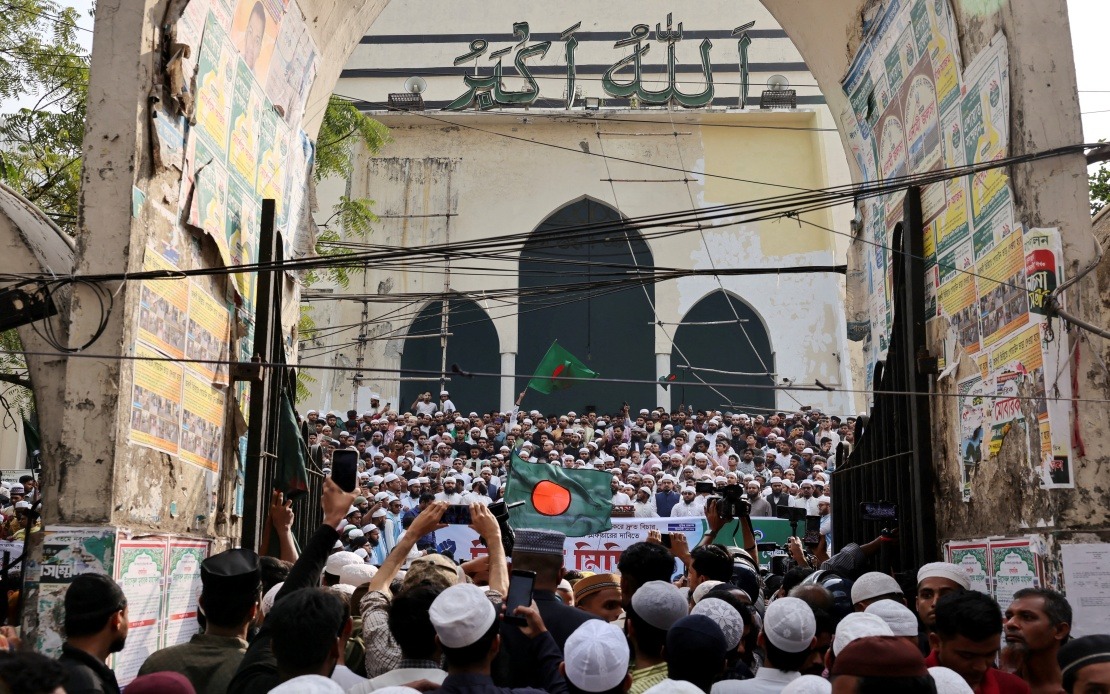
Bangladesh's International Crimes Tribunal has handed down death sentences in absentia to three high-ranking police officers for their involvement in the fatal shooting of demonstrators during the turbulent 2024 popular uprising. The verdict, delivered on Sunday by Justice Md Golam Mortuza Mozumder and two other tribunal members, marks a significant moment in the country's reckoning with state violence that destabilised the government and displaced its leadership.
The three condemned officers occupy prominent positions within the former security apparatus. Habibur Rahman, who previously served as Commissioner of the Dhaka Metropolitan Police, faces his second death sentence in separate proceedings. Md Rashedul Islam, formerly an Additional Deputy Commissioner with the DMP, and Md Mashiur Rahman, the ex-chief of Rampura Police station, complete the trio. All three remain at large, having absconded from the country to avoid prosecution. The tribunal imposed additional sentences of life imprisonment plus 20 years on two other defendants in the same case, including Tariqul Islam Bhuiyan, a former sub-inspector.
The charges centre on crimes against humanity, with particular focus on several high-profile incidents that galvanised public anger. One case involved the fatal shooting of a young man who was clinging to a building in Dhaka, an incident captured on video and disseminated widely across social media platforms. The tribunal also heard evidence concerning the deaths of two additional protesters in the capital during the tumultuous period. These killings became lightning-rod moments that crystallised public outrage, triggering viral social media campaigns and setting off a cascade of protests that eventually brought down the government.
The 2024 uprising represented a watershed moment in Bangladeshi politics. According to United Nations assessments, approximately 1,400 people lost their lives during the demonstrations, with the vast majority shot by police forces who operated under orders from Prime Minister Sheikh Hasina's administration. Thousands more sustained injuries from gunfire and other means of crowd suppression. The scale and intensity of the state response shocked regional observers and prompted international scrutiny into the methods employed by Dhaka's security forces.
These deaths and injuries did not fade quietly into history. Instead, the visceral evidence captured on mobile phones and circulated through digital channels transformed individual tragedies into collective symbols of injustice. The social media campaigns highlighting police violence became impossible to ignore, forcing political discourse into uncomfortable territory. Civil society organisations, families of the deceased, and ordinary citizens coalesced around demands for accountability, creating sustained political pressure that neither the government nor security establishment could indefinitely withstand.
The uprising's trajectory reflected broader underlying tensions within Bangladesh's political system. Discontent with governance, economic grievances, and perceived democratic backsliding had been accumulating for years. The government's heavy-handed response to initial protests, rather than defusing tensions, catalysed exponential growth in the movement's scale and intensity. By August 2024, Sheikh Hasina found her position untenable and departed for exile, marking a dramatic reversal of fortune for a leader whose Awami League party had dominated Bangladeshi politics.
For Malaysian and Southeast Asian observers, the Bangladesh episode offers instructive lessons about the limits of state authority and the risks of employing overwhelming force against popular movements. In democracies across the region, questions about police conduct during protests remain contentious. The cases now progressing through Bangladesh's tribunal system demonstrate that security personnel cannot assume indefinite protection from accountability, even when they acted on orders from senior political figures.
The tribunal's proceedings against Sheikh Hasina herself underscore this principle. In November of last year, the same court sentenced the former prime minister to death in absentia on separate charges stemming from crimes against humanity. This dual prosecution of both security force commanders and political leadership represents an attempt at comprehensive accountability. However, the fact that all convicts remain beyond Bangladesh's reach, having escaped to foreign jurisdictions, highlights the practical limitations of national justice systems when dealing with cases involving powerful fugitives.
The broader context of Bangladesh's transitional justice process bears careful examination. The country now operates under an interim administration that has made prosecuting the previous government a priority. This shift reflects genuine public demand for accountability but also carries risks common to post-conflict and post-transition societies. Questions arise about whether tribunals can maintain legitimacy when they selectively prosecute officials from one political faction, particularly if members of the interim administration face no similar scrutiny. International observers have noted the importance of perceived impartiality in such proceedings.
For the regional dimension, these trials and their outcomes will influence how neighbouring governments and security establishments approach crowd control and protest management. If accountability mechanisms work effectively—even if imperfectly—there exists a deterrent effect on excessive force. Conversely, if prosecutions appear selective or politically motivated, they may undermine public confidence in transitional justice processes across Southeast Asia. Bangladesh's experience will likely inform discussions about police training, rules of engagement, and institutional safeguards in other countries grappling with security force reforms.
The sentencing of these three police officers, coupled with Hasina's conviction, represents acknowledgment that security personnel cannot escape responsibility by claiming to follow orders or acting within their institutional roles. This principle has long existed in international law, yet its practical application remains inconsistent globally. Bangladesh's tribunal appears committed to testing its application in this particular context, though the absence of the convicts from the courtroom and from the country complicates any immediate enforcement of sentences.
As Bangladesh consolidates its transitional arrangements and works toward eventual democratic elections, these justice proceedings will continue shaping public sentiment and political narratives. For citizens traumatised by the violence and families of those killed, the convictions may provide some measure of vindication, though not closure in any complete sense. The challenge ahead involves sustaining momentum for accountability while building institutions capable of administering justice fairly and maintaining public trust across the broader political landscape.

