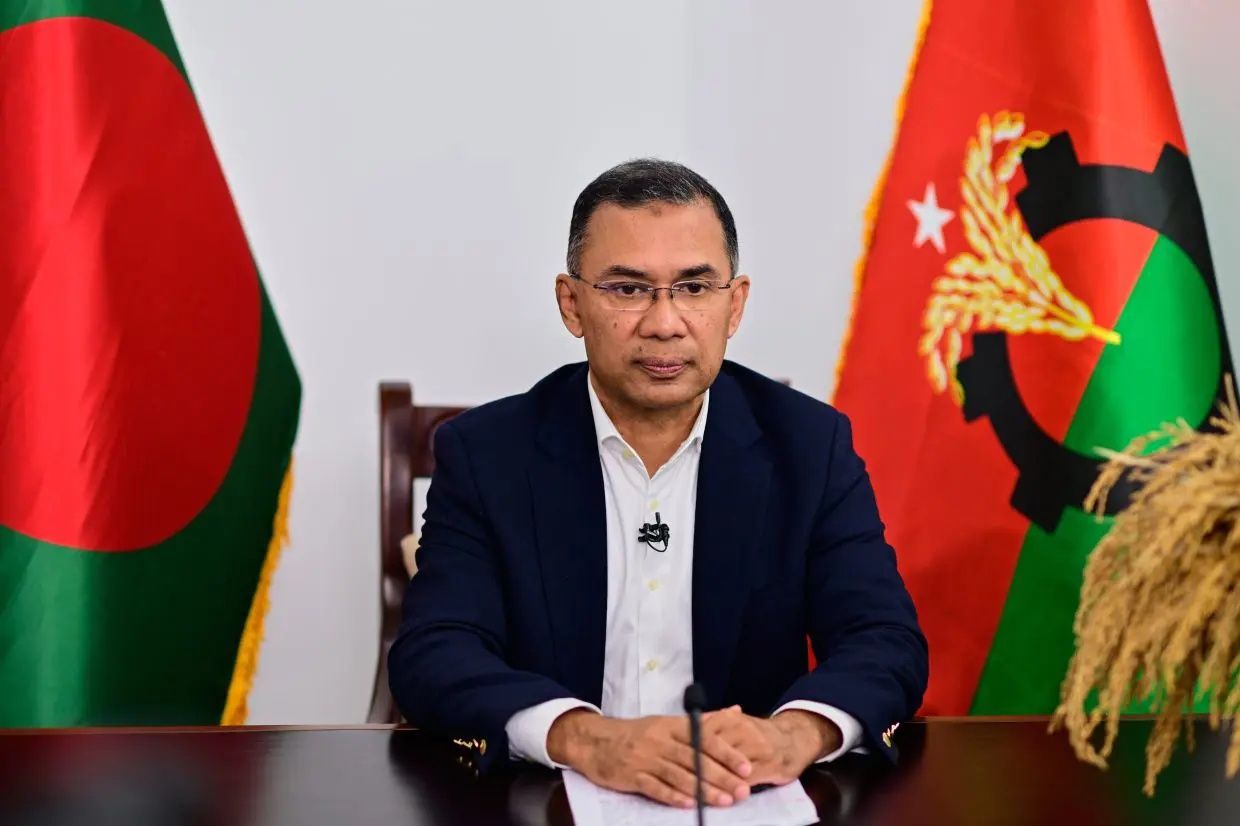
Bangladesh's newly installed Prime Minister Tarique Rahman is preparing for his maiden international journey, directing his attention toward Malaysia and China rather than the traditionally influential neighbouring India. The foreign ministry announced the two-nation tour on Saturday, with Rahman scheduled to arrive in Kuala Lumpur on Sunday before proceeding to Beijing the following day. The strategic sequencing of these visits underscores a deliberate recalibration of Dhaka's external relations, reflecting broader geopolitical shifts within South Asia and Bangladesh's effort to diversify its international partnerships following the political upheaval of recent years.
The decision to bypass India as an inaugural destination carries profound symbolic weight in the context of Bangladesh's contemporary political landscape. Rahman's government, which assumed office in February following elections held after the tumultuous 2024 uprising that displaced former Prime Minister Sheikh Hasina, must carefully navigate complex bilateral dynamics with New Delhi. The previous administration, which fell victim to mass protests and civil unrest, had maintained close ties with India and its government now finds itself exiled. This transition represents not merely a change in leadership but a fundamental reconfiguration of Bangladesh's strategic alignment and the way Dhaka intends to project its interests regionally.
Malaysia emerges as a critical economic partner in this new framework, hosting an estimated 800,000 Bangladeshi migrant workers who constitute more than one-third of the country's foreign labour force. This substantial demographic presence creates powerful economic and social interconnections between the two nations, making Malaysia's significance to Bangladesh's prosperity and stability difficult to overstate. The remittances flowing from these workers represent a vital lifeline for millions of Bangladeshi families and contribute meaningfully to the national economy. Rahman's decision to prioritise Malaysia reflects recognition of these tangible economic realities and the need to strengthen institutional frameworks governing labour migration, worker protections, and bilateral trade arrangements.
China's role on the agenda carries equally consequential implications for Bangladesh's infrastructure development ambitions. Among the priority items for discussion in Beijing is Chinese assistance for the long-delayed Teesta River project, an ambitious undertaking aimed at restoring and properly managing this crucial waterway through comprehensive dredging operations, embankment construction, and irrigation infrastructure development. The Teesta project represents a cornerstone initiative for Bangladesh's agricultural productivity and water resource management, yet it has languished in planning and preliminary stages for years. Chinese investment and technical expertise could prove instrumental in finally translating this vision into tangible reality, potentially transforming agricultural yields and regional water security.
The broader diplomatic framing of these visits centres on what Bangladeshi officials characterise as a significant economic initiative designed to fortify Bangladesh's partnerships and trade relationships. Foreign ministry representatives have publicly emphasised that these early engagements set the tone for Rahman's administration's external economic strategy. By clustering economic and infrastructure discussions within the inaugural foreign tour, the new government signals to international observers that development and prosperity form the cornerstone of its diplomatic agenda. This approach differs markedly from the previous administration's orientation, which placed greater emphasis on security and geopolitical alignment with specific powers.
The backdrop of strained India-Bangladesh relations provides crucial context for understanding the significance of these travel plans. The 2024 uprising that precipitated Sheikh Hasina's departure from power also created a substantial rift with New Delhi, which had been a traditional ally of the ousted regime. Hasina herself has remained in hiding within India since her dramatic flight during the revolution, and Bangladesh has persistently demanded her extradition to face accountability for alleged crimes committed during her tenure. These demands have been repeatedly rebuffed, creating a persistent point of friction that undermines reconciliation efforts.
Border tensions add another layer of complication to India-Bangladesh relations. Indian authorities have adopted a controversial policy of directing individuals they classify as illegal migrants across the international border into Bangladesh, effectively transferring what New Delhi considers an internal demographic problem onto its neighbour. This practice has generated considerable resentment in Bangladesh and complicated efforts to normalise bilateral ties. The cumulative effect of these disputes—the extradition standoff, the border migration pressures, and the legacy of geopolitical misalignment—has created space for Bangladesh to explore alternative partnerships and reduce its strategic dependence on India.
The geopolitical competition between China and India across South Asia forms an important overarching context for Bangladesh's diplomatic moves. As the world's two most populous nations, China and India have long competed for regional influence, with each seeking to deepen partnerships with strategically located neighbours. India has traditionally viewed Chinese expansion into South Asia with considerable wariness, concerned about erosion of its regional predominance. By strengthening ties with China and positioning Beijing as a development partner, Bangladesh is making a calculated assertion of its own agency in regional power dynamics, refusing to remain simply within any single power's sphere of influence.
Rahman's government faces the delicate challenge of managing these multiple relationships without unnecessary provocation while simultaneously pursuing Bangladesh's legitimate development interests. The new administration, having won democratic legitimacy through elections, carries expectations that it will deliver tangible improvements in economic performance and quality of life. Securing Chinese infrastructure investment and strengthening labour cooperation with Malaysia represent concrete pathways toward these objectives. Simultaneously, the government must eventually find ways to stabilise relations with India, given the geographic reality that the two nations remain neighbours whose cooperation remains essential for managing shared water resources, border security, and regional stability.
The timing of these diplomatic visits, occurring within weeks of Rahman's assumption of office, demonstrates the new administration's determination to quickly establish Bangladesh's international position and demonstrate proactive engagement on the global stage. Rather than allowing Bangladesh to drift in the post-uprising period, the government is seizing the initiative to shape narratives about the nation's direction and priorities. These early moves will likely establish templates and precedents that influence Bangladesh's international behaviour throughout Rahman's tenure. The visits to Malaysia and China thus represent not merely ceremonial first trips but consequential decisions about the orientation and priorities of Bangladesh's external relations during a pivotal historical moment.

