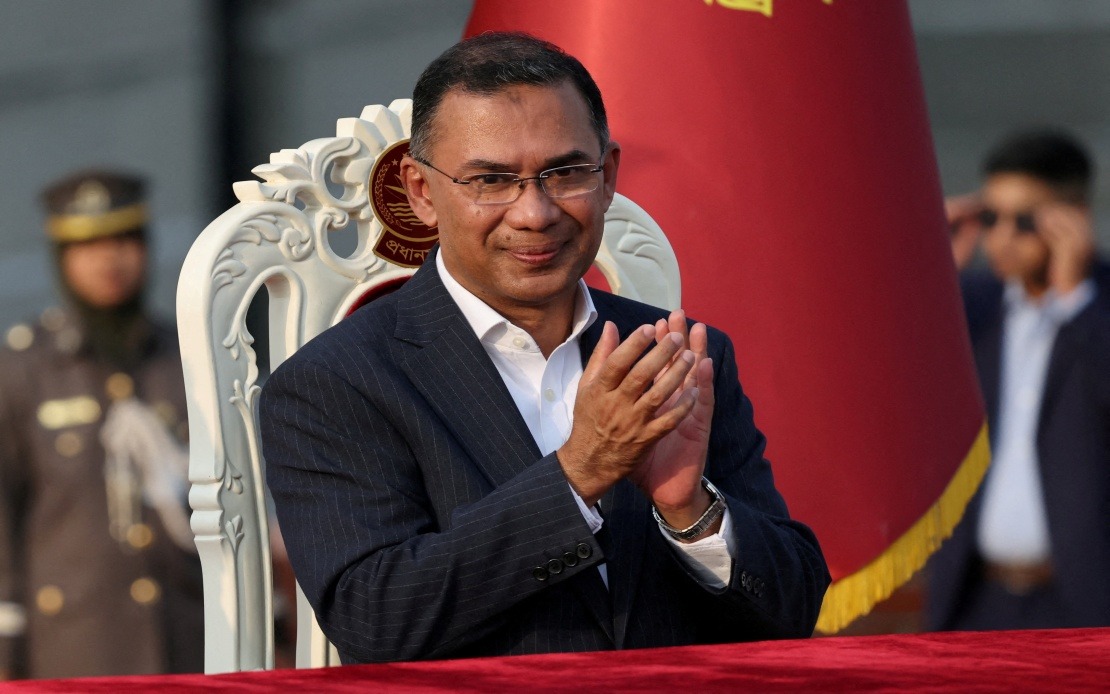
Bangladesh Prime Minister Tarique Rahman is set to arrive in Malaysia on June 22 for an official visit that signals the importance both governments place on their bilateral relationship. The trip, conducted at the invitation of Prime Minister Datuk Seri Anwar Ibrahim, carries symbolic weight as it represents Rahman's first overseas official engagement since taking office just four months ago, a choice that underscores Malaysia's standing among Dhaka's immediate foreign policy priorities.
The visit will commence with an official welcoming ceremony at the highest level, followed by substantive bilateral discussions between the two premiers at the Perdana Putra Complex. The Malaysian Foreign Ministry has structured the visit to allow Rahman and Anwar ample time to review the trajectory of Malaysia-Bangladesh ties and identify concrete avenues for deepening cooperation across several strategic sectors. The agenda reflects both nations' recognition that their partnership extends well beyond traditional trade arrangements into areas of genuine strategic complementarity.
During the meeting, leaders will assess progress made in existing bilateral frameworks and chart directions for enhanced collaboration spanning trade and investment, human resource development, semiconductor manufacturing, energy security, agricultural cooperation, and educational exchanges. These sectors have been carefully selected to reflect both countries' development priorities and the comparative advantages each brings to the partnership. Malaysia's strength in semiconductor manufacturing and energy expertise aligns with Bangladesh's growing industrial ambitions, while both nations see significant potential in agricultural trade given their different climatic zones and production capabilities.
The visit will be marked by the formal exchange of a memorandum of understanding on cultural cooperation, a recognition that building people-to-people linkages strengthens diplomatic foundations. Additionally, two exchanges of notes will be signed, one addressing counter-terrorism research collaboration and another focused on investment promotion and facilitation. These instruments reflect contemporary security concerns and the mutual desire to encourage greater commercial engagement between their business communities.
Prime Minister Anwar will host an official luncheon honouring his Bangladeshi counterpart, providing an informal setting for candid discussions beyond the formal bilateral talks. Rahman will travel with a significant delegation including his spouse Dr Zubaida Rahman, Foreign Minister Dr Khalilur Rahman, and other senior government officials, indicating the comprehensive nature of discussions anticipated during the visit.
The economic dimensions of Malaysia-Bangladesh relations are substantial and growing. In 2025, bilateral trade reached RM12.18 billion, equivalent to US$2.84 billion, establishing Bangladesh as Malaysia's 28th largest trading partner globally. Within South Asia, Bangladesh ranks as Malaysia's second largest trading partner, export market, and import source, surpassed only by India. This positioning reflects both the scale of engagement and the room for further expansion across multiple sectors.
Malaysia's exports to Bangladesh totalled RM10.08 billion in 2025, predominantly comprising petroleum products that reflect Bangladesh's energy import requirements as its domestic production cannot meet surging demand. This concentration in energy trade presents both an opportunity and a vulnerability—opportunity because regional energy markets are expected to tighten further as Southeast Asian economies industrialise, and vulnerability because Bangladesh may seek to diversify its suppliers. Malaysian companies, particularly those in the energy sector, have incentive to strengthen commercial relationships during high-level visits.
Imports from Bangladesh to Malaysia amounted to RM2.10 billion in 2025, primarily textiles, apparel, and footwear—sectors where Bangladesh has become globally competitive through large-scale manufacturing and workforce expertise. The asymmetry in trade flows, with Malaysian exports substantially exceeding imports, suggests potential for Bangladesh to expand its export base into Malaysia through value-added manufacturing and processed goods. The new investment promotion accord signals both governments' commitment to addressing this imbalance through targeted commercial partnerships.
From Malaysia's perspective, Bangladesh represents a significant market of over 170 million people undergoing rapid urbanisation and development. The country's garment and textile industries, among the world's largest, create opportunities for Malaysian suppliers of industrial machinery, chemicals, and technology. Conversely, Bangladeshi workers in Malaysia constitute an important migrant community, making cooperation in human resource management and worker welfare a substantive policy area requiring regular high-level attention.
Regional dynamics also inform the timing and substance of this visit. Both Malaysia and Bangladesh operate within complex geopolitical environments shaped by great power competition, maritime trade concerns, and the evolution of multilateral institutions across Asia. The bilateral discussions are expected to encompass regional and international issues of mutual interest, potentially including perspectives on ASEAN's engagement with South Asian nations, climate change impacts on deltaic regions, and maritime security in waters both countries depend upon for commerce.
The visit reflects a broader Malaysian foreign policy orientation toward deepening ties with South Asian partners, recognising that economic and security interests increasingly transcend traditional ASEAN boundaries. Bangladesh, as a major South Asian economy with growing strategic significance, represents a natural focus for this engagement. For Rahman, the choice to make Malaysia his first official bilateral destination abroad signals that he sees value in cultivating relationships with Southeast Asian partners who can offer models for development and cooperation frameworks.
Looking forward, the instruments signed during this visit—particularly the investment promotion accord—may catalyse fresh commercial initiatives. Malaysian investors, especially in manufacturing and services, may find in Bangladesh a cost-competitive location for production serving South Asian markets, while Bangladeshi entrepreneurs could access Malaysian expertise in technology-intensive sectors. Both nations stand to benefit from mechanisms that reduce transaction costs and regulatory friction in bilateral commerce.
The Rahman visit thus represents far more than ceremonial diplomacy. It signals serious intent from both governments to move beyond existing trading patterns toward deeper structural integration across multiple dimensions. As Bangladesh navigates its development trajectory and Malaysia seeks to strengthen regional partnerships beyond ASEAN, this bilateral engagement establishes platforms for sustained cooperation addressing shared challenges in energy transition, technological advancement, and managing demographic change—issues that will define South and Southeast Asian trajectories for decades ahead.

