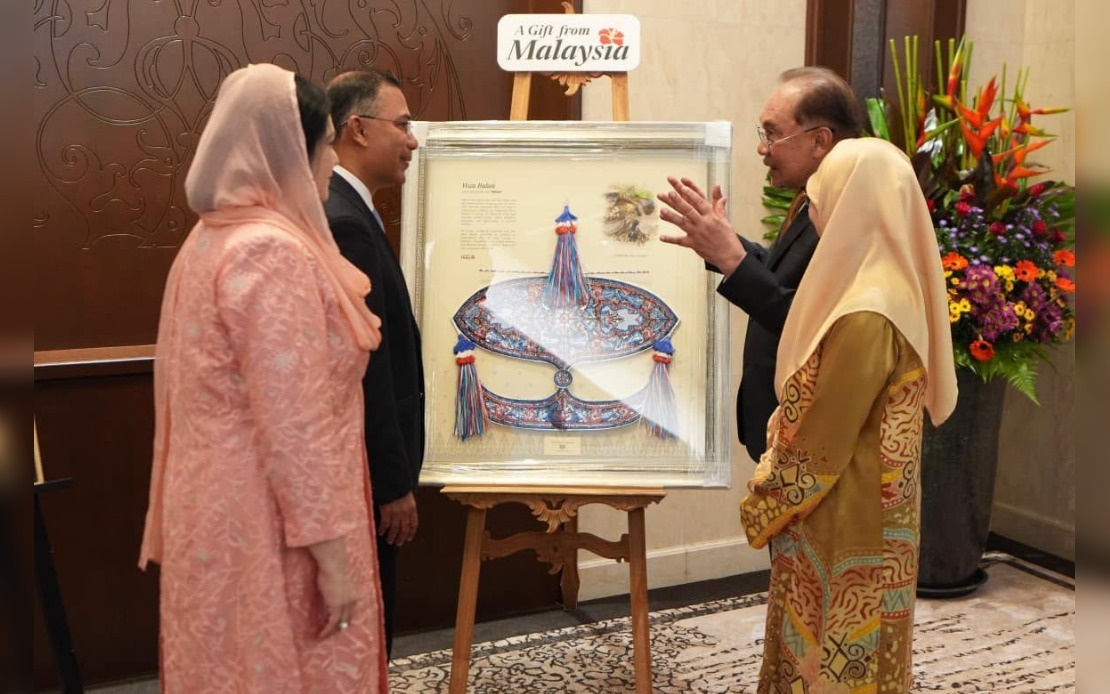
Bangladesh Prime Minister Tarique Rahman has pledged his government's commitment to working in close partnership with Malaysia as he wrapped up his first official state visit to the country on Monday. During his time in Kuala Lumpur, the Bangladesh leader reiterated his nation's strong appreciation for the multifaceted relationship shared with Malaysia, underscoring the importance of strengthening ties that extend across political, economic, cultural and social dimensions.
In a statement released through Bangladesh's Ministry of Foreign Affairs, Tarique highlighted the deep people-to-people connections that link the two countries. These bonds span multiple sectors and encompass citizens from all walks of life, creating a foundation for cooperation that transcends formal governmental interactions. The emphasis on grassroots connectivity reflects an understanding that sustainable bilateral relations depend not merely on state-level agreements but on the shared experiences, cultural exchanges and individual relationships that ordinary citizens from both nations cultivate.
The prime minister, accompanied by his wife Dr Zubaida Rahman, expressed profound gratitude towards Datuk Seri Anwar Ibrahim and the Malaysian premier's spouse Datuk Seri Dr Wan Azizah Wan Ismail for their hospitality during the visit. He acknowledged the warm reception extended by Malaysia's government and people, describing it as a testament to the friendship and goodwill that characterizes relations between Dhaka and Kuala Lumpur. Such diplomatic courtesies serve as important markers of respect between nations and set a positive tone for future engagement on substantive policy matters.
Tarique also conveyed his appreciation to His Majesty Sultan Ibrahim, King of Malaysia, for receiving him and extending royal courtesy during the state visit. The inclusion of royal-level engagement in bilateral visits underscores the formal significance accorded to Bangladesh-Malaysia relations at the highest institutional levels. This multi-layered diplomatic engagement—involving heads of government, their spouses and the monarchy—reflects both nations' commitment to treating the relationship as a priority partnership within the Southeast Asian context.
The discussions held during the visit served to reaffirm existing bonds between Bangladesh and Malaysia that go beyond mere transactional cooperation. According to Tarique, the conversations with Anwar reinforced shared commitments to advancing mutual prosperity, deepening regional progress and fostering greater collaboration across multiple domains. These overarching themes suggest that both governments view their partnership as having strategic significance that extends beyond bilateral concerns to encompass broader regional stability and development objectives.
A particularly noteworthy aspect of Tarique's remarks involves his references to historical continuity in Bangladesh-Malaysia relations. He pointed to the era when his father, former President Ziaur Rahman, and his mother, Begum Khaleda Zia, held high office in Bangladesh, suggesting that the bilateral relationship carries historical resonance for Bangladesh's leadership. This invocation of familial and historical connections implies that the current government views its engagement with Malaysia as rooted in long-standing diplomatic traditions and previous successful interactions between both nations' leadership.
For Malaysia, this state visit from Bangladesh carries significance given the two nations' shared Islamic heritage, their membership in regional and international organizations, and their mutual interests in maritime security, trade and development. Bangladesh, as South Asia's most populous Muslim-majority nation and a significant economic player in the region, represents an important partner for Malaysia's broader regional diplomacy. The emphasis on deepening ties with Dhaka reflects Kuala Lumpur's strategy of maintaining robust relationships across Southeast Asia and South Asia, bridging these two regions through sustained engagement.
The visit also underscores Bangladesh's own regional diplomacy initiatives under Tarique Rahman's leadership. As a relatively new prime minister, his decision to undertake a state visit to Malaysia signals his government's prioritization of Southeast Asian engagement and his commitment to continuing the bilateral relationship trajectory established by previous administrations. Such early diplomatic missions often serve to establish the visiting leader's credentials on the international stage while simultaneously signaling continuity in foreign policy direction.
Looking forward, the pledges made during this visit will likely translate into concrete cooperation mechanisms across various sectors. Malaysia and Bangladesh have established frameworks for collaboration in areas including trade, education, defense, cultural exchanges and development cooperation. The reaffirmation of commitment to partnership provides political backing for bureaucratic and technical teams to pursue ambitious agendas within these existing frameworks, potentially leading to expanded volumes of bilateral commerce, more student exchanges and deeper security cooperation.
The broader context of this visit involves both nations' positions within evolving regional dynamics. Bangladesh faces significant development challenges including climate vulnerability, population pressures and infrastructure needs, areas where Malaysia's development experience and technological capacity offer valuable lessons. Simultaneously, Bangladesh's strategic location along major maritime routes and its role in South Asian affairs present opportunities for Malaysian engagement in a region of growing geopolitical importance to Southeast Asia.
The emphasis throughout Tarique's statements on strengthening people-to-people connections reflects a sophisticated understanding of bilateral relations in the contemporary era. Governments increasingly recognize that sustainable partnerships depend on building constituencies within their respective societies who actively support cross-border cooperation. By highlighting cultural, educational and commercial linkages between ordinary citizens, both prime ministers signal their intention to cultivate broad-based support for the bilateral relationship beyond the corridors of power.
As Bangladesh and Malaysia move forward in implementing the commitments articulated during this visit, observers will watch for concrete manifestations in areas such as increased bilateral trade, expanded educational partnerships and enhanced security cooperation. The visit itself represents an important diplomatic milestone, establishing the tone for relations under Tarique Rahman's leadership and reinforcing that Bangladesh-Malaysia partnership remains a significant component of both nations' regional strategies.

