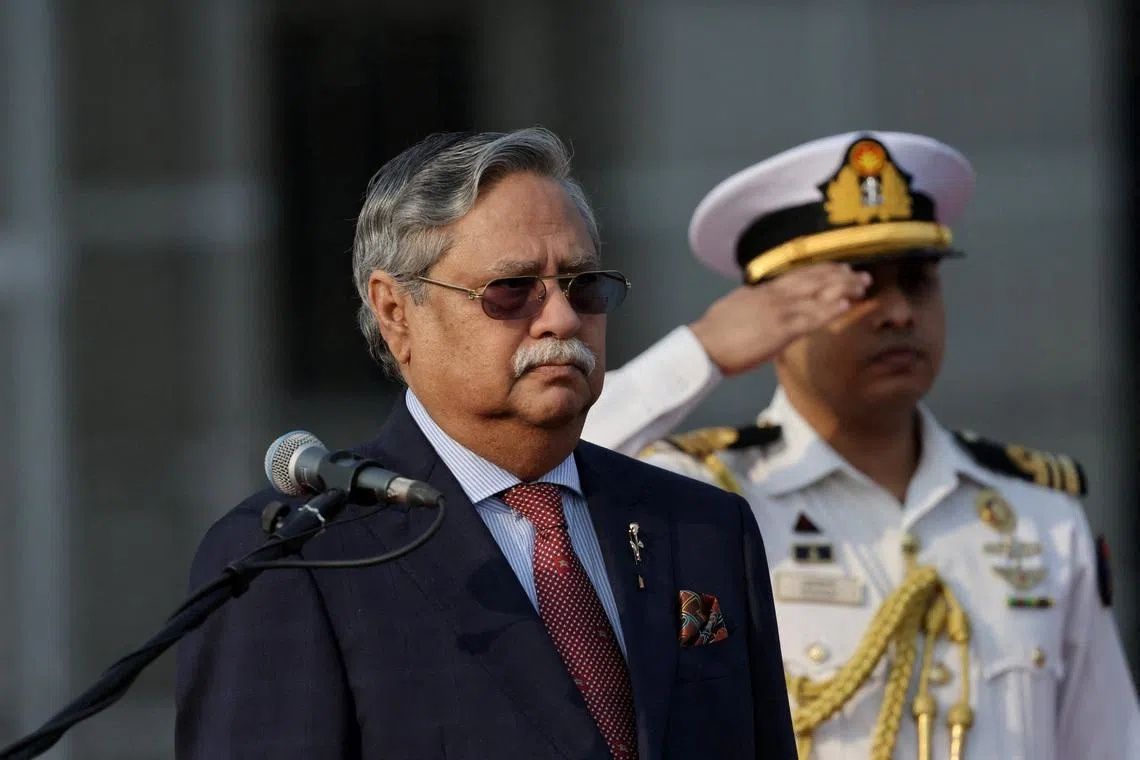
Mohammed Shahabuddin, the 76-year-old President of Bangladesh, has announced his resignation on medical grounds, marking a significant shift in the country's political landscape at a delicate moment. The announcement, released through his office on Friday, comes as the nation continues navigating the aftermath of a tumultuous student-led uprising that unseated Prime Minister Sheikh Hasina in 2024. Shahabuddin, who has occupied the largely ceremonial presidential post since April 2023, cited serious health complications as the reason for his departure, signalling the end of an era in which he served as one of the few remaining allies of the exiled premier.
The medical condition that prompted the resignation is autonomic neuropathy, a neurological disorder affecting involuntary body functions. According to Shahabuddin's statement, this diagnosis has caused him to experience periodic episodes of sudden unconsciousness, a symptom that renders the position untenable even though presidential powers are predominantly symbolic in Bangladesh's parliamentary system. The revelation of his health struggles provides a concrete explanation for his exit, though the timing intensifies questions about the stability of what remains of Hasina's political infrastructure and her capacity to influence events from abroad.
Shahabuddin's departure represents a strategic blow to Hasina's prospects for a political resurrection. The ousted prime minister, who fled to India following the uprising, has reportedly been planning her return within five months, yet her pathway back grows increasingly constrained. The Awami League, her party, remains formally banned, and the government has systematically pursued charges against party members and affiliates. Hundreds of leaders and activists have been imprisoned or forced underground, effectively dismantling the organizational capacity Hasina would need to mount a political comeback. With Shahabuddin now removed from the presidency, she loses access to a sympathetic voice in a position that, while largely ceremonial, holds symbolic weight and provides a connection to state institutions.
Under Bangladesh's constitutional framework, the Speaker of the Jatiya Sangsad, the national parliament, will assume presidential duties until the legislature elects a successor. This interim arrangement underscores the limited executive authority embedded in the presidency itself. The role of head of state carries the formal designation of commander-in-chief of the armed forces, yet genuine power flows through the Prime Minister and cabinet. Bangladesh, a Muslim-majority nation of 173 million people, has experienced considerable institutional strain in recent months, and the transition process for selecting a new president will test the government's capacity to maintain stability while managing competing political interests.
The backdrop to this resignation is the unprecedented nature of the 2024 uprising that toppled Hasina. Unlike previous political transitions in Bangladesh, which often involved transfers of power between rival factions within the same system, the student-led movement represented a broader popular rejection of Hasina's authoritarian governance. The uprising left a power vacuum that existing political structures have struggled to fill. The government that has emerged since her departure has pursued an aggressive campaign against Awami League members, creating a climate in which even ceremonial allies like Shahabuddin face pressure from the new political reality.
Shahabuddin's position had become increasingly isolated as the new political order consolidated itself. His health condition may be genuine, but his departure also reflects the institutional and political isolation that has enveloped those associated with Hasina's regime. The decision to resign now rather than attempt to serve out his term suggests an awareness of his precarious standing and perhaps an acknowledgement that remaining in office would prove unsustainable given his medical circumstances and shifting political fortunes.
The succession process will be closely watched for clues about the direction of Bangladesh's government and its attitude toward former power brokers. The choice of the next president will carry symbolic significance regarding whether the new order intends reconciliation or continued accountability measures against Hasina's supporters. The current government's positioning will reflect broader questions about Bangladesh's political trajectory and whether the nation can stabilize following the upheaval of recent years.
For observers across South Asia, including those in Malaysia and the region, the situation in Bangladesh illustrates the fragility of political transitions and the challenges of managing institutional change following popular uprisings. The removal of Shahabuddin, whether by genuine health necessity or accelerated by political circumstance, demonstrates how dramatically circumstances can shift for figures once seen as secure in their positions. Hasina's absence from Bangladesh and the systematic dismantling of her political network represent a cautionary tale about the durability of authoritarian governance when confronted with sustained popular mobilization.
The five-month window before Hasina's anticipated return will be crucial. With institutional allies slipping away and her party facing legal restrictions, any political comeback would require either a significant shift in the government's stance or unforeseen developments in Bangladesh's political dynamics. Shahabuddin's resignation removes one piece from an already severely diminished political puzzle, suggesting that whatever role Hasina might hope to play in Bangladesh's future will have to be constructed from dramatically reduced resources.

