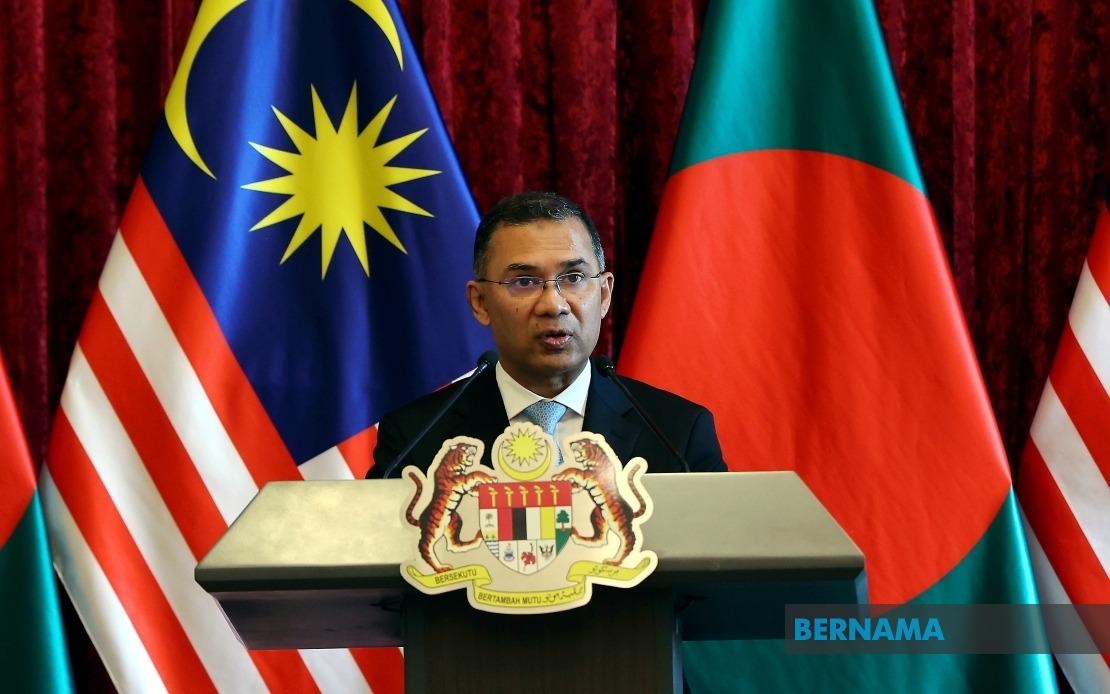
Bangladesh's newly-installed Prime Minister Tarique Rahman used his maiden bilateral visit abroad to reinforce the country's commitment to deepening relations with Malaysia, marking a strategic priority as he consolidates his administration following his February 2026 assumption of office. The two-day visit to Putrajaya, undertaken at the invitation of Prime Minister Datuk Seri Anwar Ibrahim, culminated in a series of formal commitments designed to expand cooperation across multiple sectors.
During their joint press conference on Monday, both leaders outlined their intention to activate existing institutional frameworks to facilitate closer engagement. The joint commission mechanism and scheduled bilateral meetings between foreign ministers will serve as the primary conduits for ongoing dialogue, allowing the two nations to coordinate responses to regional developments and international issues. This structured approach reflects a pragmatic strategy to manage an increasingly complex geopolitical landscape while maintaining continuity in diplomatic relations.
Three formal agreements were signed during the visit, signalling concrete areas of expanded partnership. A Memorandum of Understanding on Cultural Cooperation establishes a foundation for people-to-people exchanges and cultural preservation initiatives. Simultaneously, Bangladesh and Malaysia formalised arrangements in counter-terrorism research, recognising the shared security challenges confronting the region as transnational terrorist networks continue to pose persistent threats across Southeast and South Asia. An additional accord on investment promotion and facilitation aims to reduce bureaucratic barriers and encourage private sector engagement between the two economies.
The counter-terrorism research agreement holds particular significance for the region. Both nations have experienced security challenges related to extremist organisations, and collaborative research can enhance threat intelligence sharing and operational coordination. Malaysia's extensive experience managing complex security environments positions it as a valuable partner for Bangladesh as it navigates its own security imperatives. This dimension of the partnership extends beyond traditional diplomatic courtesies to address fundamental national interests.
Global developments featured prominently in the leaders' discussions, with special attention directed toward the evolving situation in West Asia. Both nations, as Organisation of Islamic Cooperation members with substantial Muslim populations, maintain keen interests in Middle Eastern stability and Palestinian affairs. Their commitment to coordinated approaches within the United Nations and other international organisations reflects recognition that middle-power nations can amplify their influence through strategic alignment on issues of shared concern.
Rahman's acknowledgment of Malaysia's support for Bangladesh's candidacy for the presidency of the 81st session of the United Nations General Assembly underscores the diplomatic capital Malaysia has invested in its South Asian neighbour. This backing carries practical implications for Bangladesh's ability to shape multilateral agendas on development, climate action, and South-South cooperation—issues of particular consequence for least-developed and lower-middle-income countries throughout the region.
Trade dynamics between the nations reveal both substantial current engagement and untapped potential for expansion. In 2025, bilateral commerce totalled RM12.18 billion, with Malaysia exporting RM10.08 billion primarily in petroleum products—reflecting energy-intensive industrial activity and Bangladesh's reliance on hydrocarbon imports to sustain its growing manufacturing sector. Bangladeshi exports of RM2.10 billion, concentrated in textiles, apparel, and footwear, demonstrate the country's established competitive advantages in labour-intensive manufacturing.
Bangladesh's ranking as Malaysia's 28th largest trading partner globally and second in South Asia after India provides context for the economic relationship's significance. For Malaysia, Bangladesh represents an important export market and an alternative source of manufactured goods, particularly in sectors where labour costs constitute a critical competitive factor. Conversely, for Bangladesh, Malaysia constitutes a critical source of energy supplies and investment capital essential for industrial expansion and infrastructure development.
The bilateral trade structure reflects complementary economic structures typical of developing countries at different stages of industrial transformation. Malaysia's petroleum-based exports support Bangladesh's energy-intensive textile and apparel industries, which in turn generate employment for millions of workers. Deepening this relationship through investment facilitation agreements could unlock opportunities for Malaysian firms to establish manufacturing and processing operations in Bangladesh while sourcing finished products for re-export or regional markets.
Cultural cooperation initiatives carry significance extending beyond ceremonial exchanges. Bangladesh's rich heritage and Malaysia's multicultural society create natural bridges for engagement through education, arts, and academic collaboration. Such people-to-people connections strengthen the foundations of official relations and build constituencies supportive of closer ties across both nations. Educational scholarships, researcher exchanges, and artistic collaborations can deepen mutual understanding and create enduring networks of goodwill.
The timing of Rahman's visit during Malaysia's current political stability and economic positioning makes it strategically advantageous. Malaysia's roles in regional institutions and its established relationships with major powers provide Bangladesh with a partner capable of advancing shared interests within multilateral forums. Conversely, Bangladesh's position as a critical player in global supply chains and its demographic weight as South Asia's third-largest nation makes it an increasingly important partner for Malaysian diplomatic and economic interests.
Looking forward, the substantive agreements signed during this visit establish foundations for expanded cooperation, though realisation of stated ambitions will depend on consistent implementation by relevant government agencies and private sector participation. The counter-terrorism research accord requires institutional capacity building and sustained intelligence sharing protocols. Investment facilitation requires regulatory harmonisation and removal of structural barriers. Cultural cooperation demands sustained funding and political commitment from both sides. Success in these endeavours will determine whether this visit represents merely a diplomatic milestone or the beginning of a transformative phase in Bangladesh-Malaysia relations.

