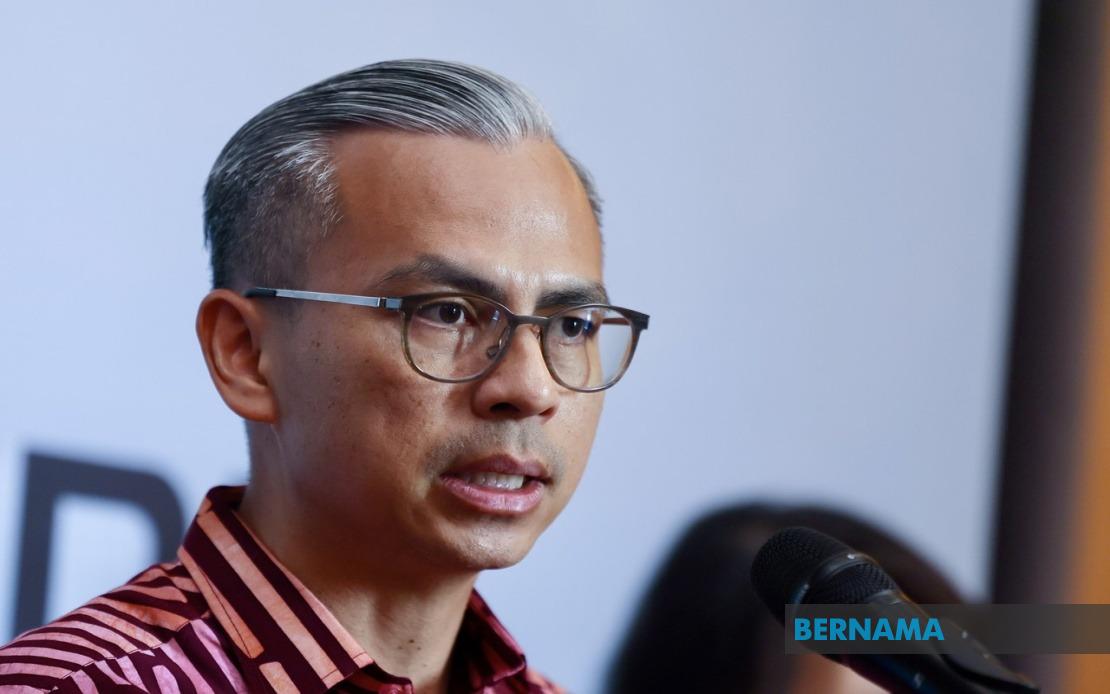
Bank customers encountering RM1 charges when withdrawing cash from interbank automated teller machines should immediately notify Bank Negara Malaysia, Communications Minister Datuk Fahmi Fadzil said on Wednesday. The directive comes as the government's fee waiver scheme—intended to ease financial pressure on consumers—became effective in early July, yet some customers continue to face charges that should no longer apply. Fahmi, speaking at the Communications Ministry's weekly briefing, stressed that BNM would pursue enforcement action against any financial institution breaching the compliance deadline.
The scope of this fee elimination initiative is far broader than many Malaysians may realise. The waiver encompasses approximately 16,000 bank-owned ATMs nationwide, representing roughly 84 percent of the total machines operated by financial institutions across the country. This extensive coverage reflects years of banking sector consolidation around shared networks, which allow customers to access funds from competing banks without penalty. For ordinary Malaysians accustomed to managing multiple bank accounts and navigating increasingly fragmented financial ecosystems, the removal of these charges represents meaningful relief from what had become routine transaction costs.
Fahmi's intervention underscores a critical implementation challenge that has emerged since the policy took effect. Despite clear government announcements and banking sector preparation, confusion persists regarding which machines qualify for the fee waiver. The minister acknowledged that social media inquiries flooded government channels as customers grappled with inconsistent information at point of withdrawal. This gap between policy intention and on-the-ground execution highlights persistent coordination issues between regulators, participating banks, and the public. Rather than accept the implementation stumble passively, Fahmi framed citizen reporting as a tool for enforcement, effectively deputising consumers as compliance monitors.
The remaining 16 percent of bank-owned ATMs operate under fundamentally different commercial structures. These machines, managed by non-bank private enterprises through independent service agreements, fall outside the regulatory framework covering the major financial institutions. Unlike traditional bank ATMs that function as customer acquisition tools and transaction facilitators, privately operated machines represent revenue streams for third-party operators. Accordingly, these entities retain authority to maintain the RM1 fee under their existing commercial contracts. Fahmi advised consumers to distinguish between institution-operated and privately contracted machines by examining logos displayed on the hardware itself—a practical measure that places identification burden squarely on users.
The gap in coverage carries implications for financial inclusion, particularly in less profitable market segments. Private operators typically concentrate machines in high-traffic commercial areas where transaction volumes justify operational costs. Rural regions, smaller towns, and economically marginal neighbourhoods may experience disproportionate reliance on the privately operated subset, meaning certain Malaysians would continue bearing costs that urban, affluent customers effectively escape. This geographic dimension of the fee waiver deserves scrutiny as policymakers assess whether the 84 percent coverage adequately serves all demographic segments or whether targeted interventions addressing underserved areas become necessary.
Banking industry associations are preparing supplementary communication to clarify implementation details. The Association of Banks in Malaysia and the Malaysian Islamic Banking and Financial Institutions Association indicated imminent joint guidance on operational aspects of the waiver. Such coordination suggests the banking sector recognises legitimacy concerns around implementation inconsistency and seeks to restore public confidence through transparent, unified messaging. For regional observers monitoring Malaysia's financial regulatory environment, this coordinated industry response signals reasonably robust self-governance mechanisms within the Malaysian banking framework, though the necessity for additional clarification also indicates initial communication failed to achieve universal understanding.
The ATM fee waiver must be contextualised within Malaysia's broader financial inclusion agenda and government cost-of-living initiatives. The MADANI Government has positioned various consumer-facing financial reforms as pillars of its stated commitment to improving household purchasing power and reducing transaction friction within the financial system. ATM charges, though individually modest, accumulate into meaningful burdens for low-income households conducting numerous cash transactions. By eliminating these charges for the vast majority of bank-operated machines, the government addresses what many citizens perceive as unjustified surcharges rather than economically essential fees.
Fahmi's broader remarks regarding foreign investment in financial technology at Tun Razak Exchange reveal how the government links domestic financial regulatory reform to its international economic positioning. The establishment of a Global Development Centre by an international fintech company signals investor confidence in Malaysia's institutional stability and policy consistency. The minister framed this development as validation of the MADANI Government's economic vision, suggesting that regulatory responsiveness—demonstrated through consumer-friendly policies like the ATM fee waiver—contributes to Malaysia's attractiveness as a technology and finance destination. This linkage between domestic consumer policy and international competitive positioning reflects how governments increasingly calibrate various policy domains to influence overall investor perception.
The fintech investment announcement also positions Malaysia within the emerging artificial intelligence and agentic systems ecosystem that leading economies are contending with. Malaysia's aspiration to establish itself as a regional hub for AI talent and digital innovation depends partly on regulatory environments that both protect consumers and encourage institutional innovation. The ATM fee waiver, while seemingly distant from artificial intelligence development, actually reflects the type of regulatory agility and consumer-centric approach that technology companies evaluate when selecting regional headquarters locations. Southeast Asian nations increasingly compete for share of emerging technology investment, and policy responsiveness to public concerns contributes to that competitive positioning.
For Malaysian consumers navigating this transition, practical vigilance remains essential despite regulatory assurances. The implementation gaps that prompted Fahmi's directive suggest that not all banking institutions achieved simultaneous compliance. Customers should verify charges at point of withdrawal and document any charges inconsistent with policy rather than assuming automated compliance. This defensive posture may seem burdensome, but serves both individual interests—recovering erroneous charges—and collective purposes by supplying BNM with empirical evidence of non-compliance that could prompt more aggressive enforcement. The citizen reporting mechanism that Fahmi advocated essentially transforms individual consumer interactions into data points that can guide regulatory action, an approach that works only when sufficient customers actively participate.

