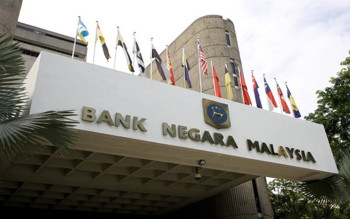
The scale of financial mismanagement at Tabung Haji has come into sharper focus following parliamentary disclosures that Bank Negara Malaysia (BNM) issued five separate warning letters to the Islamic pilgrimage fund's leadership regarding a widening gap between its assets and liabilities. The warnings, which targeted both the TH chairman and the Minister of Religious Affairs, underscored mounting concern within Malaysia's central bank that the institution posed a potential systemic risk to the country's financial stability.
Dr Zulkifli Hasan, the Minister in the Prime Minister's Department (Religious Affairs), laid bare the extent of the crisis during a special parliamentary sitting where he presented findings from the Royal Commission of Inquiry into Tabung Haji's operations. According to Zulkifli, the repeated warnings from BNM conveyed an urgent message: TH's financial condition required immediate corrective action to prevent continued legal violations. The fact that multiple letters were deemed necessary suggests that initial alerts fell on deaf ears, pointing to institutional resistance to acknowledging or addressing the underlying problems.
Most troubling is that TH's leadership appears to have disregarded these formal warnings from the nation's financial regulator, a decision that allowed the institution's deterioration to persist unchecked. For Malaysian depositors who have entrusted their savings to Tabung Haji—a body established to manage funds for Muslims performing the hajj pilgrimage—such negligence raises fundamental questions about accountability and fiduciary responsibility. The warnings effectively represented a regulatory alarm bell that went unheeded during a critical period when intervention could have limited damage.
The central bank's concerns proved prescient when the Auditor-General subsequently issued its own rebuke, highlighted in the 2017 Financial Statements Report. The Auditor-General flagged an Emphasis of Matter regarding changes to TH's impairment policy, changes that notably occurred twice within the same twelve-month period. Such rapid successive policy adjustments, appearing designed to inflate reported profitability for 2017, signalled systematic attempts to mask underlying financial weakness through accounting manoeuvres rather than genuine operational improvement.
Only after a change in TH's board did the institution take meaningful steps toward transparency and accurate financial assessment. In 2018, the new leadership engaged PricewaterhouseCoopers, an international audit firm with substantial experience in forensic financial analysis, to conduct a comprehensive reassessment of the fund's true financial position and performance. This decision proved instrumental in breaking through layers of obfuscation that had accumulated during the previous administration.
The PwC audit delivered a stark reality check. Of the RM4.6 billion in total assets claimed by Tabung Haji, only RM556 million—approximately 12 per cent—had been valued by qualified professional valuers. The remaining bulk of the asset base was essentially unverified and potentially overstated, confirming that the financial manipulations flagged by the Auditor-General had indeed masked a far more precarious underlying condition than public disclosures had suggested. This revelation vindicated the concerns that BNM's repeated warnings had sought to communicate.
The government's response to the escalating crisis came through establishment of the Royal Commission of Inquiry in 2021, with formal appointment of its members occurring in January 2022. This investigative body examined the period from 2014 through 2020, focusing on weaknesses in management practices and operational frameworks that had enabled such systematic failings. By August 2022, the RCI had completed its work and presented its findings to the Yang di-Pertuan Agong, following which the full 211-page report was made public on July 29 of the following year.
The RCI's investigation identified systemic vulnerabilities spanning both governance and operational domains, resulting in twenty-five specific recommendations for institutional reform and improvement. As of late July 2023, Tabung Haji had implemented approximately seventy-five per cent of these recommendations, suggesting meaningful progress toward addressing the root causes of the earlier crisis. However, the remaining quarter of unimplemented recommendations warrants scrutiny regarding any potential obstacles to full remediation.
For Malaysian policymakers and financial regulators, the Tabung Haji episode offers crucial lessons about the consequences of regulatory forbearance and the importance of escalating enforcement mechanisms when initial warnings prove ineffective. The fact that BNM needed to issue five separate warnings before systemic concerns were formally investigated indicates that intermediate enforcement tools may require strengthening. The episode also underscores the vulnerability of institutions with mixed commercial and social mandates when governance structures fail to maintain adequate checks on management discretion.
The implications extend beyond Tabung Haji itself, touching broader questions about how Malaysia supervises financial institutions serving specific demographic communities. Islamic finance institutions and pilgrimage-related bodies occupy a unique position combining religious significance with substantial financial stewardship responsibilities. Ensuring robust governance frameworks in such institutions becomes particularly important given their social and spiritual importance to Malaysia's Muslim population and their role as custodians of hajj-related savings.

