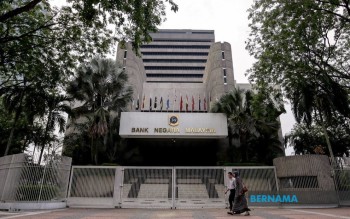
Bank Negara Malaysia is expected to maintain its overnight policy rate at 2.75 per cent through the end of 2026, according to consensus forecasts from leading domestic research institutions. The collective assessment reflects a marked shift in sentiment towards greater optimism about the country's economic prospects, particularly following the central bank's latest monetary policy statement that signalled confidence in Malaysia's resilience and growth potential.
The shift in tone from Bank Negara's most recent monetary policy committee statement, delivered in July, carries particular significance for investors and policymakers navigating Southeast Asia's largest economy. Rather than signalling urgency for rate adjustments in either direction, the central bank's communication has become increasingly constructive about domestic demand and export momentum. CGS International emphasized that the policy stance remains neutral overall, yet the underlying assessment of economic conditions has grown considerably more positive compared to previous statements issued in May. This nuance matters because it suggests the central bank sees no immediate need to tighten or loosen policy, even as global conditions evolve.
The foundation for this benign outlook rests on several pillars of economic strength that have manifested across different sectors and demand channels. Export performance has emerged as a particular bright spot, exceeding earlier expectations and providing crucial momentum to overall growth. The electric and electronic sector, Malaysia's traditional growth engine, continues to demonstrate robust demand despite global manufacturing uncertainties. Beyond these traditional strengths, the recovery in non-E&E exports, particularly from petrochemicals and oil and gas production as facilities return from scheduled maintenance, offers additional growth support that was less certain in previous forecasts. This diversification of export growth reduces dependency on any single sector and provides greater visibility into sustained expansion.
Domestic demand channels remain equally important to the growth narrative. Malaysia's labour market has continued to demonstrate resilience with steady wage growth providing support to household spending power. Policy support measures remain in place, further buttressing consumer confidence and purchasing ability. Public Investment Bank noted that the second quarter growth figures, which showed resilience driven by sustained domestic demand alongside stronger export performance, validate the central bank's confidence that the domestic growth buffer remains intact. This buffer becomes increasingly valuable given external shocks that periodically roil global markets, from supply chain disruptions to geopolitical tensions affecting international commerce.
Bank Negara's explicit reinforcement of its four to five per cent growth forecast range for 2026 carries weight in signalling the institution's confidence in the trajectory ahead. When a central bank reiterates its official forecast range with apparent conviction, it typically reflects careful analysis suggesting the domestic economy possesses sufficient structural resilience to achieve these targets. For Malaysia, remaining within this band would represent solid performance consistent with historical averages and sufficient to generate employment and income growth for the population. This forecast anchors expectations across financial markets and the broader business community.
The inflation picture complements the growth outlook in justifying rate maintenance. Rather than presenting as a hawkish concern, price pressures remain characterized as contained and primarily external in origin. While Bank Negara has acknowledged some initial pass-through effects from higher global cost pressures—particularly relevant given Malaysia's exposure to international commodity prices—these impacts have not yet translated into broad-based domestic inflation. Core inflation measures, which exclude volatile food and energy components, continue to behave moderately. This distinction matters because it suggests any price pressure is cost-push in nature from external sources rather than demand-driven inflation emerging from domestic overheating.
Apex Securities highlighted how improving supply conditions and moderating commodity prices globally are supporting both international and domestic growth prospects. This external environment, while occasionally volatile, currently appears conducive to sustained expansion without requiring monetary tightening. The research house noted that although Bank Negara remains comfortable with present policy settings, the central bank could shift to a more hawkish stance should inflation begin exceeding expectations or demonstrating persistence. This conditional language reflects standard central banking frameworks where policy remains data-dependent and responsive to emerging conditions.
Public Investment Bank articulated a crucial consideration regarding tail risks to this baseline forecast. While the expectation centers on rate maintenance, a conditional risk exists for a five-basis-point rate hike in the fourth quarter should specific conditions materialize. Such conditions would include evidence that cost pressures are broadening into core inflation measures, inflation pressures becoming more pervasive and persistent across the economy, or policy accommodation generating financial imbalances through excessive credit growth or asset price inflation. This articulation demonstrates that research consensus represents a baseline rather than a certainty, with specific triggers that could alter the trajectory.
For Malaysian policymakers and business leaders, this forecast consensus carries implications extending beyond interest rate mechanics. A stable policy rate environment supports business planning and investment decisions by reducing uncertainty about borrowing costs over the medium term. Companies can extend investment horizons and plan expansion strategies with greater confidence about financial conditions. Households benefit from predictable mortgage and consumer credit costs, facilitating major purchasing decisions. Regional investors viewing Malaysia as an entry point to Southeast Asia similarly benefit from monetary policy clarity that reduces hedging costs associated with currency and interest rate volatility.
The improvement in growth momentum since the May monetary policy statement reflects a broader shift in global and regional dynamics that has benefited Malaysia disproportionately. While developed economies face stagflation concerns and emerging markets navigate capital flow volatility, Malaysia's diversified export base and resilient domestic demand have positioned it relatively favourably. The recovery in semiconductor demand, which undergirds E&E exports, aligns with global technology investment cycles that should persist into 2026. Tourism recovery continues advancing as international travel normalizes, providing additional growth support.
Looking ahead, the sustainability of this constructive outlook depends on external conditions remaining broadly stable and domestic fundamentals continuing to evolve positively. Geopolitical risks, trade tensions, and global recession concerns represent tail risks that could force reassessment. However, the current consensus reflects analyst confidence that Malaysia's economy possesses sufficient dynamism and diversification to maintain momentum within forecast ranges. For stakeholders planning financial strategies through 2026, the expected policy rate maintenance at 2.75 per cent provides a stable reference point, though genuine caution about external shocks remains warranted given global uncertainties.

