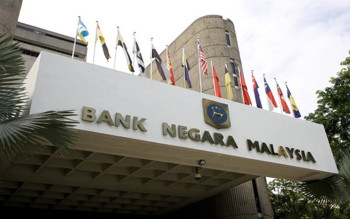
Bank Negara Malaysia has clarified that its engagement with Tabung Haji, including the provision of advisory guidance to the pilgrimage fund operator, falls squarely within its core mandate to preserve overall financial system stability under the Central Bank of Malaysia Act 2009. The central bank's explanation comes amid an ongoing Royal Commission of Inquiry into TH's operations, which has prompted scrutiny of the institution's financial health and the regulatory oversight mechanisms surrounding non-bank financial institutions of systemic importance.
The central bank's responsibility to monitor and address risks to financial stability extends beyond the commercial banking sector to encompass major non-bank financial institutions that maintain meaningful connections to the broader financial system. Tabung Haji, as one of Malaysia's largest financial intermediaries managing pilgrim savings and investment portfolios, clearly falls into this category of systemically significant entities whose difficulties could trigger cascading effects throughout the financial architecture. BNM's approach reflects international best practice, where central banks maintain surveillance responsibilities over all major financial players regardless of whether they fall under direct regulatory supervision.
To operationalise this mandate, BNM established the Financial Stability Executive Committee under the Central Bank of Malaysia Act 2009, providing a formal institutional mechanism for identifying emerging vulnerabilities and coordinating policy responses across the financial system. This committee structure enables the central bank to conduct comprehensive surveillance across multiple financial sectors and institutions, moving beyond its traditional banking regulation remit to encompass the broader ecosystem of financial intermediaries. The FSEC framework allows BNM to synthesise information from various sources and coordinate with other relevant authorities when systemic risks materialise or appear likely.
While Tabung Haji operates outside BNM's direct supervisory jurisdiction, the central bank has argued that this distinction does not preclude it from offering preventive counsel to the institution's board and to the Minister overseeing religious affairs when necessary. Such advisory interventions, BNM contends, constitute prudent precautionary measures designed to preserve TH's financial soundness and prevent spillover effects that could jeopardise the stability of Malaysia's wider financial system. This supervisory philosophy acknowledges that certain non-bank institutions, by virtue of their size, market share, or interconnectedness with regulated entities, warrant central bank attention even absent direct regulatory authority.
The history of BNM's interaction with Tabung Haji demonstrates the practical application of this monitoring function. Over the course of several years, the central bank issued five separate warning letters to TH's chairman and the Minister of Religious Affairs, drawing attention to persistent and widening gaps between the institution's recorded assets and its obligations to members. These interventions preceded criticism from Malaysia's Auditor-General, who similarly flagged concerns in his examination of TH's 2017 financial statements. The pattern of warnings underscores BNM's attempt to deploy non-regulatory tools to encourage corrective action by an institution it could not directly compel compliance.
For Malaysian investors and pilgrims who maintain savings accounts with Tabung Haji, BNM's engagement carries significant implications. The central bank's monitoring function provides an additional layer of oversight beyond whatever internal governance mechanisms TH itself maintains, though it is not equivalent to the blanket deposit protection afforded to commercial bank customers. The distinction between direct supervision and advisory engagement means that TH members depend partly on BNM's surveillance capacity to detect problems early, combined with the efficacy of the Minister and TH's board in implementing remedial measures that the central bank might recommend.
The establishment of the Royal Commission of Inquiry in 2021, with members formally appointed on January 20, 2022, reflected broader public concern about TH's financial trajectory and governance standards. The subsequent presentation of the RCI report to Yang di-Pertuan Agong on August 30, 2022, marked a critical juncture in efforts to understand how TH's financial position deteriorated and what institutional reforms might be necessary. BNM's clarification of its role appears partly designed to contextualise the central bank's earlier warnings within its legitimate mandate rather than as failures of oversight or instances where BNM possessed but withheld critical information.
From a Southeast Asian perspective, Malaysia's experience with Tabung Haji highlights the ongoing challenge of integrating non-bank financial institutions into systemic risk frameworks without necessarily imposing full regulatory authority on entities with distinct policy objectives and stakeholder bases. Other regional economies similarly grapple with institutions serving specific social or demographic mandates—whether related to Islamic finance, housing, or retirement—that operate partially outside conventional regulatory perimeters. BNM's approach of maintaining surveillance and offering advice without direct supervisory powers represents one model for managing this tension, though its effectiveness depends heavily on the willingness of political authorities to act on central bank counsel.
The relationship between BNM's statutory responsibilities and TH's governance raises enduring questions about the appropriate division of labour between independent central banks and elected political authorities. BNM's advocacy for its monitoring role implicitly concedes the limits of what the central bank can accomplish through advisory channels alone. When institutional problems persist despite warnings, the central bank's recourse remains limited unless its mandate is expanded or explicit obligations are imposed on the target institution. This dynamic underscores why some economists and policy experts have advocated for broadening central banks' regulatory authority over systemically important non-bank financial institutions, a debate likely to intensify as Malaysia and other economies experience mounting stress in non-traditional financial sectors.
The clarification from Bank Negara also serves to reinforce the distinction between supervisory authority and analytical engagement in Malaysia's financial system architecture. By anchoring its Tabung Haji engagement to a specific statutory mandate rather than discretionary goodwill, the central bank establishes that such oversight constitutes a normal function of contemporary monetary authorities. This positioning may influence future debates about whether TH itself should eventually be brought under BNM's formal supervisory jurisdiction, a step that could fundamentally alter the pilgrimage fund's governance structure and operational autonomy. For now, BNM's explanation confirms that the central bank's role is to identify risks and offer counsel, leaving implementation of remedial measures to political and institutional actors with direct authority over TH.

