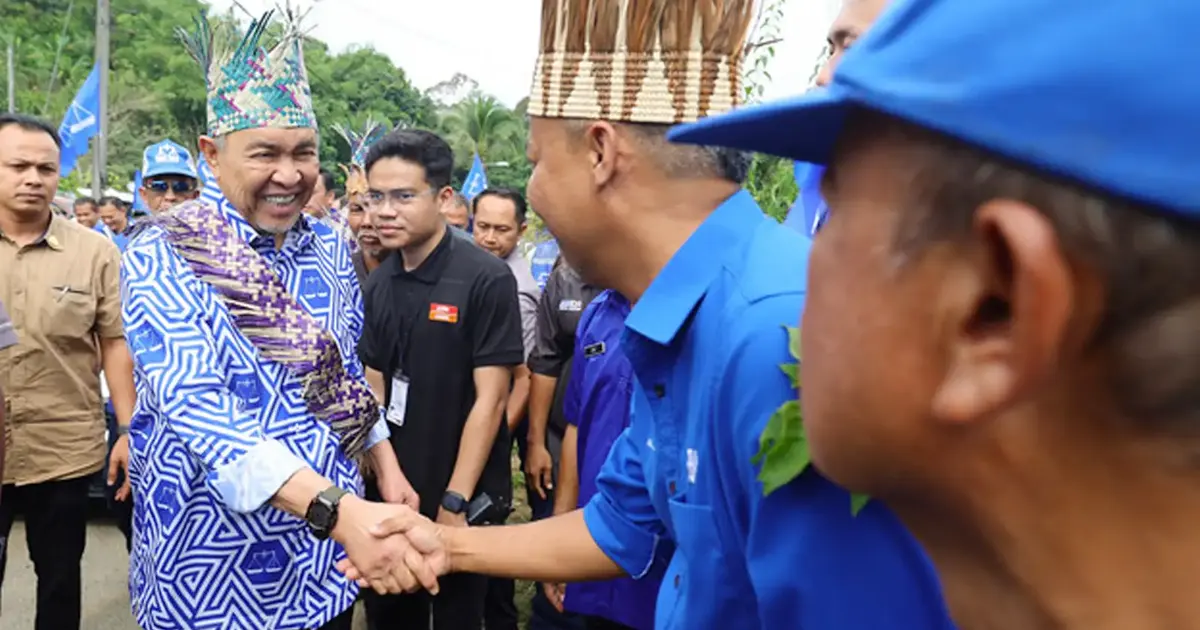
The Barisan Nasional coalition and its ally Perikatan Nasional have not yet achieved complete operational cohesion in Negeri Sembilan ahead of the state election, Barisan Nasional chairman Zahid Hamidi revealed, even as he expressed confidence that outstanding differences would be ironed out before polling day on August 1.
Zahid's acknowledgment points to the persistent challenges facing the two major coalitions as they attempt to coordinate campaigning and candidate selection across Malaysia's central state. The task of melding the organisational machinery, electoral strategies, and political interests of multiple parties across two separate coalitions remains complex, particularly when local power structures and factional dynamics come into play at the state level.
The August 1 Negeri Sembilan election carries significance beyond the state itself, as it represents a key test of stability for the federal government. The outcome could influence perceptions of the current administration's political strength and the durability of the governing coalition's support base. For Barisan Nasional and Perikatan Nasional, demonstrating unified electoral performance would strengthen their political position nationally.
Negeri Sembilan has historically been a Barisan Nasional stronghold, though the coalition's dominance has faced challenges in recent electoral cycles. The inclusion of Perikatan Nasional as an ally adds layers of complexity, as the two coalitions must balance their own internal interests while presenting a united front against opposition parties. This requires careful negotiation over seat allocations, campaign messaging, and policy positioning.
For Perikatan Nasional, which has grown in political stature following the 2023 general election, the Negeri Sembilan campaign offers an opportunity to consolidate influence in a key peninsula state. However, integrating Perikatan Nasional's political machinery and members into existing Barisan Nasional structures at the grassroots level poses practical challenges that cannot be resolved through high-level coordination alone.
Zahid's confidence in resolving outstanding issues by August 1 suggests that senior leadership recognises the electoral imperative of presenting a unified image to voters. The compressed timeline between his acknowledgment of incomplete cohesion and the actual polling date underscores the urgency with which the coalitions are working to resolve coordination gaps. Whether these efforts translate into seamless execution on the ground remains to be seen.
The opposition, meanwhile, will likely attempt to exploit any visible signs of disunity or disagreement between Barisan Nasional and Perikatan Nasional during the campaign. A fractured coalition appearance could dampen voter turnout among supporters and create opportunities for opposition parties to make inroads in competitive constituencies. This reality adds further pressure on both coalitions to achieve not just operational alignment, but also visible unity in their public messaging.
At the party level, individual component parties within both coalitions must also reconcile their own organisational interests with the broader coalition strategy. This nested complexity—balancing intra-party dynamics, inter-coalition coordination, and statewide electoral strategy—requires sustained political management from senior leaders like Zahid.
Historically, states like Negeri Sembilan have served as bellwethers for broader political trends in Malaysia. A strong performance by the Barisan Nasional–Perikatan Nasional alliance would signal effective coalition governance and could provide momentum for future elections. Conversely, a disappointing result could prompt questions about the stability and durability of current political arrangements, potentially affecting federal government cohesion.
The August 1 election will ultimately test whether the confidence expressed by Zahid translates into improved ground-level coordination and voter reception. The coming weeks will be crucial as both coalitions work to transform structural alignment into sustained campaign effectiveness across the state's constituencies. Success would demonstrate that diverse political entities can work together towards common electoral objectives, while failure could reinforce perceptions of coalition fragmentation that opposition parties have sought to exploit.

