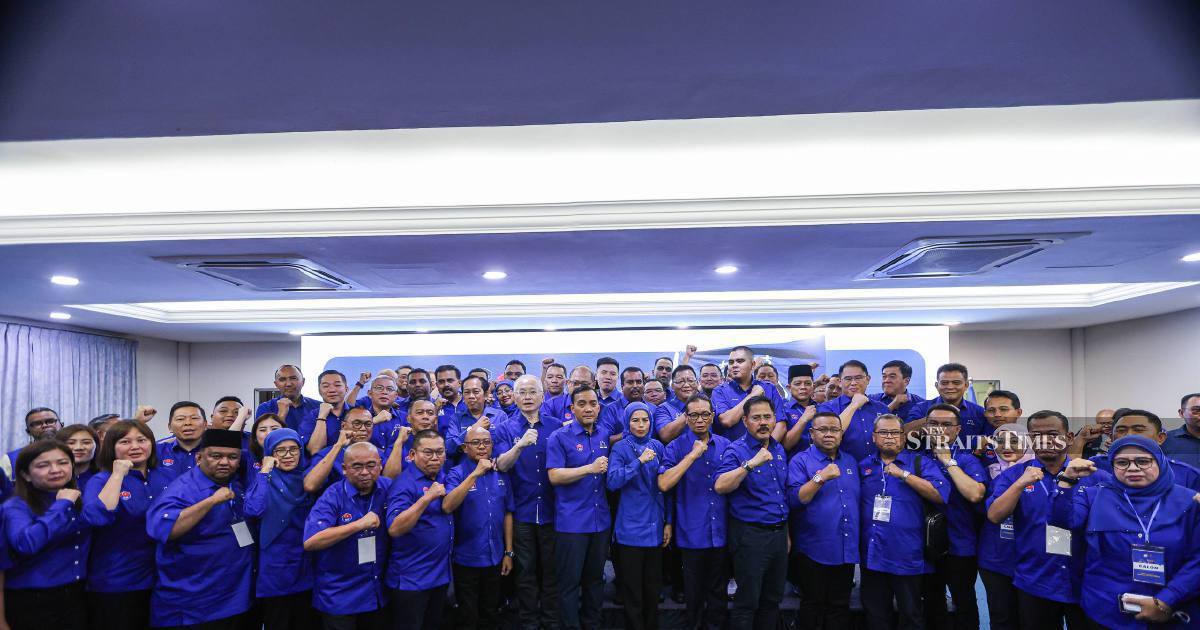
Barisan Nasional has formally announced its full complement of 56 candidates who will contest the Johor state election scheduled for July 11. The announcement marks a significant milestone in the coalition's campaign preparations, consolidating months of internal discussions and party negotiations across its component parties. The Johor election looms as a crucial test of BN's electoral strength in one of Malaysia's most strategically important states, where the coalition has historically maintained considerable influence through its dominance in the Dewan Rakyat representation.
The unveiling of the candidate line-up comes at a critical juncture in Malaysia's political calendar, as Johor state elections typically generate substantial national attention and regional implications. The 56 candidates represent BN's strategic allocation across the state's constituencies, reflecting the coalition's assessment of competitive battlegrounds and its perception of voter sentiment across urban, semi-urban, and rural areas. This comprehensive roster demonstrates the coalition's commitment to fielding experienced and new faces capable of addressing diverse constituency concerns, from industrial development and infrastructure to education and social welfare.
Johor's significance within the Malaysian political framework cannot be overstated. As the second-largest state by economic output and the gateway to Singapore, developments in Johor carry implications extending far beyond state-level governance. The election outcome influences perceptions of national political momentum and frequently signals broader trends affecting federal politics. For BN, maintaining its position in Johor is integral to its national relevance, as the state has historically provided substantial parliamentary representation and served as a political powerbase for various coalition leaders throughout Malaysian history.
The candidate selection process typically reflects intricate party politics within BN's component organisations, particularly between UMNO, which fields the majority of candidates, and smaller coalition partners including MCA and MIC. The distribution of candidatures among these parties reveals power dynamics within the coalition structure and indicates which party leadership factions enjoy influence in the nomination machinery. The 56-candidate roster therefore embodies not merely an electoral choice but also an internal political statement about the hierarchy and influence within BN's tripartite structure.
For Malaysian voters in Johor and observers nationwide, this comprehensive candidate announcement enables detailed scrutiny of the coalition's renewal efforts and demographic composition. Analysts will examine the proportion of incumbent legislators retained, the number of fresh candidates introduced, and the geographic distribution of nominees to assess whether BN is pursuing a consolidation strategy or undertaking substantial organisational overhaul. The candidate profile—in terms of age, ethnicity, professional background, and previous electoral performance—offers crucial insights into the coalition's confidence levels in various constituencies and its strategic priorities moving forward.
The July 11 election date itself carries procedural and strategic significance. The timing allows sufficient campaign duration while occurring during a period when competing political narratives may be overshadowed by parliamentary schedules and other state-level developments. BN's candidate readiness by this announcement date suggests organisational capability to conduct coordinated campaigns across multiple battlegrounds simultaneously, a demanding operational challenge requiring substantial party machinery activation.
Beyond the immediate electoral contest, the candidate slate reflects BN's positioning amid evolving Malaysian politics characterised by increasingly fluid coalitional arrangements. The coalition faces competition from Pakatan Harapan, Perikatan Nasional, and various independent or regional political entities. The quality and appeal of BN's 56 nominees will substantially determine whether the coalition can retain or expand its Johor representation against these competing political forces. Voter evaluations of individual candidates often transcend purely party-based considerations, particularly in constituencies where candidate reputation, local track records, and personal connections strongly influence electoral outcomes.
From a Southeast Asian perspective, Johor's election outcome carries implications for Malaysia's political stability and regional positioning. As ASEAN's largest economy and a critical node in regional supply chains and diplomatic networks, Malaysian political developments attract attention from neighbouring governments assessing the country's governance trajectory and policy consistency. A decisive BN performance in Johor would signal coalition organisational viability and sustained electoral competitiveness, while divergent results might suggest significant shifts in voter preferences or regional political realignments within the state.
The announcement also marks the formal entry into intensive campaign mode, where candidates must mobilise supporters, articulate policy platforms, and construct persuasive narratives distinguishing themselves and their coalition from competitors. With 56 candidates across numerous constituencies, the campaign will span diverse socioeconomic environments and demographic communities, requiring differentiated messaging while maintaining coherent coalition-wide strategic positioning. Media coverage, grassroots organising, and digital campaign infrastructure will determine how effectively these candidates communicate their case to voters between announcement and polling day.
BN's complete roster disclosure demonstrates institutional capability and political confidence, yet electoral outcomes remain inherently uncertain. The comprehensive 56-candidate line-up provides voters with clear choices across all constituencies while enabling the coalition to prosecute a full statewide campaign. The months preceding July 11 will test whether BN's candidate selection, campaign execution, and political messaging can persuade Johor voters to maintain or strengthen the coalition's position in a state whose political trajectory significantly shapes Malaysian politics at both state and national levels.

