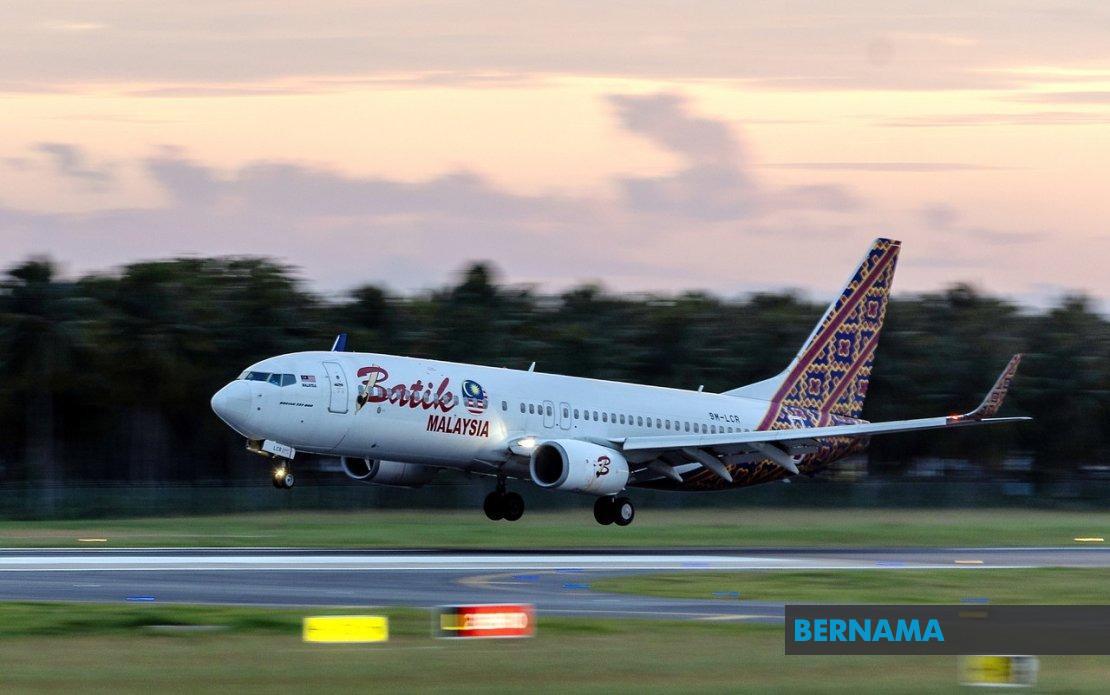
Batik Air is set to double its frequency on the Bintulu-Kuala Lumpur route beginning July 20, introducing a second daily flight in response to sustained pressure from the Tourism, Arts and Culture Minister Datuk Seri Tiong King Sing over escalating airfare costs and inadequate capacity. The expansion marks a significant response to public grievances that have accumulated as the airline previously reduced its service on this route while simultaneously raising ticket prices, creating a squeeze on commuters who rely on the corridor for business, education, and medical travel.
Minister Tiong had initially sought a more ambitious expansion involving three daily flights, but after working through negotiations with the airline, settled on implementing one additional departure immediately. The flexibility built into this arrangement suggests room for further growth, with the minister indicating that a third daily flight remains on the table if passenger demand justifies the investment. This staged approach reflects practical constraints around aircraft availability and slot allocation at both terminals, though it also signals confidence that the market will support additional capacity in coming months.
Under the new schedule, departures will occur at staggered intervals designed to serve different travel needs throughout the day. Flights heading from Kuala Lumpur toward Bintulu will leave at 10 am and 2.30 pm, while the return direction will see departures at 1.10 pm and 5.40 pm. This timing spreads services across the day rather than concentrating them during peak morning or evening slots, potentially distributing passenger loads more evenly and reducing bottlenecks.
Bintulu's economic trajectory has been a critical factor driving this expansion. The Sarawak town has experienced substantial industrial and commercial growth, particularly in energy, palm oil processing, and manufacturing sectors, which has generated consistent demand for air connectivity to the federal capital. Beyond commercial activity, the route serves crucial social functions, linking families separated by distance, enabling students pursuing higher education in Kuala Lumpur to return home, and connecting patients seeking specialized medical treatment available only in the peninsula's major hospitals.
The minister's intervention in commercial aviation operations illustrates growing recognition among Malaysian policymakers that transport connectivity directly affects economic competitiveness and public welfare. His emphasis on balancing capacity expansion with fare affordability reflects a pragmatic understanding that high ticket prices can themselves suppress demand and limit the route's potential. By framing price stability as a mutual benefit rather than a sacrifice, Minister Tiong articulated a position that benefits could extend to both airline revenue through volume growth and passenger economics through reduced per-unit costs.
The previous period of service reduction and price escalation had generated considerable friction between the airline and affected communities, with concerns voiced by business chambers, educational institutions, and individuals dependent on regular travel. This public feedback evidently moved the government to take action, demonstrating that transport advocacy at the ministerial level can influence corporate decisions, particularly when framed in terms of regional development and public interest.
Round-trip connectivity matters significantly for regional aviation dynamics. The second daily flight reduces reliance on single-departure timing, which is particularly important for time-sensitive business meetings or medical appointments requiring same-day travel from Bintulu to Kuala Lumpur. Conversely, the additional evening departure from the capital creates a return window that did not previously exist, potentially opening the route to same-day business travel patterns that favor more frequent, scheduled services.
Minister Tiong's references to cooperation between government, airlines, and authorities underscore an emerging policy framework in which public interest concerns about transport pricing and availability warrant active government engagement. This represents a subtle but significant shift from treating aviation services as purely commercial matters insulated from political scrutiny. The approach suggests that as Malaysia develops regionally, expectations around essential services like air transport will increasingly incorporate affordability and reliability alongside commercial viability.
The phased expansion strategy also reflects realistic airline economics. Deploying additional aircraft capacity requires certainty about demand sustainability, crew scheduling coordination, and maintenance resources. By committing to one additional flight with an explicit pathway to adding another if volumes grow, Batik Air can test market response while managing operational risks. For passengers and regional stakeholders, this creates both immediate relief through added capacity and a credible signal that further improvements remain possible.
Looking ahead, the success of this arrangement will likely influence similar discussions affecting other underserved Malaysian routes. If the Bintulu-Kuala Lumpur expansion generates strong passenger loads and demonstrates that increased frequency can attract demand while stabilizing fares, it may establish a precedent for government-facilitated dialogue on transport connectivity elsewhere. For Bintulu residents and businesses, the July 20 launch date represents the end of a period of constrained access and the beginning of restored confidence in reliable air service linking the town to peninsular opportunities.

