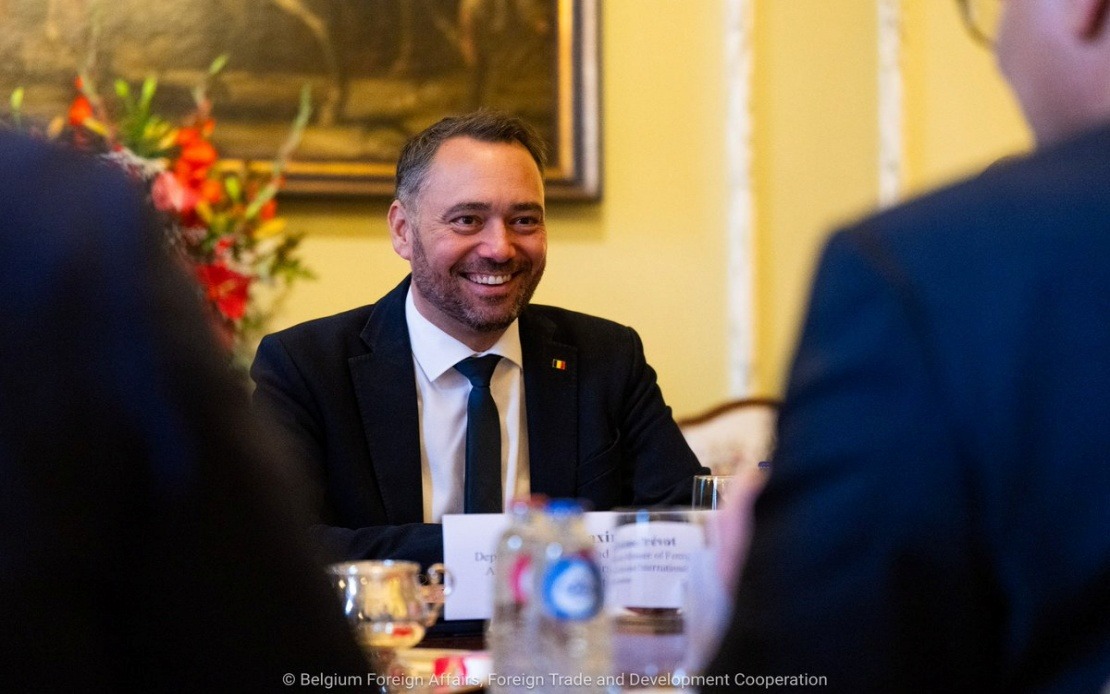
Belgium's Deputy Prime Minister and Foreign Minister Maxime Prévot is set to arrive in Malaysia on Thursday for a two-day working visit aimed at strengthening bilateral ties across multiple economic sectors. The visit represents Prévot's inaugural trip to Malaysia since his appointment in February 2025, signalling renewed interest from Brussels in deepening cooperation with Southeast Asia's third-largest economy. His agenda encompasses critical discussions on renewable energy transitions, rare earth element sourcing, and expansion of the halal industry—three areas where Malaysia holds strategic advantages and Europe seeks reliable partnerships.
The centrepiece of Prévot's visit will be a formal meeting with Deputy Prime Minister Datuk Seri Fadillah Yusof on July 2, who simultaneously holds the portfolio of Energy Transition and Water Transformation Minister. This appointment carries symbolic weight, as it demonstrates Malaysia's commitment to positioning energy transition discussions at the ministerial level. The pairing reflects a shared urgency between both nations regarding the acceleration of green energy projects, a theme that resonates throughout Europe's ambitious climate commitments and Malaysia's own renewable energy targets. Both sides intend to examine the current trajectory of Malaysia-Belgium relations while charting new pathways for collaborative ventures in sectors poised for growth over the coming decade.
Renewable energy cooperation stands as the primary focus of bilateral discussions. Malaysia has emerged as a significant player in Southeast Asia's energy transition landscape, with ambitious plans to increase renewable capacity and reduce carbon emissions. Belgium, as a founding member of the European Union and a nation grappling with its own energy security challenges, views partnerships with resource-rich nations as integral to securing sustainable supply chains. The convergence of Malaysia's abundant renewable resources and Belgium's advanced green technology expertise creates a natural foundation for joint ventures, technology transfer agreements, and investment frameworks that could benefit both economies.
Rare earth elements form the second pillar of engagement during this visit. These materials are essential to modern manufacturing, particularly for electronics, renewable energy systems, and defence applications. Malaysia's established position in rare earth processing, combined with Europe's growing concern over supply chain vulnerabilities tied to Asian dependencies, has elevated this sector into high-level diplomatic discussions. Belgium's role as an EU hub for industrial chemicals and materials manufacturing positions it as a potential strategic partner for Malaysia in developing value-added rare earth products that meet European specifications and sustainability standards. Discussions likely encompass investment opportunities, technical collaboration, and potential joint ventures in downstream processing.
The halal industry represents an increasingly important dimension of Malaysia's economic portfolio, extending beyond religious commerce into mainstream global markets. With Muslims comprising approximately 2 billion people worldwide and halal products achieving mainstream consumer acceptance in non-Muslim countries, Belgium and broader Europe represent significant growth markets. Malaysia's expertise in halal certification, logistics, and product development—backed by established institutional frameworks—offers commercial opportunities for European businesses seeking to penetrate this demographic. Prévot's inclusion of halal cooperation in his visit agenda suggests Belgium recognizes the economic potential of this sector and may be exploring opportunities for Belgian enterprises to participate in halal value chains.
Beyond bilateral matters, Prévot's itinerary includes a ministerial address at the 39th Asia-Pacific Roundtable, a prestigious annual conference organised by the Institute of Strategic and International Studies Malaysia. This forum provides a regional platform where European leaders engage with prominent Asian policymakers, academics, and strategists on matters of continental significance. His participation underscores Belgium's broader commitment to European engagement with the Asia-Pacific region during a period of geopolitical recalibration. The Roundtable offers an opportunity for Prévot to articulate European perspectives on regional security, trade dynamics, and multilateral cooperation to an influential Malaysian and regional audience.
The visit will also include an audience with the Sultan of Perak, Sultan Nazrin Muizzuddin Shah, reflecting protocol recognition of Malaysia's constitutional monarchy and the importance afforded to royal engagements in bilateral relations. Such courtesies underscore the elevated nature of state visits and signal respect for Malaysia's institutional framework. Sultan Nazrin, known for his intellectual engagement with economic and development issues, may provide Prévot with insights into Malaysia's strategic priorities and long-term vision for regional cooperation.
Bilateral trade data provides context for the commercial dimensions of this diplomatic engagement. Total bilateral trade reached RM9.74 billion in 2025, with Malaysia exporting RM6.85 billion in goods to Belgium while importing RM2.89 billion. This trade surplus reflects Malaysia's positioning as a supplier of raw materials and processed goods to European markets, a dynamic that may shift as discussions on value-added products and joint ventures progress. As of 2025, Belgian-affiliated projects approved in Malaysia totalled 67 ventures, representing RM5.1 billion in cumulative investments and generating approximately 4,605 employment opportunities. These figures demonstrate substantial economic integration already underway, providing a foundation upon which new cooperation frameworks can be constructed.
For Malaysia, hosting Prévot's visit represents an opportunity to consolidate its position within European economic networks during a period of strategic repositioning. European nations increasingly view Southeast Asia as critical to managing supply chain resilience, climate change mitigation, and maintaining open sea lanes for commerce. Belgium's particular interest in renewable energy and rare earth cooperation aligns with Malaysia's economic diversification ambitions and its role as a responsible supplier of critical materials. The visit reinforces Malaysia's status as a preferred partner for European capital and technology transfer in green sectors.
From Belgium's perspective, the visit acknowledges Malaysia's strategic importance within ASEAN and the broader Indo-Pacific region. Europe's growing emphasis on partnerships beyond traditional Atlantic relationships has elevated engagement with Southeast Asian economies. Belgium, as both an EU member and a manufacturing hub with interests spanning chemicals, pharmaceuticals, and advanced materials, stands to benefit from preferential access to Malaysian resources and markets. The visit also signals European recognition of Malaysia's halal industry credentials and potential for European businesses to benefit from participation in this growing global sector.
The discussions on Malaysia-European Union relations during Prévot's visit may also touch upon broader trade negotiations, investment protection frameworks, and regulatory alignment in emerging sectors such as green hydrogen, battery technology, and sustainable agriculture. As the EU navigates its strategic autonomy agenda and seeks to reduce dependencies on non-European suppliers, partnerships with trusted Asian economies like Malaysia gain heightened significance. Prévot's visit provides a platform to advance these structural conversations while maintaining the bilateral relationship as a flagship example of European-Southeast Asian cooperation.

