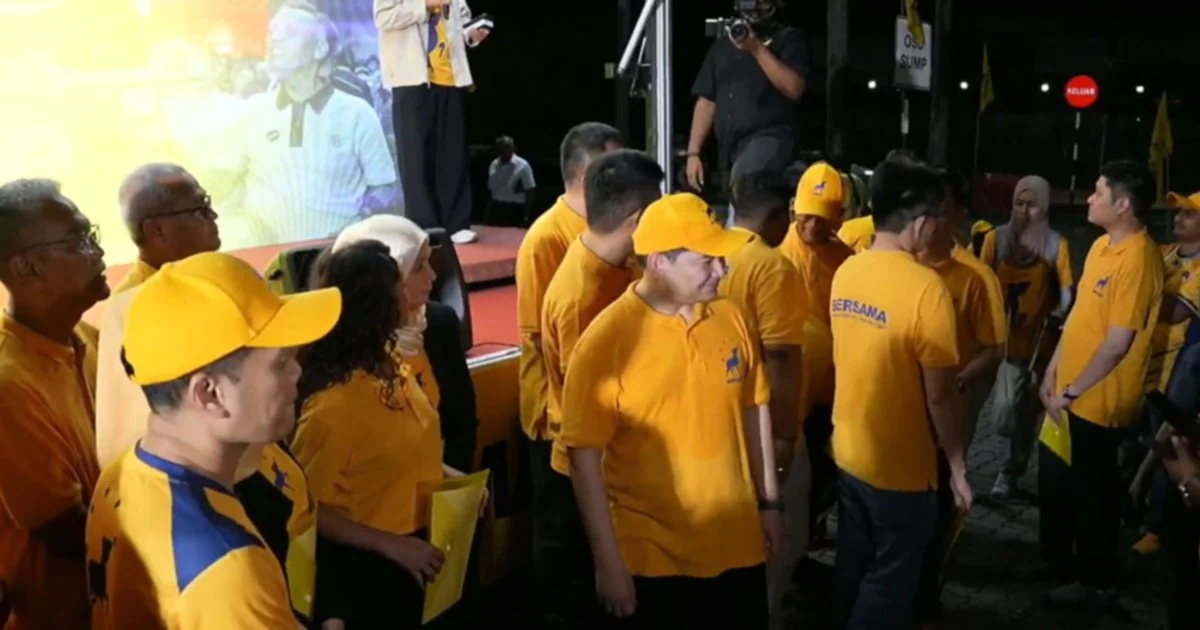
Parti Bersama Malaysia has stepped into the competitive landscape of Johor electoral politics by unveiling a slate of 15 candidates for the 16th state election, signalling the party's ambition to capture ground support across diverse socioeconomic segments. The announcement, made on Friday in Kuala Lumpur, marks a significant moment for the relatively newer political outfit as it prepares to contest in one of Malaysia's most politically volatile states. The candidate selection reflects a deliberate strategy to represent working-class and entrepreneurial voices alongside the more traditional political class, a positioning that underscores Bersama's positioning as an alternative voice in Malaysian politics.
The composition of the candidate list reveals intentional diversity in background and professional experience. Among the 15 contenders are an entrepreneur with private sector credentials, a supermarket manager with retail sector knowledge, and a logistics worker whose experience reflects the concerns of Malaysia's transport and supply chain workforce. This breadth of representation differs markedly from conventional candidate selections, where legal, corporate, and political backgrounds typically dominate state election lineups. The inclusion of a logistics worker is particularly notable given that transport and distribution workers have gained heightened visibility in recent years due to discussions around gig economy conditions and delivery sector regulation in Malaysia.
For Malaysian voters in Johor, the strategic composition of the candidate slate carries implications for how political parties are increasingly packaging themselves to appeal beyond entrenched support bases. Johor has long been a stronghold of competition between Barisan Nasional and opposition-aligned coalitions, with smaller parties finding it challenging to establish meaningful traction. Bersama's entry with a deliberately diverse team suggests the party recognises that electoral success increasingly depends on demonstrating genuine connections to multiple voter constituencies rather than relying on traditional power brokers and establishment networks.
The supermarket manager candidate carries particular relevance given Malaysia's substantial retail sector workforce and the cost-of-living concerns that have defined political discourse in recent electoral cycles. Retail management requires hands-on understanding of supply chain pressures, pricing dynamics, and consumer behaviour, experiences that could resonate with voters concerned about inflation and commercial operations. Similarly, the entrepreneur's inclusion speaks to a constituency of small and medium-sized business owners who navigate regulatory frameworks and market competition in ways that national-level political discourse often overlooks.
Bersama's timing in announcing the Johor lineup reflects broader patterns in Malaysian political reorganisation. The party has been positioning itself as an alternative within a fragmented political landscape, competing with established parties and newer entrants for voter attention. The deliberate projection of working-class and entrepreneurial representation attempts to distinguish Bersama from competitors perceived as elitist or disconnected from ordinary Malaysians' daily economic realities.
The logistics worker's candidacy deserves particular scrutiny given Malaysia's evolving relationship with its gig and informal economy. This sector has grown dramatically with e-commerce expansion, yet workers often lack formal representation in political discourse. By fielding a logistics candidate, Bersama signals attention to this constituency at a moment when delivery and transport workers have become increasingly vocal about working conditions, payment structures, and occupational safety.
Johor's electoral significance extends beyond the state level, carrying implications for national politics and coalition-building dynamics. State election results often serve as barometers for broader political sentiment, influencing perceptions of momentum and coalition viability heading toward federal elections. Any meaningful performance by Bersama in Johor could either signal genuine voter appetite for alternative political voices or demonstrate the challenges facing newer parties in penetrating established electoral strongholds.
The selection process itself reflects evolving thinking within Malaysian political parties about candidate recruitment. Rather than exclusively sourcing candidates from existing party structures or professional networks, Bersama appears to have conducted targeted identification across economic sectors. This approach acknowledges that effective political representation increasingly requires demonstrating personal stake in the constituencies and issues voters care about most urgently.
For the business community, the entrepreneur candidate may signal receptiveness to private sector concerns within Bersama's policy framework. For workers in retail and logistics, the inclusion of candidates with direct sectoral experience offers at least symbolic representation in electoral contests previously dominated by figures from legal, corporate, and administrative backgrounds.
The 15-candidate announcement represents Bersama's most substantial electoral effort to date in Johor, committing meaningful organisational resources toward competitive positioning in the state. Success or failure will likely influence the party's strategy in other states and shape perceptions of whether Bersama can evolve from a political novelty into a genuine force capable of mobilising sustained voter support across economic classes.
The upcoming Johor election will test whether Bersama's diversified candidate approach resonates with voters seeking alternatives to established political brands, or whether traditional party machinery and entrenched coalition dynamics continue to dominate electoral outcomes. The results will carry ripple effects throughout Malaysian politics, influencing how other parties approach candidate selection and how seriously voters regard newer entrants to the political arena.

