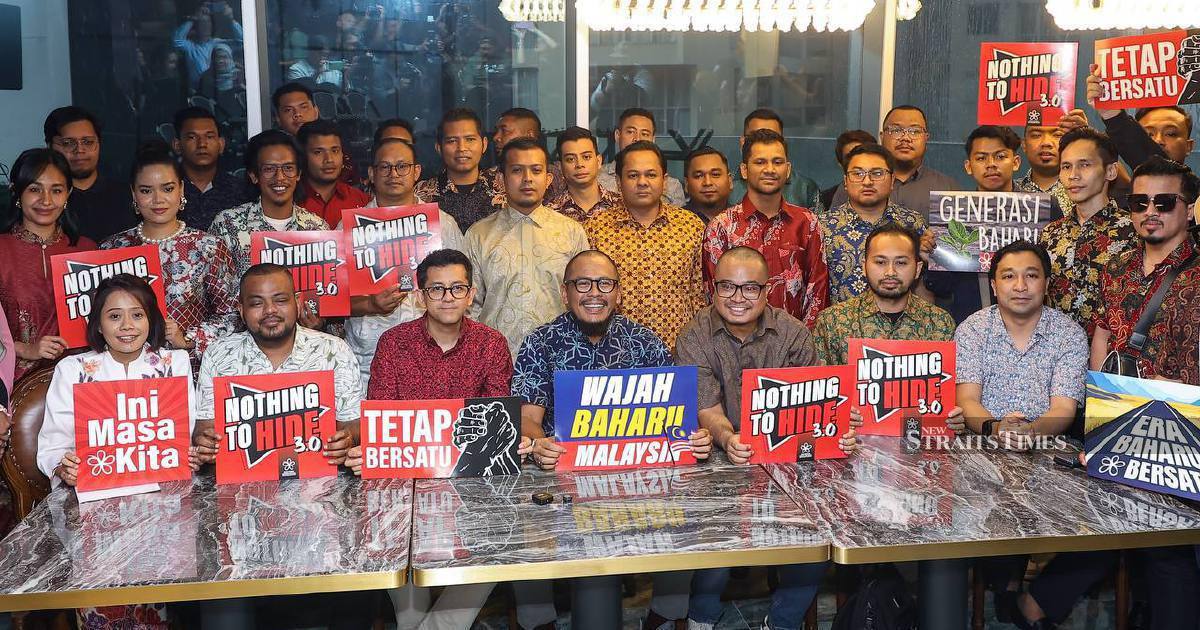
Kota Siputeh assemblyman Mohd Ashraf Mustaqim Abdul Munir has expressed confidence that the strained relationship between Bersatu and PAS can be restored, describing the recent friction between the two key pillars of the Perikatan Nasional coalition as a temporary domestic spat rather than an irreparable rupture. Speaking with an eye toward reconciliation, Ashraf drew a telling analogy comparing the two parties to a married couple navigating through conflict while maintaining their shared household, suggesting that underlying bonds remain intact despite surface-level disagreements.
The remarks come at a delicate juncture for Malaysia's coalition politics, where the stability of PN—comprising both Bersatu and PAS—carries significant weight in the nation's parliamentary equilibrium. The alliance has weathered multiple tensions in recent months, raising questions about the sustainability of their partnership and the broader implications for federal and state-level governance. Ashraf's intervention, measured and conciliatory in tone, represents an attempt to frame the current discord as resolvable rather than terminal, signalling that leadership within Bersatu remains committed to dialogue and restoration of trust.
The Bersatu politician's optimism stands in contrast to the public displays of friction that have characterised PN dynamics over recent weeks. Both parties have occasionally traded criticism through media channels and parliamentary statements, with disagreements surfacing over policy priorities, ministerial appointments, and the direction of the coalition's political agenda. For Malaysian observers tracking coalition stability, such episodes have become increasingly familiar as the various blocs navigate the complexities of shared governance while maintaining distinct party identities and supporter bases.
The metaphor deployed by Ashraf carries particular resonance in the Malaysian political context, where coalitions have historically required substantial tolerance for internal friction and periodic realignment. Unlike single-party governments, coalition arrangements demand continuous negotiation, compromise, and the ability to absorb disagreements without triggering wholesale dissolution. The marriage analogy implicitly acknowledges that some level of tension is normal and survivable within such structures, provided both parties retain commitment to the broader relationship and shared interests.
PAS, the larger of the two parties in terms of electoral strength and organisational reach, brings substantial grassroots mobilisation capacity and significant representation in key states, particularly in the peninsula's northern and east coast regions. Bersatu, while smaller in membership, carries influence through its leadership base and parliamentary presence, positioning itself as a bridge between different segments of Malaysia's political landscape. Their continued alliance, despite friction, allows PN to maintain a competitive position relative to the Pakatan Harapan coalition and other political forces.
The sustainability of the PN partnership matters considerably for Malaysia's broader political trajectory. Should the alliance fracture significantly, the resulting realignment could reshape parliamentary mathematics and potentially trigger government instability or fresh elections. This prospect weighs heavily on both parties' strategic calculations, creating incentives for management of disputes and maintenance of the coalition framework even when philosophical or tactical disagreements emerge. Ashraf's intervention can be read as part of this broader effort to signal commitment to preservation of the alliance infrastructure.
Background tensions within PN have periodically surfaced around questions of religious policy direction, particularly where PAS's more conservative Islamic governance positions have occasionally diverged from Bersatu's positioning. Additionally, competition for state-level dominance and ministerial portfolios has occasionally fuelled internal friction, reflecting the reality that coalition partners simultaneously cooperate and compete depending on political context and constituency interests. Managing these cross-cutting pressures requires skilled leadership and a shared sense that the benefits of alliance outweigh the costs of maintaining partnership discipline.
For Southeast Asian observers, the PN experience offers insights into the mechanics of coalition politics in plural democracies, where ideological diversity and electoral arithmetic frequently necessitate uncomfortable partnerships. Malaysia's coalition-dependent politics creates structural incentives for both formation and dissolution of alliances, with outcomes depending heavily on whether leadership prioritises short-term advantage or long-term relationship stability. Ashraf's remarks suggest at least some faction within Bersatu believes the latter approach currently serves the party's interests more effectively.
The diplomatic language employed by the Kota Siputeh assemblyman—positioning current difficulties as temporary and manageable—also serves a signalling function to coalition members, supporters, and the broader political market. Statements expressing optimism about reconciliation can help prevent negative market sentiment from damaging the alliance's credibility or triggering defections among parliamentarians or party members who might worry about their electoral prospects under a fractured coalition. In Malaysia's fluid political environment, such symbolic reassurances constitute an important form of coalition maintenance.
Looking forward, the actual trajectory of PN relations will depend less on optimistic rhetoric than on concrete outcomes regarding policy priorities, resource allocation, and decision-making processes within the coalition structure. Both Bersatu and PAS face pressures from their respective supporter bases, with expectations that party interests receive adequate protection within the partnership framework. Whether mechanisms exist to resolve future disputes without escalating public confrontation remains an open question, one that will shape not only PN's stability but potentially the broader configuration of Malaysian politics in coming years.

