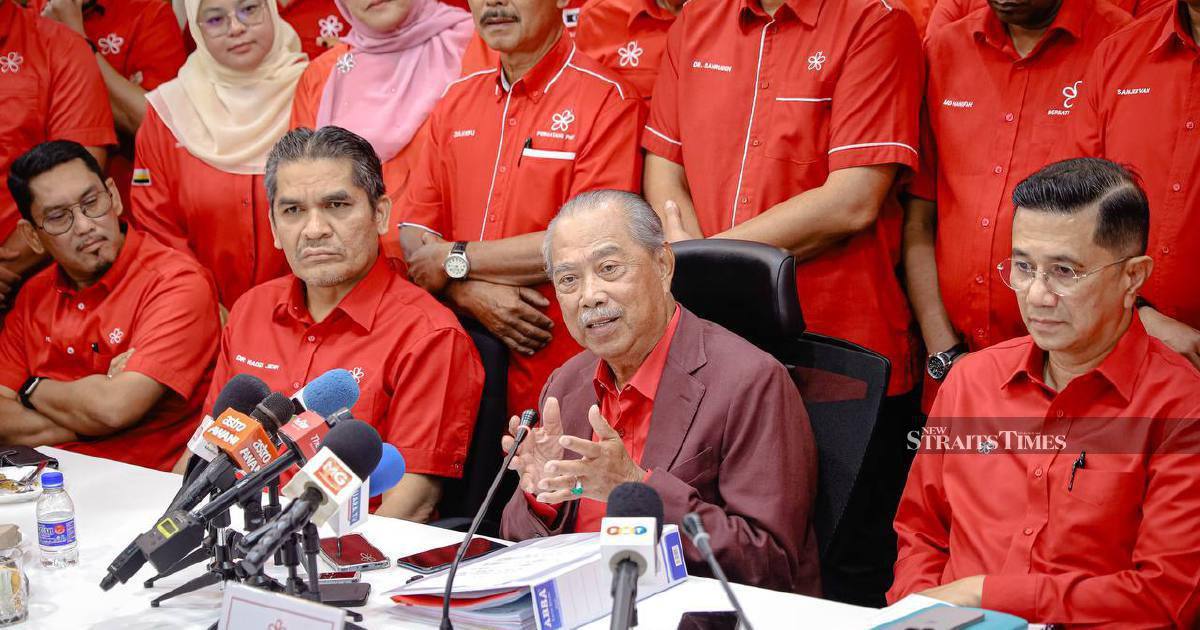
Parti Pribumi Bersatu Malaysia finds itself at a potential crossroads with coalition partner Pas ahead of what could become a fragmented electoral contest in Johor. Party president Tan Sri Muhyiddin Yassin has publicly declared Bersatu's willingness to contest seats directly against Pas should negotiations over constituency allocation break down, a statement that underscores simmering tensions between the two organisations despite their partnership within the federal government.
The prospect of intra-coalition clashes in Johor represents a significant test of the stability that has characterised the ruling Perikatan Nasional alliance since the 2023 general election. While Pas and Bersatu have operated within the same governmental framework, their organisational interests and voter bases do not entirely overlap, creating inherent friction points whenever electoral seat distributions come under discussion. Muhyiddin's explicit acknowledgement that his party is prepared for such a scenario suggests Bersatu is adopting a defensive posture, ensuring it maintains sufficient representation in one of Malaysia's most economically significant states.
Johor holds particular strategic importance for both parties for distinct reasons. As a state with substantial electoral weight and a history of competitive politics, control over parliamentary and state assembly seats directly influences each party's bargaining power within broader coalition arrangements. For Bersatu, which has faced internal challenges and shifting electoral fortunes since its formation, Johor represents an essential territory where maintaining visibility and securing legislative representation becomes crucial for long-term party sustainability and relevance within federal politics.
The statement also reflects the broader complexity of managing coalition politics in Malaysia's current environment. Unlike monolithic political movements, multi-party alliances require constant negotiation and compromise on practical matters such as candidate selection and seat allocation. When disagreements emerge—as they inevitably do in competitive political systems—public declarations of readiness to contest independently serve multiple purposes: they signal resolve in negotiations, reassure party members and supporters that leadership will defend organisational interests, and establish clear positions before formal bargaining begins.
Pas, as an established political force with deep roots in several states including Johor, approaches such negotiations from a position of significant organisational strength. The party's grassroots network and strong performance in previous elections give it considerable leverage in discussions about seat allocation. Bersatu's willingness to challenge Pas directly if necessary indicates it is not approaching negotiations from a position of weakness but rather as a coalition partner asserting its right to meaningful representation.
For Malaysian voters in Johor, any such contest between Bersatu and Pas would introduce an additional layer of complexity to electoral calculations. Both parties occupy positions on the conservative side of Malaysia's political spectrum, though their bases have different characteristics and motivations. A direct clash could fragment votes in ways that might benefit opposition candidates or alter the expected outcome in particular constituencies, adding unpredictability to what might otherwise be more straightforward contests.
The timing of Muhyiddin's statement also matters in the context of broader coalition management. Public positioning ahead of serious negotiations can either facilitate or complicate subsequent discussions depending on how skilfully it is managed. If interpreted as flexibility with firmness, it might actually improve Bersatu's negotiating position by demonstrating credibility. However, if perceived as confrontational, it could harden Pas's approach and make compromise more difficult to achieve.
Regional implications extend beyond Johor itself. The relationship between Bersatu and Pas in electoral contests elsewhere across Malaysia may be influenced by how their negotiations in Johor conclude. Other states where both parties have presence might look to Johor's outcome as an indicator of how the broader coalition will manage similar seat-allocation challenges, creating a domino effect that could reshape electoral arrangements across multiple constituencies.
For the Perikatan Nasional coalition's stability and effectiveness in government, managing these internal competitions constructively becomes essential. While some degree of internal competition is natural and potentially healthy in maintaining party vitality, excessive friction could undermine the coalition's overall effectiveness and coherence. Coalition leadership will need to balance allowing individual parties to assert their interests while maintaining sufficient unity to govern effectively and present a credible front to voters.
Muhyiddin's statement ultimately reflects a calculated political position—neither capitulation nor outright aggression, but rather a clear indication that Bersatu will defend its interests vigorously if negotiations fail to produce an acceptable outcome. This posture is likely to characterise the actual seat-sharing discussions that will follow, suggesting protracted negotiations aimed at finding an equilibrium that gives both parties sufficient representation to justify their continued participation in the coalition arrangement.