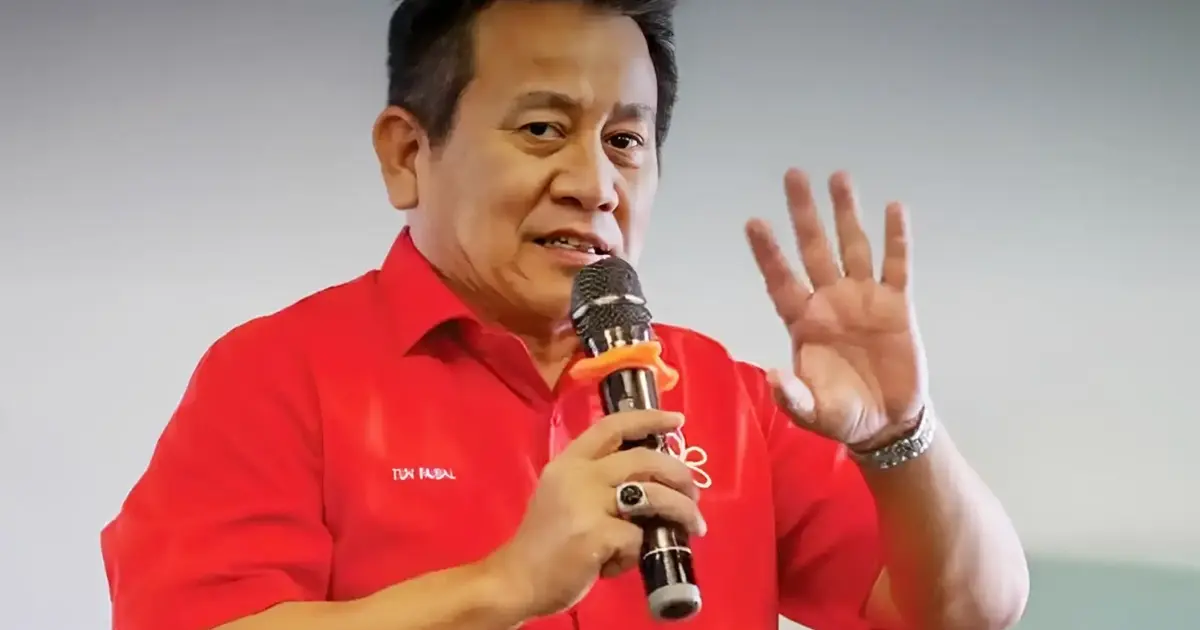
Bersatu president Tun Faisal Ismail Aziz has cast serious doubts on the operational logic of Perikatan Nasional's emergency Supreme Council meeting, contending that the gathering serves little practical purpose if its outcomes require subsequent ratification from member parties. The critique signals potential friction within the opposition coalition as it grapples with internal governance structures during a politically volatile period.
The question of institutional hierarchy and decision-making autonomy within Perikatan Nasional—comprising Bersatu, PAS, and Gerakan—has long been a source of tension. The Supreme Council, intended as the coalition's highest governing body, is supposed to wield definitive authority on major matters affecting the alliance. Yet if its resolutions must then be submitted to individual party leaderships for approval before implementation, the practical authority of the Supreme Council becomes substantially diminished, effectively rendering it an advisory rather than executive body.
Tun Faisal's observation reflects a broader challenge facing multi-party coalitions in Malaysian politics. The coalition structure theoretically balances unity with party autonomy, but in practice creates layers of bureaucratic decision-making that can slow responses to urgent political situations. An emergency meeting suggests circumstances demanding swift, authoritative action—scenarios that are typically incompatible with sequential approval processes across multiple party hierarchies. This structural contradiction is now emerging as a visible weakness in Perikatan Nasional's operational framework.
For Bersatu, which joined Perikatan Nasional relatively recently and has experienced considerable internal upheaval since its formation, questions about power distribution within the coalition are particularly pertinent. As the party navigates its post-Mahathir identity and consolidates its position within the broader opposition movement, clarity on decision-making mechanisms becomes crucial. Without it, Bersatu risks being sidelined or compelled to accept determinations made primarily by larger coalition partners like PAS.
The Supreme Council typically comprises representatives from each component party, allowing for negotiated consensus-building at a senior level. However, this inclusive approach, while theoretically democratic, can create gridlock when rapid decisions are required. The requirement for subsequent party-level approval essentially creates a dual-approval system where the Council's decisions serve as preliminary consensus rather than final determinations. This arrangement fundamentally alters the Supreme Council's role and authority within the coalition's governance hierarchy.
From a strategic perspective, Tun Faisal's remarks suggest Bersatu is advocating for a clearer delineation of powers and responsibilities within Perikatan Nasional. By highlighting the inefficiency of the current arrangement, the party is implicitly arguing for either genuine Supreme Council autonomy or transparent acknowledgment that coalition governance operates through consensus rather than hierarchical command. This distinction carries implications for how quickly Perikatan Nasional can respond to evolving political circumstances, particularly in an environment where parliamentary dynamics frequently shift.
The coalition's internal structure becomes especially relevant when considering its role as the primary opposition bloc in parliament. Opposition coalitions require agility to respond to government initiatives, capitalize on political opportunities, and coordinate member party activities. A governance structure that requires multiple rounds of approval processes can handicap these capabilities, potentially allowing the government to outmanoeuvre a slow-moving opposition apparatus. Tun Faisal's criticism implicitly recognizes this tactical disadvantage.
Peikatan Nasional's composition—combining PAS's organisational strength and conservative base, Gerakan's administrative experience, and Bersatu's reformist positioning—creates inherent tensions that governance structures must accommodate. Without clearly delineated decision-making authority, these parties risk either deadlock or domination by the largest member, neither scenario conducive to sustainable coalition cohesion. Tun Faisal's intervention suggests Bersatu is resisting a trajectory toward subordination within the coalition.
The emergency meeting context adds urgency to these structural questions. Emergency sessions typically address time-sensitive matters where delays can undermine effectiveness or allow opponents to seize initiative. If Perikatan Nasional convenes such a meeting but lacks the operational capacity to implement rapid decisions, it projects weakness and suggests the coalition is more comfortable with symbolic gestures than substantive action. This perception carries electoral and parliamentary consequences, influencing how voters and legislators assess opposition viability.
Looking forward, Tun Faisal's public questioning may catalyse broader reforms to Perikatan Nasional's governance architecture. The coalition might clarify that Supreme Council decisions are binding on component parties, or alternatively establish tiered decision-making systems where urgent matters are handled through expedited approval procedures. Without such clarifications, ongoing ambiguity about institutional authority could generate recurring friction between coalition partners, particularly when significant political decisions require coordinated responses.
For Malaysian observers and opposition supporters, the implications of this governance debate extend beyond internal coalition management. How effectively Perikatan Nasional can organise itself, make decisions, and execute strategy directly influences the opposition's capacity to present itself as a credible alternative government. Institutional inefficiency that slows decision-making or muddies accountability ultimately affects public confidence in the coalition's readiness for national leadership responsibilities.

