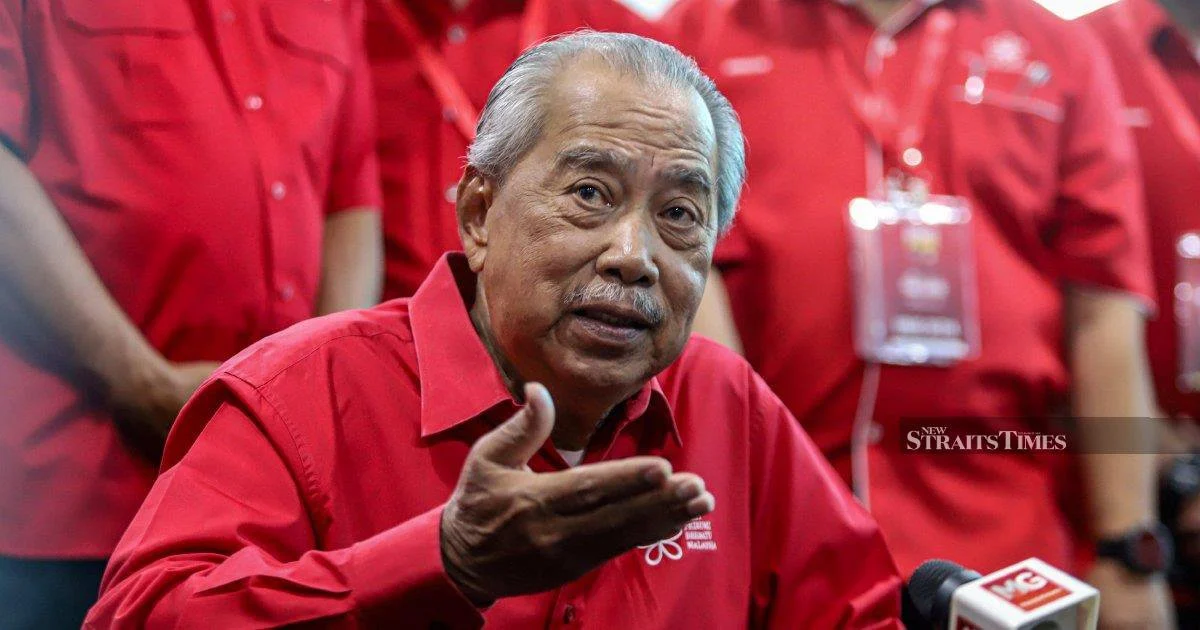
Tan Sri Muhyiddin Yassin, the president of Bersatu, has moved to dispel lingering doubts about his party's future political direction by publicly reaffirming that Bersatu will remain a permanent fixture within the Perikatan Nasional coalition. The declaration comes amid a backdrop of continuous speculation regarding the stability and trajectory of the opposition alliance, particularly in light of shifting political dynamics and factional pressures affecting various member parties.
The Perikatan Nasional coalition, which emerged as a significant political force following the 2022 general elections, has served as the primary vehicle for opposition politics in Malaysia over the past two years. The alliance brings together several parties with distinct ideological orientations and regional strongholds, creating a complex balancing act that requires careful management from senior leadership. Muhyiddin's explicit commitment to the coalition's permanence represents an attempt to project stability and unity during a period when external observers and political analysts have questioned whether the coalition structure can withstand emerging pressures.
The timing of Muhyiddin's statement carries particular significance given the periodic flurries of coalition-related news that have swept through Malaysian political circles. Such speculation typically intensifies during periods of legislative activity, by-elections, or when internal disagreements surface between coalition partners. By publicly staking out his position with unambiguous language about Bersatu's future, Muhyiddin appears intent on preventing his party from becoming a focus point for further coalition destabilisation narratives in the media and among political observers.
Bersatu, which Muhyiddin founded after leaving the United Malays National Organisation (UMNO), has been a central component of the PN architecture despite its relatively modest parliamentary representation compared to larger coalition members. The party's positioning as a bridge between different political factions and its geographic presence across multiple states have given it outsized influence within PN's decision-making structures. This influence derives partly from its ability to serve as a stabilising force through the calculated deployment of its parliamentary members and the strategic choices its senior leadership makes regarding coalition dynamics.
The Perikatan Nasional coalition itself comprises diverse political entities with sometimes competing interests and philosophical orientations. Beyond Bersatu, the alliance includes PAS (Parti Islam Se-Malaysia), which controls several state governments and holds substantial parliamentary representation, along with smaller component parties that have varying degrees of political leverage. Managing these disparate interests while maintaining coalition coherence represents an ongoing challenge that affects the viability of the broader opposition bloc.
Muhyiddin's unequivocal commitment to permanent PN membership stands in contrast to the more ambiguous positions occasionally adopted by representatives of other coalition members when facing internal or external pressures. Such definitional clarity from the Bersatu president may signal to other coalition constituents and to the broader electorate that at least one major component party views the alliance as a durable, long-term political arrangement rather than a transitional formation subject to rapid realignment depending on electoral outcomes or tactical opportunities.
From a Malaysian political perspective, the health of the opposition coalition carries implications for the broader competitive environment and for voters seeking political alternatives to the governing Barisan Nasional and PKR-led Pakatan Harapan configurations. A fragmented, internally unstable opposition structure can benefit the ruling coalition by limiting effective political competition, whilst a cohesive alternative alliance can provide meaningful electoral contests and policy contrasts for voters to evaluate. Muhyiddin's rhetorical commitment to PN's durability thus extends beyond internal party management into the realm of national political dynamics.
The Perikatan Nasional alliance has already demonstrated its capacity to mobilise significant electoral support in certain constituencies and state-level contests, though its overall performance has been uneven across different regions. The coalition's ability to present itself as a credible, stable alternative government depends substantially on public perception of its internal coherence and its members' genuine commitment to collaborative governance arrangements. Persistent speculation about potential departures by major component parties naturally undermines such perception building.
Looking forward, Muhyiddin's reaffirmation of Bersatu's coalition loyalty may seek to establish a baseline expectation that can guide intra-alliance discussions and prevent minor disagreements from mushrooming into existential questions about the PN structure itself. Political commentators have noted that Malaysian coalition arrangements often suffer from recurrent rounds of speculation about defections or realignments that drain political energy and distract from substantive policy engagement. By establishing clear declarative positions from major parties, coalition leaders can potentially reduce such distracting speculation and focus collective efforts on more productive political activities.
For Southeast Asian observers monitoring Malaysian politics, the evolution of the Perikatan Nasional coalition carries relevance insofar as it reflects broader regional patterns concerning opposition coalition building and the structural challenges facing multi-party alliances operating within electoral democracies. The coalition's trajectory may offer insights into how diverse political groupings can sustain collaborative relationships across different ideological spectrums and organisational cultures, though the Malaysian experience also demonstrates the persistent fragility of such arrangements when subjected to electoral pressures or shifting constituent interests.

