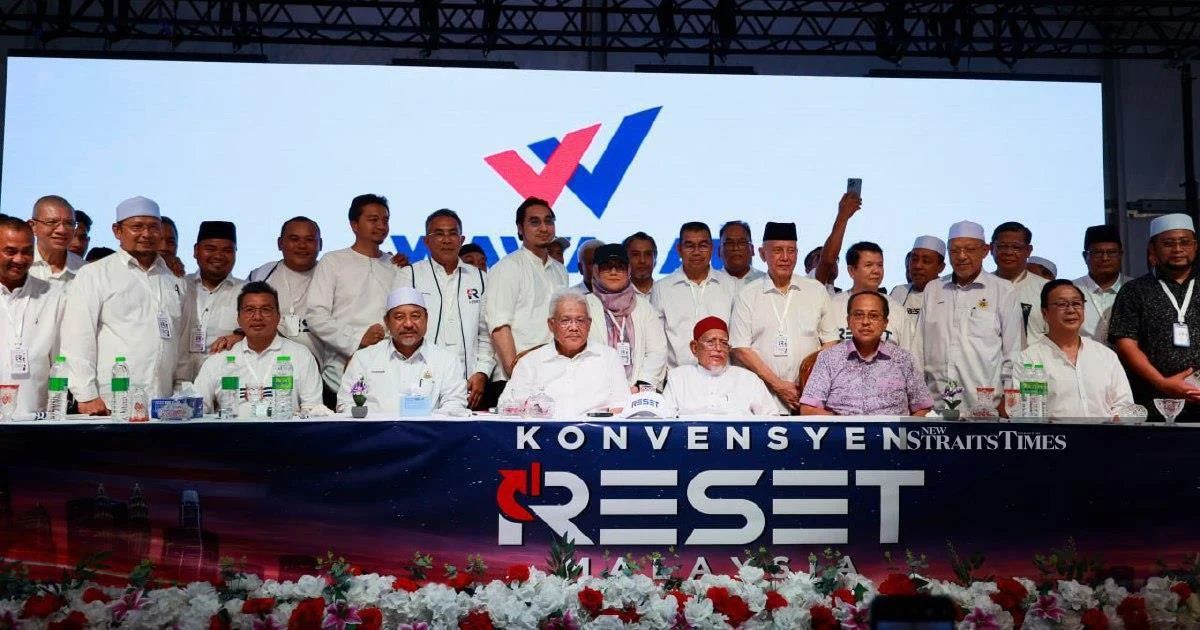
Perikatan Nasional (PN) found itself engulfed in internal turmoil when Bersatu openly questioned the constitutional validity of an emergency Supreme Council gathering convened Monday evening, casting doubt on decisions reached during that hastily-arranged session and threatening the stability of Malaysia's primary opposition coalition.
The dispute centres on procedural matters governing how PN conducts high-level decision-making, with Bersatu asserting that the Monday night meeting did not follow established protocols for calling emergency assemblies of the coalition's Supreme Council. The party's concerns suggest deeper anxieties about the manner in which the coalition leadership handled the controversial matter of extending membership to Wawasan, a political entity whose admission has triggered considerable internal debate and factional tensions.
Bersatu's willingness to publicly challenge the legitimacy of the proceedings marks an unusually direct confrontation within PN's hierarchy, indicating that consensus-building among the coalition's constituent parties has fractured on this particular issue. Rather than accepting the Supreme Council's decision as fait accompli, Bersatu chose to escalate the matter by questioning the very foundation upon which that decision rested—the meeting's legal standing and procedural compliance.
The admission of Wawasan into PN represents a significant structural shift for the coalition, which has positioned itself as an alternative political force since its formation. The organisation's entry could reshape the coalition's internal balance of power, alter its policy direction, and potentially influence how PN negotiates with other political entities at both federal and state levels. Such consequential decisions typically warrant extensive deliberation and consensus-building among member parties, making the emergency nature of Monday's meeting particularly contentious.
PN chairman's decision to convene an emergency meeting rather than scheduling a regular gathering suggests urgency regarding Wawasan's admission, but this very haste appears to have triggered Bersatu's objections. The party may fear that expedited processes bypassed adequate consultation mechanisms, potentially marginalising the input of coalition members who hold reservations about expanding PN's membership. For Bersatu specifically, rapid unilateral decision-making by the chairman could represent an erosion of collective governance principles that theoretically guide coalition operations.
The timing and manner of this procedural challenge carry implications beyond internal coalition mechanics. To observers tracking Malaysian politics, the dispute reveals fault lines within PN that extend beyond surface-level unity. As an opposition coalition still rebuilding its institutional structures and decision-making frameworks following previous leadership transitions and internal conflicts, PN's inability to manage consensus on significant matters raises questions about its operational maturity and readiness to govern should electoral opportunities arise.
Bersatu's public stance also reflects the party's own political positioning within the coalition hierarchy. As a founding component of PN and historically one of its stronger voices, Bersatu may view the chairman's approach as overreaching, particularly if the party was inadequately consulted before the emergency meeting was called. For a coalition supposedly built on partnership principles among equals, such unilateral executive action threatens the legitimacy of collective decision-making and invites challenge from parties concerned about their diminishing influence.
The question of Wawasan's admission itself carries broader significance for Malaysian politics. Any entity joining PN would bring its own political base, electoral calculations, and policy preferences into the coalition equation. For Bersatu members and supporters, understanding precisely what Wawasan represents politically and what its membership terms entail becomes crucial before they can responsibly support such expansion. A rushed decision-making process understandably provokes anxiety about whether adequate due diligence was performed.
Moving forward, PN faces a critical test of its internal governance mechanisms. The coalition must either demonstrate that the Monday meeting complied with all procedural requirements, thereby legitimising its decisions, or acknowledge procedural irregularities and revisit the Wawasan decision through proper channels. Either path carries risks: the former risks appearing dismissive of Bersatu's concerns, potentially emboldening further dissent, while the latter admits fault and potentially undermines the chairman's authority and decision-making credibility.
For Malaysian observers and political analysts, this internal coalition dispute underscores a persistent challenge facing opposition blocs in the country: maintaining cohesion while respecting constituent party autonomy. PN's struggle to manage this balance while expanding its membership suggests that the coalition remains a work in progress, still establishing institutional norms and decision-making precedents that command universal respect among member parties. How PN resolves this current controversy will significantly influence whether the coalition can present itself as a credible, professionally-managed alternative government-in-waiting.
The Bersatu challenge also demonstrates that despite outward displays of unity, Malaysian political coalitions continue operating with considerable internal friction and disagreement over fundamental matters. This reality shapes not only how opposition blocs function internally but also influences their electoral competitiveness and public perception among voters evaluating which political formations deserve their support in future contests.

