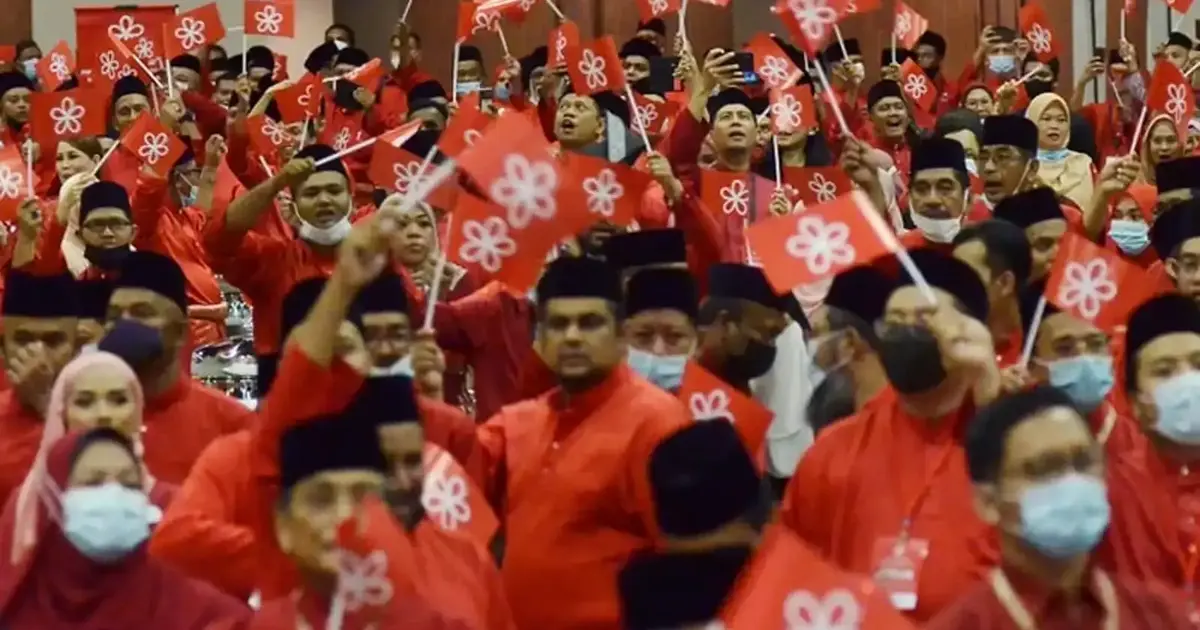
The fragile stability of Malaysia's Perikatan Nasional coalition faces fresh strain as a prominent PAS leader questions whether Bersatu can meaningfully sustain its membership within the bloc. Iskandar Abdul Samad, who serves as treasurer of PAS, has suggested that the political circumstances surrounding Bersatu's continued participation in PN have become increasingly untenable, reflecting deepening tensions within the opposition alliance that could reshape Malaysia's political landscape in coming months.
The warning from PAS signals underlying friction within the PN framework, an alliance formed primarily to counter the government but which has struggled to maintain cohesion amid competing interests and leadership ambitions. Bersatu's positioning within the coalition has long been complicated by its relationship with former Prime Minister Mahathir Mohamad and subsequent leadership transitions, making it a perennially contentious element within PN's internal dynamics. Iskandar's comments suggest that these longstanding tensions have now reached a critical threshold where the party's continued effective operation within the alliance structure itself is being questioned by key stakeholders.
For Malaysian observers tracking opposition politics, this development carries significant implications. A meaningful fracture within PN could alter the balance of parliamentary seats and shift calculations regarding viable government coalitions. Bersatu, despite its modest parliamentary presence, has served as a bridge between different ideological currents within PN, particularly between PAS's Islamic-oriented agenda and other components. Should Bersatu's position become truly indefensible within the framework, the alliance faces a choice between reconfiguring its internal structure or accepting the departure of a member that has attempted, however imperfectly, to bridge theological and secular divides.
The broader context matters significantly here. PN itself emerged from a complex realignment following the 2020 Sheraton Move, and has spent the intervening years struggling to present a unified electoral platform while managing internal disputes over governance philosophy, Islamic policy, and distribution of party positions. Bersatu's presence, though sometimes awkward, has provided a degree of flexibility that helps the coalition appeal to constituencies beyond PAS's traditional base. Loss of that bridging function could push PN toward a narrower ideological positioning that might strengthen PAS's dominance but alienate voters in urban and ethnically diverse areas.
Iskandar's statement also reflects practical operational challenges that Bersatu faces within the coalition structure. Coalition parties typically divide parliamentary constituencies, ministerial portfolios, and party positions according to agreed frameworks, but Bersatu's smaller size relative to PAS has meant it frequently negotiates from a position of relative weakness. These asymmetries become especially pronounced during parliamentary votes on critical matters, where Bersatu's limited numbers become apparent compared to PAS's significantly larger delegation. Such dynamics create constant friction over resource allocation and decision-making authority.
The timing of Iskandar's comments deserves attention as well. Malaysian politics currently operates under a government formed by Anwar Ibrahim's PKR-led coalition, with PN serving as the principal opposition force. The opposition's internal cohesion directly affects its credibility as a potential alternative government, making public disputes about membership viability particularly damaging to overall opposition standing. Statements questioning a coalition member's continued functionality inevitably prompt speculation about potential departures or realignment, which destabilizes the entire opposition platform.
Historically, Malaysian political coalitions have shown capacity to absorb internal tensions through informal compromise and deliberate obscuring of disagreements, yet public declarations of indefensibility suggest that such traditional conflict-management approaches may be breaking down. When senior figures begin openly questioning whether a coalition partner can viably function, the softer diplomatic language that typically masks internal friction disappears, signaling that disputes have moved beyond the range of standard negotiation.
For Bersatu specifically, the trajectory has been particularly unstable. The party emerged from a split within UMNO, initially served as a platform for Mahathir's political comeback, faced internal turbulence around his leadership, and subsequently navigated uncertain positioning across multiple government configurations. Each transition has tested party cohesion and raised questions about whether Bersatu possesses the deep organizational roots necessary to survive in Malaysian politics' highly competitive environment. Iskandar's warning implicitly suggests that the current political configuration has become incompatible with Bersatu's effective operation, potentially accelerating internal discussions about the party's strategic future.
The viability question also extends to PN's electoral prospects. Malaysian voters have demonstrated clear preferences for which coalitions they will support, and PN's opposition status depends partly on presenting a unified, coherent alternative. Internal dissolution or public disputes about member viability undermine that presentation and diminish the coalition's appeal to swing voters. Constituencies that might consider opposition alternatives become less confident about the stability and direction of a coalition openly questioning its own composition.
PAS leadership faces a delicate balance as the coalition's dominant component. Appearing too aggressive toward Bersatu risks accelerating departure and potentially driving that party toward rapprochement with the government, which would further weaken PN. Yet failing to address what senior figures perceive as indefensible positioning invites accusations of weak coalition management and allows problems to fester. These contradictory pressures suggest that resolution, whether through accommodation or separation, may become unavoidable in the coming political cycle.
Looking forward, observers should monitor whether other PN component leaders amplify Iskandar's assessment or seek to downplay it through reassuring statements about coalition unity. The trajectory of these responses will indicate whether Bersatu's position constitutes a manageable internal dispute or whether it reflects fundamental incompatibilities that PN structures cannot absorb. For Malaysian politics more broadly, the health of the opposition coalition remains consequential for competitive governance and political alternation, making PN's internal dynamics worthy of sustained analytical attention.