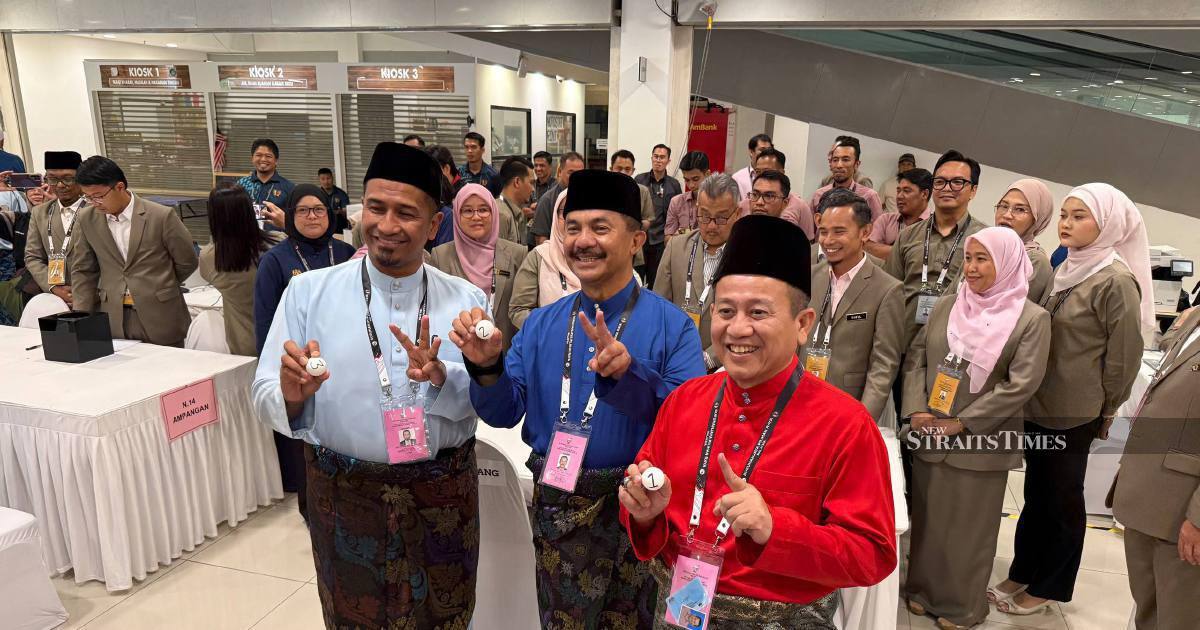
Bersatu's decision to field candidates independently across 24 constituencies in the Negri Sembilan state election represents a significant departure from the state's established two-coalition political landscape, positioning the party as a viable third force for voters seeking alternatives to both Pakatan Harapan and the Barisan Nasional-Perikatan Nasional alliance.
The party's strategy breaks from the prevailing consensus-building approach that has dominated Malaysian state politics, where larger coalitions typically absorb smaller parties to maximise seat distribution and coalition strength. By contesting solo, Bersatu signals confidence in its grassroots support while simultaneously challenging the binary choice presented to Negri Sembilan voters, who would otherwise be limited to selecting between two pre-arranged political blocs.
This electoral gambit carries substantial implications for how Malay-Muslim voters in Negri Sembilan will cast their ballots, particularly among constituencies where Bersatu's traditional base remains strong. The party's independent candidacy allows it to appeal directly to voters who may feel inadequately represented within the larger coalition frameworks, emphasising party identity and governance vision over compromise positions negotiated at coalition level.
Negri Sembilan's electorate, with its mixed urban and rural demographics, presents a diverse voting landscape where neither established coalition holds overwhelming dominance. The state's 36 state assembly seats encompass areas ranging from the industrial Kuala Pilah region to more traditional agricultural constituencies, creating pockets where smaller parties can realistically gain traction. Bersatu's decision to contest all but 12 seats suggests the party believes it can mobilise sufficient support across this varied terrain to achieve meaningful representation.
The broader regional context adds weight to Bersatu's independent positioning. Across Southeast Asia, voters increasingly demonstrate willingness to break from traditional party alignments and coalition constraints, seeking candidates and parties that prioritise local governance issues over national coalition deals. In this respect, Bersatu's strategy aligns with emerging voter preferences for more direct representation rather than pre-negotiated coalition outcomes where smaller parties typically receive fewer attractive seats.
From a strategic perspective, Bersatu's independence also protects the party from potential coalition collapse scenarios. By remaining unaligned, Bersatu avoids the risk of being blamed for coalition underperformance while maintaining flexibility to negotiate support arrangements after election results become clear. This approach grants the party greater negotiating leverage in post-election discussions, as neither PH nor BN-PN could claim to have incorporated Bersatu into their original electoral strategy.
The competitive dynamics this creates within Negri Sembilan deserve careful observation, as three-way contests often produce unpredictable outcomes in Malaysian electoral history. Constituencies where Bersatu, PH, and BN-PN candidates compete directly could witness significantly reduced winning margins, with the party securing the most votes in a given seat potentially failing to secure the seat itself if votes split too evenly among three contenders. This fragmentation factor makes predicting the election outcome considerably more complex than conventional two-coalition analyses would suggest.
For Malaysian political observers, Bersatu's Negri Sembilan strategy raises questions about whether this represents a broader repositioning by the party or a state-specific tactic. If successful—measured not merely in terms of seats won but in vote share and voter response—the approach could inspire similar independent campaigns in future state elections, gradually eroding the two-coalition dominance that has characterised Malaysian electoral politics since 2020.
The precedent is also significant for Bersatu's relationship with coalition partners. Bersatu's participation in Perikatan Nasional has generally been defined by coalition discipline, yet this independent campaign suggests the party is willing to pursue its own electoral interests even when coalition partners contest the same constituencies. Such moves test the bonds of coalition loyalty while demonstrating that even allied parties maintain distinct political identities and voter bases that sometimes require protection through competitive strategies.
Voter response in Negri Sembilan will ultimately determine whether independent contestation represents a viable path forward for mid-sized Malaysian parties or merely a temporary electoral experiment. Should Bersatu achieve unexpected success—securing seats or impressively large vote shares in multiple constituencies—other parties may calculate that coalition constraints excessively limit their electoral potential and growth opportunities. Conversely, poor performance would suggest Malaysian voters continue preferring established coalition frameworks and the relative stability such arrangements provide.
The election outcome will thus carry implications extending far beyond Negri Sembilan's state governance. It tests fundamental assumptions about Malaysian voter preferences, coalition politics, and whether smaller parties can effectively establish independent identities in an electoral environment increasingly dominated by larger organised coalitions. Bersatu's willingness to challenge these assumptions, whatever the electoral consequences, marks a notable moment in the evolution of Malaysian state-level politics.

