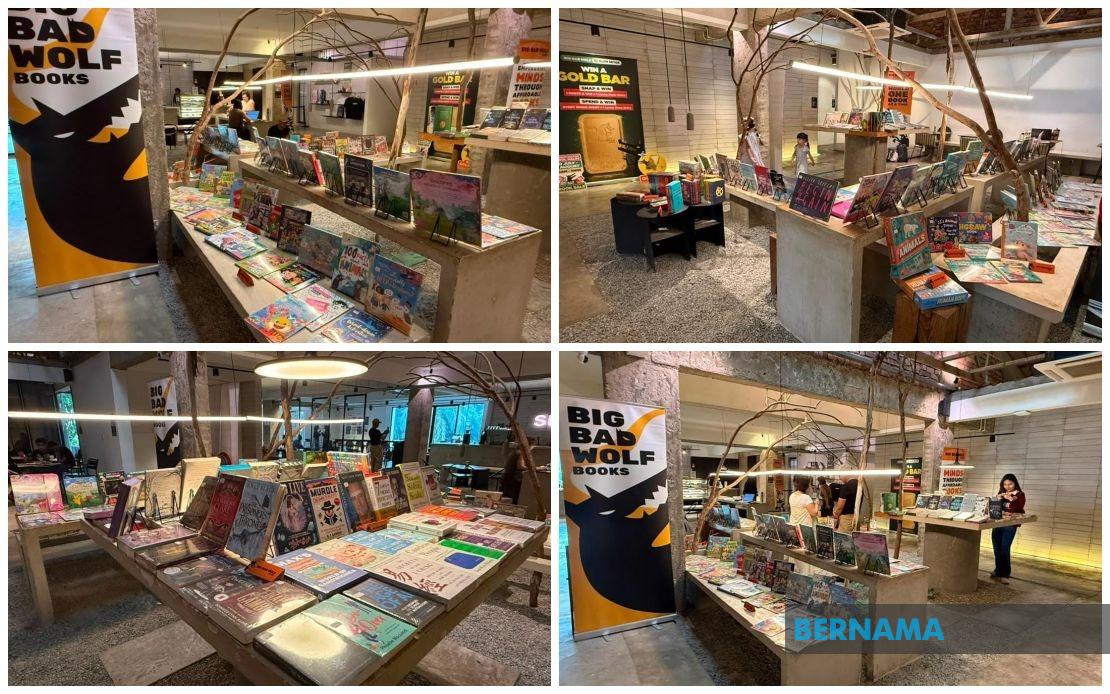
Malaysia's premier book fair, Big Bad Wolf Books (BBW), is set to make a significant return to Kedah's capital this month, bringing with it an expanded catalogue designed to deepen the state's engagement with reading and learning. The event will unfold across an 11-day run beginning July 30 at the Sultan Abdul Halim Stadium in Alor Setar, operating from 10 am to 10 pm daily with free entry for all visitors.
According to BBW representative Chloe Lim Sooi Yee, the fair carries a deliberate mission beyond commercial success—to cultivate a sustained reading culture within Kedah's community while supporting broader educational and cultural development. The organisers have curated the event with particular attention to accessibility, a core principle that has defined BBW's brand across its operations throughout the region. This approach reflects a growing recognition among stakeholders that widespread literacy and reading habits are foundational to economic mobility and social progress across Malaysia.
Central to this year's Alor Setar edition is a substantial refresh of inventory, with 40 per cent of titles being new to the fair's offerings. This deliberate rotation strategy serves multiple objectives: it prevents repetition for returning visitors, introduces previously unavailable works to the Kedah market, and signals to publishers and distributors that regional book fairs merit serious investment in their catalogues. The fair will showcase approximately one million titles in total, representing an enormous selection that caters to readers of all ages and interests.
A particularly notable addition is the debut appearance of the "Little Ummah" collection of Islamic children's books, marking the first time this specialised range will be available at a Big Bad Wolf event in Kedah. This strategic inclusion underscores the fair's commitment to reflecting the values and interests of its host community, where Islam plays a central role in cultural identity and family life. By bringing titles specifically designed for Muslim children, BBW demonstrates how major retail events can be tailored to serve diverse demographic needs without losing their universal appeal.
Pricing strategy remains central to BBW's value proposition. Entry-level books begin at just RM3, with discounts reaching as high as 95 per cent on selected titles. This aggressive pricing model, coupled with free admission to the fair itself, removes traditional barriers to book access and reflects a philosophy that reading should not be a luxury commodity but rather a basic cultural good available to all socioeconomic strata. For students and educators, the incentive deepens further—those purchasing at least three books receive an additional five per cent discount, acknowledging the educational sector's crucial role in normalising reading habits among younger populations.
Educational institutions across Alor Setar will receive targeted outreach from BBW organisers, with plans to visit schools and promote the fair directly to student bodies and teaching staff. This grassroots engagement strategy recognises that schools serve as key nodes in reading culture networks and that early enthusiasm from young readers can create momentum within families and communities. The school-focused discount structure also signals that BBW views educational institutions not as competitors but as partners in the larger mission of advancing literacy.
To enhance visitor appeal beyond the books themselves, BBW is running promotional campaigns featuring tangible rewards. The "spend and win" and "snap and win" initiatives offer participants the chance to claim 10-gramme gold bars, creating an element of gamification that can drive foot traffic and engagement, particularly among younger demographics who might otherwise overlook a book fair in favour of other recreational activities. These campaigns leverage social media and in-store participation mechanisms that align with contemporary consumer behaviour patterns.
The organisers are projecting 35,000 visitors across the 11-day period—a target that, if achieved, would represent significant penetration within Alor Setar's local population while also drawing day-trippers from surrounding districts and interstate visitors. Such projections are grounded in BBW's extensive track record across Malaysia and the broader Southeast Asian region, where the brand has consistently demonstrated the capacity to generate substantial footfall at regional locations.
From a broader perspective, Big Bad Wolf Books' continued investment in tier-two Malaysian cities like Alor Setar reflects evolving retail and cultural trends. Rather than concentrating exclusively on Kuala Lumpur and other major metropolitan centres, the fair is actively decentralising book culture, sending a powerful signal that regional markets merit serious commercial and cultural attention. This expansion strategy benefits not only local readers but also independent and smaller publishers who gain access to new market segments through partnership with established fairs.
The Kedah iteration also arrives at a moment when Malaysia's publishing and retail sectors are navigating post-pandemic normalisation and shifting consumer preferences. Physical book fairs offer experiential retail that online platforms cannot fully replicate—the tactile experience of browsing, the discovery of unexpected titles, and the community atmosphere all create value that justifies the fair's continued prominence in Malaysian cultural life. For Alor Setar residents, the event represents both a cultural celebration and a practical opportunity to access literature at unprecedented savings.

