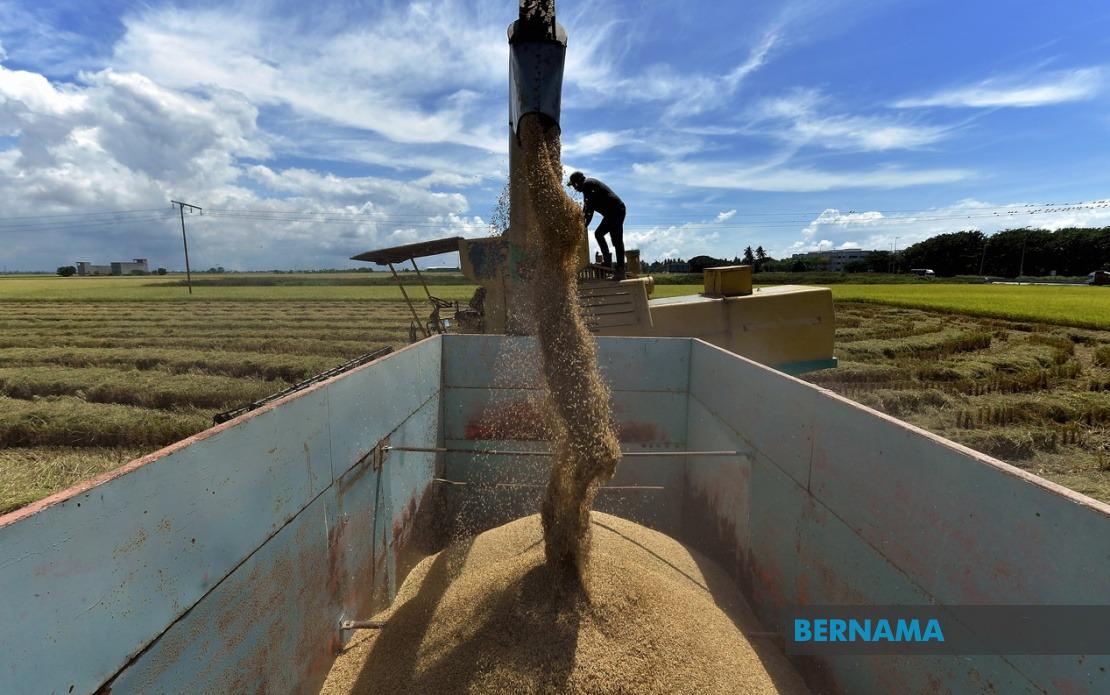
Parliament has moved forward with landmark amendments to Malaysia's rice sector governance framework, with the Control of Padi and Rice Act (Amendment) Bill 2026 receiving its first reading in the Dewan Rakyat on July 7. Agriculture and Food Security Minister Datuk Seri Mohamad Sabu oversaw the tabling of the legislation, which aims to place greater regulatory authority in government hands while introducing substantially steeper consequences for non-compliance. The minister confirmed that parliamentary proceedings would accelerate, with both second and third readings scheduled within the current sitting, indicating the government's determination to move the reform through the legislative process swiftly.
The proposed amendments contain five major structural changes to Act 522, fundamentally reshaping how Malaysia manages padi procurement and rice distribution. The legislation reflects growing concern about food security stability and market manipulation in a sector critical to national self-sufficiency and consumer welfare. By strengthening enforcement mechanisms and expanding ministerial discretion, policymakers appear intent on preventing price volatility and protecting both producers and consumers from exploitative market practices that have periodically disrupted the agricultural supply chain.
Penalty structures face the most dramatic overhaul under the bill's provisions. For individuals found breaching the act—including directors and officers of corporate bodies—maximum fines would leap from RM15,000 to RM250,000 for first offences, with second and subsequent violations carrying penalties of RM500,000 rather than the current RM25,000 cap. This represents a sixteenfold increase in baseline penalties, reflecting lawmakers' determination to deter violations through economic deterrence. For corporate entities, the escalation proves even more severe: maximum penalties would climb from RM25,000 to RM500,000 for initial breaches, and from RM50,000 to RM1 million for repeated offences—a twentyfold increase demonstrating zero tolerance for institutional non-compliance.
Equally significant is the expanded authority granted to government officials in price management. The bill empowers the director general, subject to ministerial approval, to impose maximum or minimum price ceilings for both padi and processed rice. This mechanism addresses a longstanding challenge in Malaysian agricultural policy: the inability to prevent sudden price swings that destabilize farm incomes and household budgets. By providing legal foundation for active price regulation, the amendment removes ambiguity that previously constrained officials' intervention capacity during market disruptions or speculative trading episodes.
Ministerial powers also expand considerably under the revised framework. The legislation enables the Minister to prescribe rice grades and establish price controls specific to each grade category, a more nuanced approach than blanket pricing mechanisms. This graduated pricing structure acknowledges market realities: premium rice varieties command different market dynamics than standard grades, and price controls must reflect these distinctions to avoid unintended consequences like supply shortages or black markets. The minister gains authority to regulate or prohibit padi and rice movement, tools essential for managing distribution during supply constraints or preventing hoarding that artificially inflates prices.
Regulatory capacity receives significant enhancement through new delegation mechanisms embedded in the amendment. The Minister obtains authority to issue regulations governing padi purchaser licensing—a critical control point ensuring only qualified buyers operate in the supply chain. This licensing requirement potentially reduces information asymmetries and prevents exploitation of smallholder farmers by unscrupulous middlemen. The same regulatory framework extends to movement controls, enabling officials to prevent unauthorized trade flows that might drain production from deficit regions or fuel speculative accumulation.
Penalty provisions for regulatory violations also receive attention, with the bill allowing regulations to prescribe specific offences and corresponding punishments not detailed in the principal act itself. Officials gain flexibility to address emerging market abuses through regulatory updates rather than waiting for parliamentary amendment cycles. Maximum fines under regulations are capped at RM15,000 with possible imprisonment up to six months, balancing deterrent capacity against proportionality concerns.
For Malaysian stakeholders across the agricultural supply chain, these amendments signal a decisive policy shift toward interventionist market management. Farmers may benefit from price floor protections preventing distressed selling during gluts, though questions persist about whether price ceilings might discourage production investment. Millers and traders face tighter compliance obligations and substantially elevated financial exposure, potentially pushing marginal operators from the market. Consumers could see greater price stability, though this depends on implementation effectiveness and ministerial willingness to enforce controls fairly without favoring particular constituencies.
The legislation's timing reflects broader Southeast Asian concerns about food security amid climate variability and supply chain disruptions. Malaysia, dependent on rice imports to supplement domestic production, uses domestic pricing controls strategically to maintain affordability for lower-income households while providing farm income support. Stronger enforcement mechanisms help government maintain this delicate balance against market forces threatening to destabilize either producer or consumer interests. The amendments position Malaysia among regional peers like Thailand and Vietnam in recognizing rice's strategic importance and the necessity for proactive regulatory frameworks rather than passive market reliance.
Implementation success depends critically on bureaucratic capacity and political will to apply penalties consistently and fairly. Previous agricultural regulations have sometimes suffered from selective enforcement or capture by special interests. The substantial penalty increases suggest policymakers expect improved compliance through deterrence, yet organizational capacity to investigate violations and prosecute offenders remains uncertain. Training and resource allocation for enforcement agencies will determine whether the amendment achieves its intended food security objectives or becomes a largely symbolic gesture.
The accelerated parliamentary timetable reflects government determination to enact these reforms without extended debate, possibly indicating confidence in cross-party support or urgency driven by recent market incidents. Passing through second and third readings in a single sitting is procedurally efficient but leaves limited time for stakeholder consultation or amendment consideration. This approach prioritizes speed and administrative convenience, potentially at the cost of refined legislative design that might emerge from more deliberative processes.
Broader implications extend beyond rice markets to Malaysia's agricultural modernization trajectory. By strengthening government intervention capacity, the amendments acknowledge that market liberalization alone cannot achieve food security objectives in developing economies facing structural constraints. The measures suggest renewed confidence in state capacity to manage strategic sectors effectively—a notable policy reassertion after decades of liberalization emphasis. Whether this regulatory activism succeeds depends on technical competence, corruption prevention, and willingness to adapt rules based on implementation experience rather than rigid ideological commitments.

