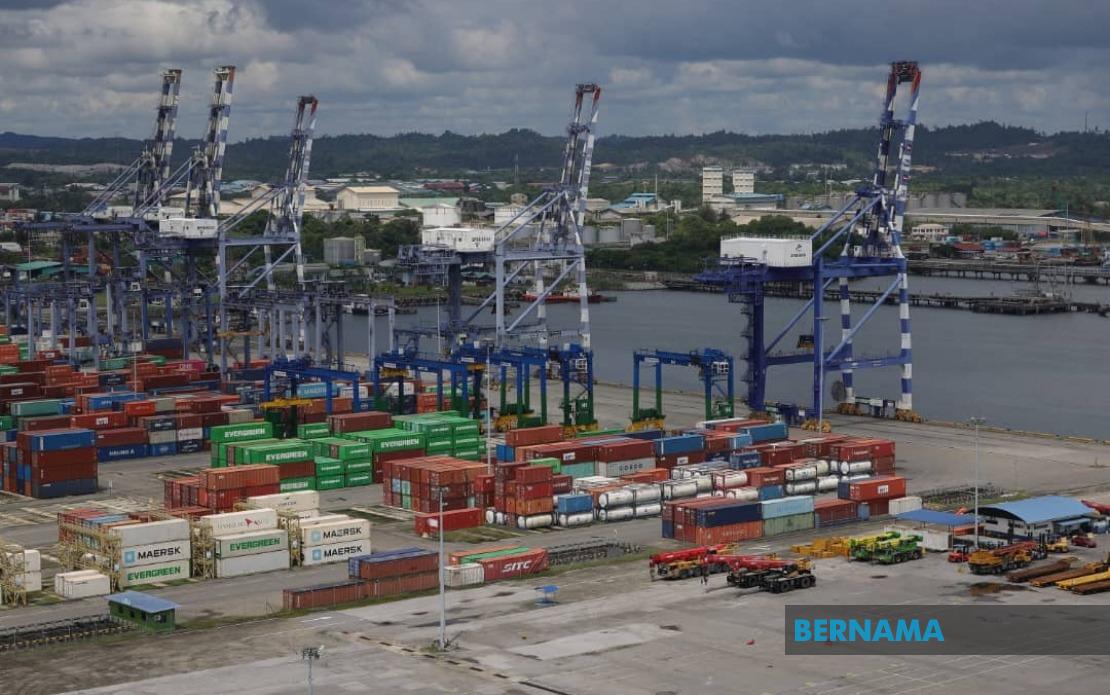
The handover of regulatory control over Bintulu Port to the Sarawak state government signals a watershed moment in the implementation of the Malaysia Agreement 1963, officials said, with the transition formalised at a ceremony in Bintulu attended by Prime Minister Datuk Seri Anwar Ibrahim and Sarawak Premier Tan Sri Abang Johari Tun Openg. This development represents one of the most tangible outcomes of MA63 negotiations in recent years, translating constitutional principles into concrete administrative action that directly affects a critical national infrastructure asset.
For Sarawak, the transfer carries profound symbolic and practical weight. Minister in the Prime Minister's Department (Sabah and Sarawak) Datuk Mustapha Sakmud framed the port handover as recognition of Sarawak's status as a founding partner in the Malaysian federation, underscoring that the transition reflects the constitutional safeguards enshrined in MA63 rather than representing any diminishment of federal authority. The shift in designation from a federal port to a state port grants Sarawak direct governance over one of Malaysia's most economically significant maritime facilities, placing decisions about port development, operations and strategic direction firmly in state hands.
The port itself has evolved substantially from its origins as primarily a liquefied natural gas export terminal. Today, Bintulu functions as a diversified industrial complex handling multiple commodity streams, with the government now positioning it as a catalyst for broader economic transformation. The facility's transformation into an integrated industrial, logistics and green energy centre reflects shifting global investment patterns and Malaysia's imperative to capture opportunities in the energy transition. By consolidating control over this infrastructure, Sarawak gains the autonomy to pursue a long-term vision aligned with regional comparative advantages.
Sarawak's renewable energy endowment provides the foundation for this strategic pivot. The state possesses substantial hydroelectric generation capacity, with potential for further development, positioning it distinctly advantageously for attracting multinational corporations undertaking global supply chain decarbonisation. Investors seeking low-carbon manufacturing and processing operations increasingly require reliable access to renewable power at scale, and Sarawak's geography and existing hydroelectric infrastructure satisfy this requirement in ways few other Southeast Asian locations can match. Bintulu's deep-water port facilities, combined with proximity to clean energy sources, create a compelling proposition for high-value industrial projects requiring both maritime logistics and substantial electricity inputs.
This combination of assets positions Sarawak to compete for investment in green hydrogen production, aluminium smelting powered by renewable energy, advanced manufacturing for clean technology sectors, and other resource-intensive industries undergoing environmental transition. The port handover thus becomes instrumental to broader economic strategy, removing regulatory bottlenecks that might have constrained state-level initiative and enabling faster decision-making cycles than federal coordination would permit. Malaysian policymakers perceive such competitive positioning as essential, given the regional competition for clean energy manufacturing clusters emerging across Southeast Asia.
The framing of the port transfer also merits examination from a federalism perspective. Mustapha emphasised that MA63 implementation constitutes a strengthening rather than a weakening of Malaysian federalism, insisting that recognising Sabah and Sarawak's founding partner status enhances national unity. This rhetorical positioning carries significance for constituencies both within and outside these two states. In peninsular Malaysia, where federal dominance in economic policy has remained largely unchallenged, the port handover tests whether federalism can accommodate more decentralised economic governance without triggering backlash from interests accustomed to national-level control.
Within Sarawak itself, the port transfer responds to longstanding grievances regarding economic autonomy and resource sovereignty. The state's natural resources—forests, hydroelectric potential, and energy reserves—have historically been managed within federal frameworks that Sarawak representatives argue did not adequately reflect state interests. Successive MA63 implementation discussions have centred on rebalancing this dynamic. The Bintulu Port handover thus carries political significance beyond administrative restructuring, validating arguments by state leaders that MA63 protections remain substantive and that partnership between Sarawak and the federal government can yield tangible outcomes.
For Malaysia's broader economic narrative, the development reflects recognition that economic growth increasingly depends on regionally differentiated strategies rather than uniform national approaches. Peninsular Malaysia, Sarawak and Sabah possess distinct comparative advantages, demographic profiles and development trajectories. A federation capable of accommodating different economic models—whether Sarawak's green energy orientation or other states' different specialisations—potentially optimises national economic performance. The port handover exemplifies this logic in practice, delegating authority to the level of government closest to particular infrastructure and capable of integrating it into coherent regional development vision.
Operationally, the transition requires careful coordination between state authorities assuming new responsibilities and federal agencies previously managing port operations. Malaysia's experience with previous devolution exercises demonstrates both the potential and challenges of such restructuring. Ensuring continuity of port operations, maintaining regulatory standards and optimising efficiency during administrative transition demand meticulous planning. The ceremony's attendance by the Prime Minister signals federal commitment to facilitating the transition, yet implementation success will ultimately depend on institutional capacity within Sarawak's government apparatus.
The broader MA63 agenda remains incomplete, with numerous provisions awaiting implementation. However, the port transfer represents progress on one of the more complex issues—securing genuine economic autonomy for the founding partners while preserving national integration. How successfully Sarawak leverages this new authority to attract investment and develop Bintulu as a regional clean energy hub will substantially influence the credibility of future MA63 negotiations and the overall trajectory of Malaysia's federal architecture. In this sense, the apparent administrative transfer carries implications extending well beyond Bintulu's boundaries.

