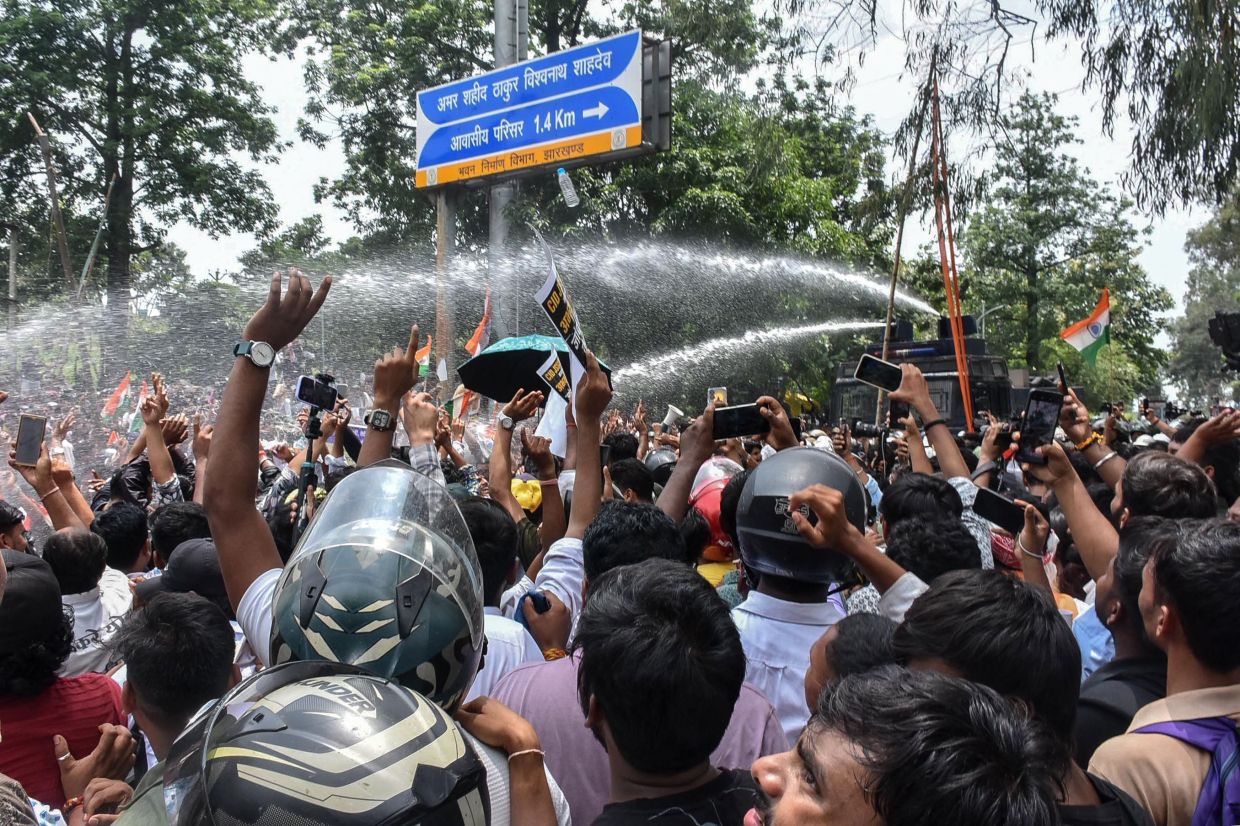
Prime Minister Narendra Modi's Bharatiya Janata Party has levelled accusations of inconsistency against the Cockroach Janta Party, a pressure group that spearheaded high-profile student agitations in the national capital last month. The BJP contends that the group's relatively subdued response to ongoing unrest in Jharkhand, an eastern mineral-rich state governed by opposition-aligned parties, exposes what it characterises as a narrow political agenda centred on destabilising the Modi administration rather than advancing genuine student welfare.
BJP spokesperson Keya Ghosh articulated this line of criticism on Tuesday, August 11, describing the Cockroach Janta Party as a "mute spectator" to the Jharkhand demonstrations. She argued that the group's swift exit from public agitation once Education Minister Dharmendra Pradhan resigned—the principal demand from the New Delhi campaign—revealed the underlying motivation behind their earlier mobilisation efforts. The timing and selective nature of the group's activism, she suggested, pointed to orchestrated political theatre rather than sustained commitment to student interests across India.
The Cockroach Janta Party emerged as a satirical grassroots movement before evolving into a recognised pressure group capable of mobilising thousands. Its central role in last month's New Delhi protests, which focused on irregularities in national examination administration, culminated in the resignation of Pradhan and generated significant political pressure on the Modi government. The group successfully captured national attention, generated media coverage, and demonstrated organisational capacity to sustain large-scale demonstrations over several weeks.
However, the trajectory differs markedly in Jharkhand, where students have demanded a federal investigation into alleged recruitment examination irregularities at the state level. Unlike the New Delhi protests, which coalesced around a single national policy issue and a specific minister's tenure, the Jharkhand agitation addresses state-level governance concerns. The demonstrations have been primarily driven by local students and job-seeking citizens rather than nationally-coordinated activist networks, though the Cockroach Janta Party has publicly endorsed their demands and voiced support for their cause.
The group's founder, Abhijeet Dipke, condemned police tactics employed during Monday's confrontations, characterising the use of water cannons and batons against student demonstrators as "cruel and inhuman." This statement signals the organisation's continued engagement with the broader student movement narrative, even if its operational footprint in Jharkhand remains comparatively modest. Some party members involved in the Delhi campaigns have subsequently travelled to Jharkhand to participate in local demonstrations, with national coordinator Akshay Shinde confirming their presence and commitment to remaining at protest sites until student demands are fully addressed.
The political dimensions of the Jharkhand situation differ substantially from the New Delhi context. Jharkhand operates under a coalition government led by the Jharkhand Mukti Morcha, which includes the Indian National Congress, positioning the BJP as the principal opposition force in state assembly proceedings. This configuration creates competing incentives for various political actors. The BJP, while nationally dominant through Modi's government, occupies a subordinate position in Jharkhand state politics, enabling it to critique the ruling coalition's handling of student grievances from an opposition perspective.
Keya Ghosh exploited this dynamic by pointedly questioning the absence of Congress leader Rahul Gandhi from protest sites in both locations. She suggested that Gandhi's non-appearance in Jharkhand, particularly given his presence as opposition leader in the state assembly, indicated partisan calculation rather than principled commitment to student advocacy. By contrast, Gandhi has issued statements condemning the use of force against demonstrating students in both contexts and advocated for dialogue-based solutions, though he has not physically visited either protest location.
The broader context involves fundamental questions about the nature and sustainability of grassroots activism in India's complex political landscape. The Cockroach Janta Party's emergence as a potent force reflects widespread student frustration with examination administration, employment prospects, and perceived governance failures. Yet the uneven geographical and temporal distribution of the group's activism raises legitimate questions about resource allocation, strategic priorities, and whether sustained commitment to student welfare or opportunistic political engagement better explains their actions.
For Malaysian observers and Southeast Asian analysts, the Indian situation illuminates dynamics relevant across the region. Student activism, examination integrity, and youth employment concerns affect multiple nations, and the intersection of grassroots movements with established political parties presents recurring strategic dilemmas. Groups must navigate tensions between maintaining independence and organisational autonomy versus wielding meaningful political influence that often requires alignment with larger political forces.
The Jharkhand protests also underscore how federal systems create multiple tiers of political contestation. When grievances address state-level governance, national-level activist organisations may struggle to mobilise the same energy and resources they deploy for central government concerns. This geographical and administrative complexity shapes the feasibility and sustainability of coordinated protest movements across India's diverse regions.
The BJP's criticism, while politically motivated, identifies a genuine pattern in protest activism: the tendency for movements to demobilise once immediate demands are met or symbolic victories achieved, regardless of whether broader systemic issues persist. The Education Minister's resignation satisfied the New Delhi protesters and the Cockroach Janta Party's core objective, enabling both the government and the movement to claim vindication. Subsequent movements addressing similar issues in different contexts operate without the same momentum or organisational infrastructure that sustained earlier campaigns.
Looking forward, the tension between the Modi government and opposition forces over student activism reflects deeper anxieties about political legitimacy and governance effectiveness. Both the ruling BJP and opposition Congress face scrutiny regarding their commitment to addressing youth concerns. The Cockroach Janta Party's trajectory will influence how future student movements navigate political engagement, with implications extending beyond India's borders to other democracies managing competing demands from organised civil society actors and institutional political parties.

