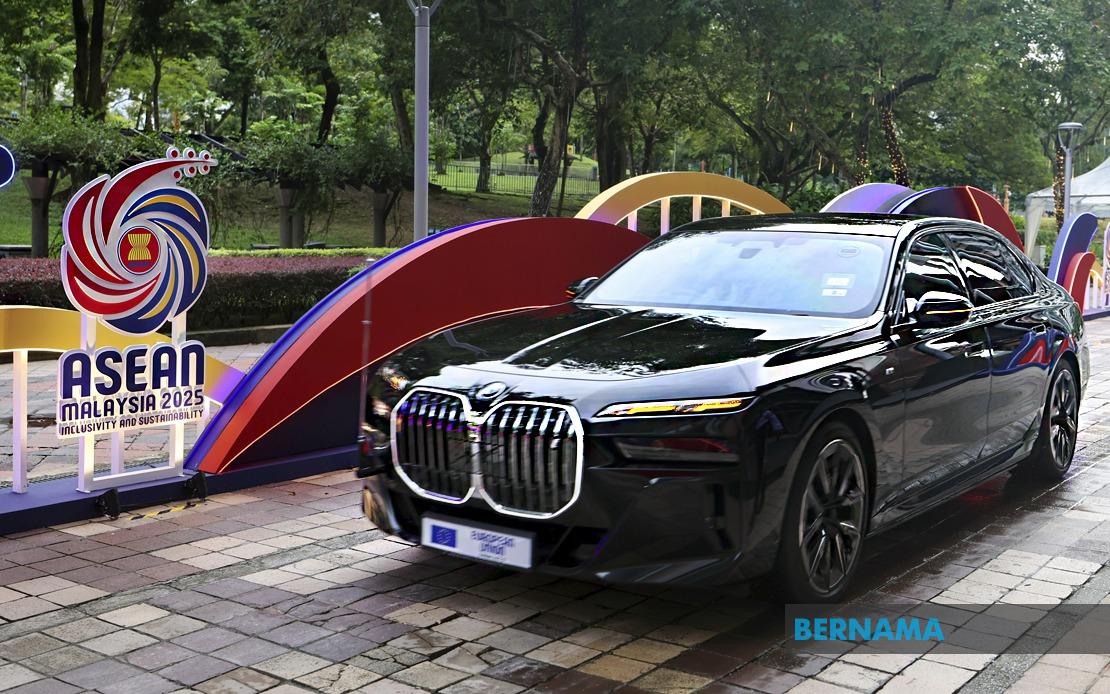
The Prime Minister's Department (JPM) has moved to dispel mounting speculation on social media by confirming that a luxury BMW vehicle in recent use by Prime Minister Datuk Seri Anwar Ibrahim is not a newly purchased official car but rather an established asset within the government's fleet. The clarification comes as the Ceremonial and International Conference Secretariat Division (BIUPA), which oversees the vehicle, sought to address circulating allegations regarding the legitimacy and ownership status of the automobile.
According to the official statement released through JPM's social media channels, the BMW falls under BIUPA's purview and has been designated specifically to support Malaysia's international logistics operations. The vehicle's primary function centres on facilitating the reception and movement of foreign dignitaries visiting the country at the highest level, particularly when heads of state and government officials with presidential or prime ministerial rank require transportation during their stays in Malaysia.
The government's justification for maintaining such a specialized asset hinges on stringent international security requirements and established diplomatic protocols. When foreign leaders of equivalent status visit Malaysia, their protection details typically demand vehicles equipped with advanced security features that exceed standard government vehicle specifications. These requirements are not arbitrary but stem from internationally recognised security standards that apply to heads of state and government movements across diplomatic channels.
The BMW in question has been engineered with security specifications designed to counter a comprehensive range of contemporary threats. The vehicle's protective systems address traditional ballistic risks from conventional firearms, as well as explosive devices that might be deployed through various methods. Notably, the security architecture also accounts for emerging threats including unmanned drone attacks, reflecting the evolving nature of security challenges facing high-ranking officials in the modern environment.
According to JPM's statement, the temporary deployment of the vehicle for Prime Minister Anwar Ibrahim's use was not a unilateral decision but rather an outcome of security assessments conducted by the Royal Malaysian Police (PDRM). The police force's professional evaluation determined that the additional protective capabilities provided by this specialized vehicle were warranted for the Prime Minister's current security posture. This temporary arrangement underscores that the decision emerged from professional security protocols rather than executive preference or administrative convenience.
The underlying reason for the temporary shift in vehicles relates to routine maintenance requirements affecting the Prime Minister's primary official transportation. The vehicle ordinarily designated for the Prime Minister's exclusive use, which was previously gifted by the Yang di-Pertuan Agong, is currently undergoing regular maintenance and servicing. These scheduled maintenance procedures are standard practice for government vehicles to ensure optimal operational condition and longevity. During this maintenance period, the security assessment by PDRM identified the specialized BMW as an appropriate interim alternative that would maintain the security protocols essential to the Prime Minister's protection.
The timing of the clarification reflects the rapid dissemination of unverified claims through social media platforms, where allegations regarding government asset acquisition and usage frequently circulate without contextual information. Such speculation can generate public concern about government spending and asset management, particularly when luxury vehicles are involved. By releasing a formal statement addressing the ownership and purpose of the vehicle, JPM sought to provide the public with accurate information and counter misinformation before it gained further traction in the information ecosystem.
For Malaysian readers and observers of governance, this situation illustrates the dual pressures that contemporary governments face between maintaining appropriate security standards for national leaders and managing public perception regarding resource allocation. The security infrastructure protecting heads of government must meet international standards and address genuine threats, yet the opaque nature of such arrangements can invite public scrutiny and speculation. The JPM's proactive response demonstrates an attempt to balance transparency with the legitimate confidentiality concerns surrounding executive protection protocols.
The incident also highlights how diplomatic and security considerations intersect with practical governance. Malaysia's role as a destination for high-level international visits necessitates maintaining appropriate facilities and vehicles that meet foreign dignitaries' security expectations and international protocols. The existence of such specialized assets reflects Malaysia's positioning within the regional and global diplomatic framework rather than representing an unnecessary luxury expenditure.
Looking forward, the clarification serves as a reminder that the vehicles and facilities surrounding the Prime Minister are not exclusively personal assets but rather components of the broader apparatus supporting Malaysia's diplomatic and governance functions. The distinction between personal preference and institutional necessity becomes particularly important in public discourse, where careful communication about government asset usage can help maintain public confidence in administrative decision-making.

