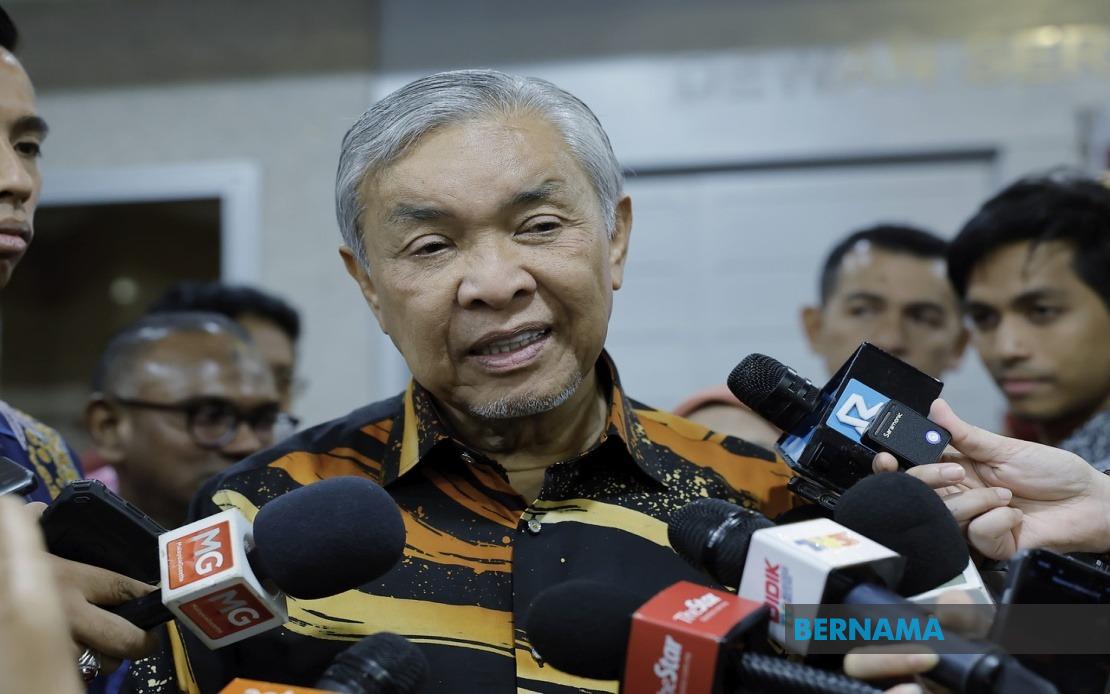
The leadership of Barisan Nasional and UMNO has moved to reinforce its commitment to accountability at Tabung Haji, with Deputy Prime Minister Datuk Seri Dr Ahmad Zahid Hamidi serving notice that the coalition will brook no deviation from governance standards within the pilgrimage fund or any other state institution. Speaking after attending the Rural and Regional Development Ministry's routine monthly assembly in Putrajaya on August 6, Ahmad Zahid, who also chairs BN, emphasised that individuals implicated in corrupt practices or administrative failures at government agencies and statutory bodies must face appropriate consequences.
The statement carries particular weight given the forthcoming parliamentary debate scheduled for August 11, during which lawmakers will examine findings from a comprehensive Royal Commission of Inquiry into Tabung Haji's stewardship. That RCI, which concluded its investigation into the fund's management spanning 2014 to 2020, released its report on July 29 and painted a troubling picture of institutional drift characterised by questionable investment decisions, concealed information flows, and suspicious financial transactions that collectively eroded the pilgrim fund's asset base substantially.
The scale of Tabung Haji's difficulties has emerged as a significant concern for Malaysian policymakers and religious authorities alike. The fund, which manages savings and facilitates hajj sponsorship for millions of Malaysian Muslims, functions as a quasi-sovereign wealth vehicle holding considerable assets and commanding deep trust among contributors. When such an institution falters, the reputational and financial implications ripple across both the Islamic finance sector and broader public confidence in state-managed entities. For Malaysian voters, particularly those from UMNO's traditional support base among rural and religious communities, the Tabung Haji situation represents a test of whether BN's renewed governance commitments translate into concrete action.
Ahmad Zahid's remarks signal that BN intends to distance itself from any perception of sheltering wrongdoers, a posture that reflects broader political calculations. Following the 2022 general election, which saw UMNO and BN reclaim federal power after the tumultuous Sheraton Move episode and the Pakatan Harapan interregnum, the coalition has positioned governance reform and anti-corruption enforcement as pillars of its political legitimacy. Extending that framework to Tabung Haji—an institution with deep roots in Malay-Muslim society and traditional UMNO constituencies—demonstrates tactical consistency with that messaging strategy.
The RCI's investigative scope of seven years proves significant, spanning a period encompassing multiple administrative transitions and investment cycles. By examining transactions and decision-making patterns across this extended horizon, the commission has been able to identify systemic vulnerabilities and accountability gaps rather than isolated incidents. The discovery of concealed information represents a particularly grave finding, as it suggests deliberate obfuscation rather than mere administrative error, thereby heightening the moral and legal stakes for anyone found culpable.
The recommendation for forensic audit operations signals that the RCI regards standard accounting procedures as insufficient for determining the full extent of irregularities within Tabung Haji's investment portfolio. Forensic examination typically involves deep documentary analysis, digital forensics, and investigative accounting designed to uncover deliberately obscured transactions or falsified records. Such audits commonly precede criminal prosecutions or civil recovery actions, indicating that the RCI views the situation as potentially involving deliberate wrongdoing rather than incompetence alone.
For Malaysian stakeholders, particularly the millions of contributors who have entrusted savings to Tabung Haji, the question now centres on whether investigations yield consequences for senior officials or merely generate voluminous reports filed away. Ahmad Zahid's rhetorical positioning on accountability will be tested against actual enforcement outcomes in the coming months. The August 11 parliamentary debate will provide a crucial platform for opposition scrutiny of government responsiveness and for documenting commitments made publicly by BN leadership, creating a record against which future performance can be measured.
The broader context involves Southeast Asian patterns around governance of large sovereign and quasi-sovereign funds. Regional peers including Singapore's Temasek Holdings and Indonesia's various state-owned investment vehicles have faced periodic scrutiny around transparency and decision-making criteria. Malaysia's experience with Tabung Haji enters a conversation about how Islamic finance institutions specifically manage fiduciary obligations and whether religious institutional identity correlates with heightened accountability or creates unique governance vulnerabilities.
Ahmad Zahid's unequivocal language—explicitly rejecting compromise on accountability matters and invoking both institutional and personal consequences—represents a calculated political gambit. By framing the issue in terms of categorical principles rather than contextual mitigation, BN leadership constrains its own future flexibility but simultaneously signals to religious constituencies and reform advocates that institutional integrity commands priority over factional loyalty. That positioning will prove consequential as investigations proceed and specific officials face potential prosecution or dismissal.

