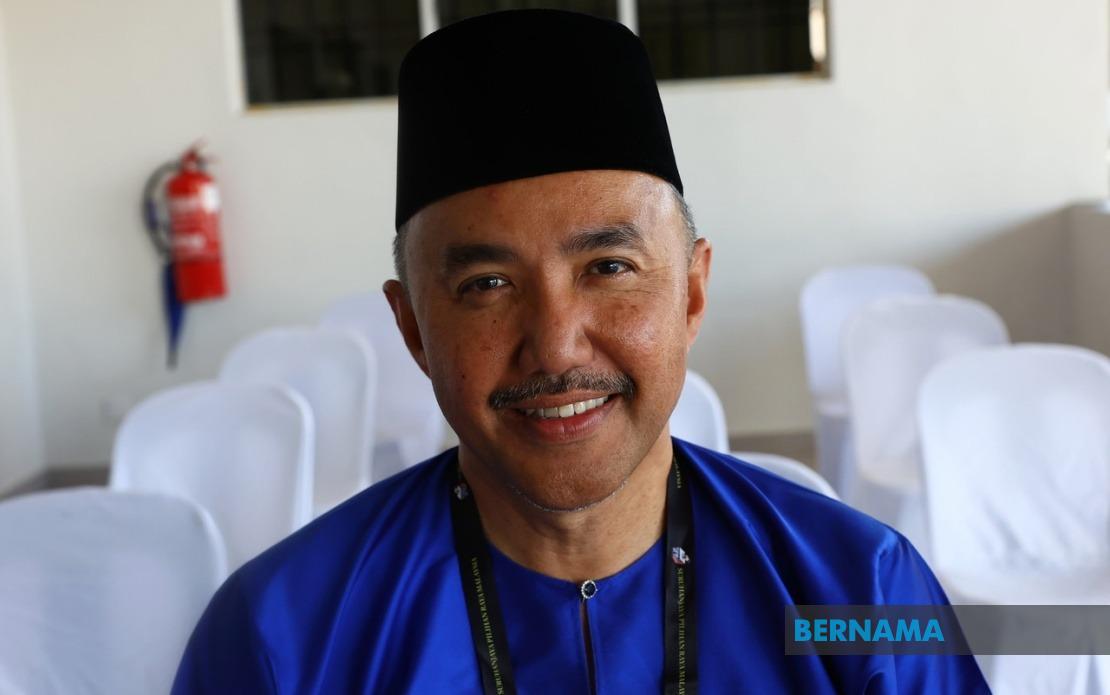
The Barisan Nasional coalition is banking on a decisive recovery among Federal Land Development Authority (FELDA) voters in the Kulai parliamentary constituency ahead of Johor's state election on July 11, betting that four years of targeted assistance and policy reforms will reverse the formation's electoral losses in rural agricultural settlements that have historically formed a crucial voting bloc.
Datuk Mohd Jafni Md Shukor, who chairs BN operations in Kulai and defends the Bukit Permai state seat, pointed to nearly 7,000 registered voters spread across four FELDA settlements as pivotal to the coalition's electoral strategy in the constituency. These communities—FELDA Taib Andak, FELDA Inas, and FELDA Bukit Permai, all falling within the Bukit Permai state assembly district, alongside FELDA Bukit Batu in the adjacent Bukit Batu seat—represent concentrated pockets of rural support that could significantly influence outcomes across multiple state legislative races.
The coalition's optimism reflects what party strategists characterise as a trajectory of recovery after what Jafni candidly acknowledged as severe setbacks during the 2018 state election, when FELDA areas swung markedly away from BN. The subsequent 2022 state polls demonstrated measurable improvement in these constituencies, suggesting that voter sentiment among settler communities began shifting back toward the ruling coalition as state government policies took effect. This modest rebound provides the electoral foundation upon which BN is constructing its comeback narrative for 2023.
At the heart of BN's campaign messaging lies the Johor state government's welfare framework, which Jafni attributed to the tenure of Menteri Besar Datuk Onn Hafiz Ghazi. The state has channelled educational subsidies through the Johor Education Foundation (YPJ) to support FELDA settler families, a targeted benefit designed to ease the financial burden on agricultural communities where household incomes remain vulnerable to commodity price fluctuations and climate pressures. Such education-focused assistance resonates particularly with younger families seeking to improve their children's prospects beyond farming.
Beyond education initiatives, the Johor government tackled a longstanding administrative grievance that had festered for decades within FELDA settlements: land title disputes and ownership verification. The state reports having resolved 99.9 per cent of land ownership applications, effectively normalising property rights and enabling settlers to conduct transactions, access formal credit, and plan long-term investments with legal certainty. This administrative success, whilst seemingly technical, carries profound symbolic weight in FELDA communities where tenure insecurity historically fuelled political discontent and voter alienation from incumbents perceived as indifferent to settler concerns.
The FELDA voter question carries significance well beyond the three state seats within Kulai's parliamentary boundaries. FELDA settlements dot constituencies throughout Johor and represent a demographic whose electoral behaviour has grown increasingly volatile over the past decade. These communities, predominantly Malay-Muslim and historically dependent on government patronage through FELDA mechanisms, shifted meaningfully toward Pakatan Harapan during the 2018 wave of anti-incumbent sentiment and only partially returned to BN in 2022. Their voting patterns have become a barometer of broader shifts in rural Malay-Muslim political sentiment across Malaysia's southern states.
Jafni's appeal for a renewal of BN's state-level mandate reflects a broader coalition strategy emphasising continuity and the unfinished business of development initiatives. He framed the election as a choice between maintaining momentum under the current state government or risking disruption by alternating to opposition rule. The argument prioritises the accumulated benefits of four years of administrative consistency, a pitch that typically resonates among voters in settled communities where property stability and predictable public services matter considerably.
The competitive landscape in Bukit Permai, where Jafni defends his seat, has fractionalised significantly. He faces opposition from four directions: Muhammad Aidil Riduan Mohd Yusof representing Parti Bersama Malaysia (Bersama), a relatively new political vehicle; Mohamad Shafwan Ani of Pakatan Harapan (PH), representing the main opposition coalition; and M. Lina Manoh of Perikatan Nasional (PN), the Islamic-focused bloc that has competed for Malay-Muslim votes. This four-way contest mirrors broader patterns of political fragmentation affecting multi-ethnic Malaysia, where the traditional BN-versus-opposition binary has fractured into multiple competing coalitions each claiming distinct ideological or communal mandates.
The fracturing of the opposition vote could theoretically benefit BN if voters concentrate support among competing non-BN parties. However, this outcome remains uncertain given PN's particular appeal to conservative Malay voters and the persistent organisational networks of PH from its 2018 breakthrough. Bersama's role as a spoiler party is unpredictable, potentially drawing votes from either BN or opposition formations depending on local campaign dynamics.
Early voting commenced on July 7, providing preliminary indicators of turnout and enthusiasm across constituencies. In FELDA settlements, turnout patterns historically reflect the effectiveness of grassroots organising by competing coalitions and the degree to which community-specific grievances mobilise voters either toward or away from the ballot box. A depressed turnout in FELDA areas could indicate voter disengagement or alienation, whilst high participation might suggest renewed competitive mobilisation by either BN or opposition formations.
The FELDA voter dynamics in Johor's 2023 state election carry implications extending beyond state-level politics. Johor remains Malaysia's third-most populous state and historically sets political direction for surrounding regions. Any decisive shift in FELDA voting patterns here could presage broader movements in federal-level politics, particularly if the state's 2023 results suggest durable realignment among agricultural communities or, conversely, continued instability in rural voter preferences. For opposition formations, underperformance in FELDA areas despite organised campaigns would signal a need to reassess messaging and policy appeals to settler communities, whilst decisive BN performance would validate the coalition's strategy of emphasising local delivery of targeted benefits over national-level messaging.
The election outcome in Kulai and surrounding constituencies will provide significant data about whether BN's incremental welfare improvements and administrative reforms have genuinely restored confidence among FELDA voters or whether rural communities remain volatile and available to opposition overtures. For Malaysian political observers, the FELDA settlements represent microcosms of broader rural sentiment, where modest material improvements in government service delivery and respectful attention to community concerns compete against opposition appeals to change, anti-corruption sentiment, and demands for greater political accountability.

