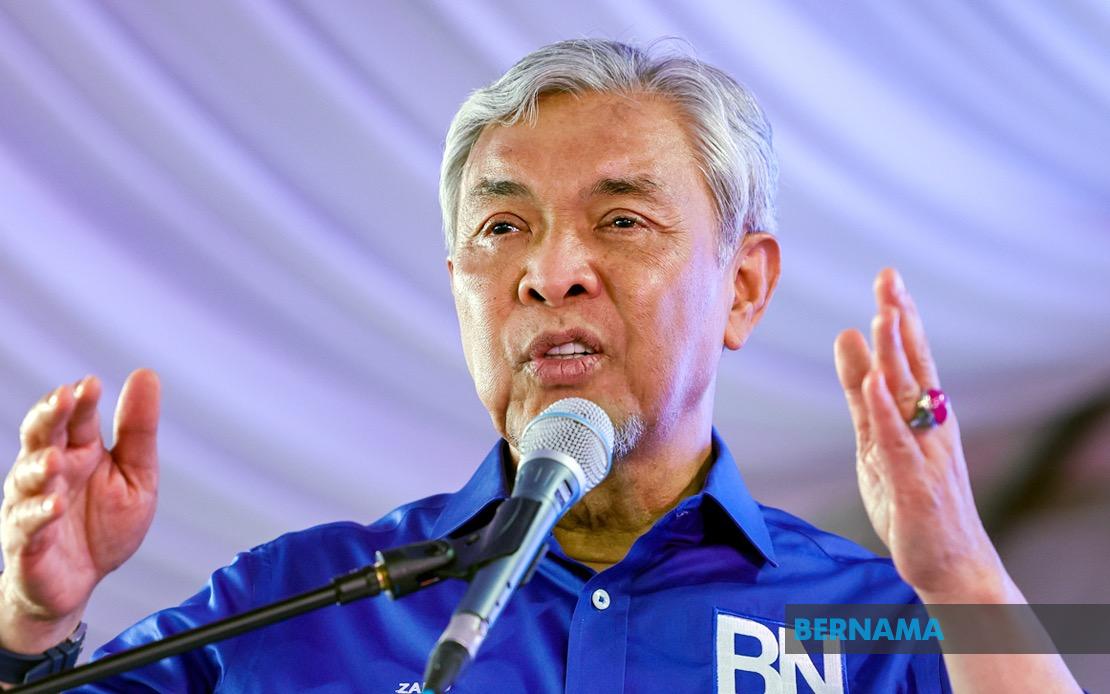
Barisan Nasional will ensure complete fulfilment of its election manifesto if voters grant the coalition the mandate in the Johor state election, according to BN chairman Datuk Seri Dr Ahmad Zahid Hamidi. The pledge came as the Deputy Prime Minister addressed party workers and community leaders in Kluang, emphasizing that translating campaign promises into tangible development projects remains central to the coalition's electoral pitch in Malaysia's second-largest state by population.
The manifesto commitments represent more than symbolic gestures, Ahmad Zahid stressed, framing them instead as essential responsibilities that will shape Johor's trajectory over the incoming term. He characterized the implementation of these pledges as inseparable from the broader objective of maintaining development momentum and safeguarding the material interests of ordinary Johoreans across urban and rural constituencies alike. This framing attempts to position BN not merely as a political organization seeking power, but as a custodian of public welfare entrusted with stewardship of state resources.
Ahmad Zahid underscored that BN's leadership structure will take active ownership of promise delivery rather than allowing manifesto commitments to languish in unfulfilled rhetoric. The emphasis on active monitoring and accountability reflects broader concerns within Malaysian political discourse about the gap between campaign pledges and post-election reality. By committing to personal oversight at the national level, working alongside other party leaders, Ahmad Zahid is signalling that manifesto implementation will not be delegated to lower-ranking officials or left to chance, but will receive direct attention from the coalition's highest echelons.
The concept of "Bangsa Johor" unity emerged as a secondary but important theme in Ahmad Zahid's remarks, suggesting that electoral victory should strengthen rather than fracture the state's social cohesion. This language carries particular resonance in Johor, where rapid urbanization, migrant populations, and economic disparities have created diverse constituencies with sometimes competing interests. By framing electoral success as an opportunity to deepen rather than exploit divisions, BN is attempting to position itself as a unifying force capable of navigating Johor's demographic complexity.
Crucially, Ahmad Zahid cautioned against the corrosive effects of electoral complacency and triumphalism. His warning that a mandate should not become a licence for arrogance suggests awareness that voter frustration with incumbent administrations often stems not from policy failures alone but from perceived disconnection between governing elites and ordinary citizens. This defensive posture acknowledges that winning an election does not automatically translate into sustained public confidence, particularly if newly empowered officials become insulated from constituent concerns.
The electoral stakes in Johor extend well beyond state-level politics. As the largest state by land area and second-largest by population, Johor's political direction carries implications for national political calculations. BN's performance here will provide crucial signals about the coalition's capacity to maintain or regain electoral dominance across Malaysia's diverse regions. A strong showing would reinforce BN's claim to be a stabilizing national force, while a weakened performance would intensify questions about the coalition's long-term viability amid competition from other political groupings.
The 16th Johor state election features 172 candidates competing for 56 state assembly seats, with approximately 2.7 million registered voters eligible to participate. The scale of this electoral exercise underscores the logistical complexity and political significance of state-level contests in Malaysia's federal framework. Each contested seat represents not merely a political prize but a geographic and demographic cross-section reflecting rural agricultural communities, industrial townships, and expanding metropolitan areas around Johor Bahru.
Voter behaviour in this election will be shaped by multiple considerations extending beyond manifesto promises. Economic conditions, perceptions of governance quality, factional dynamics within competing coalitions, and local community grievances all influence electoral outcomes in complex ways that cannot be reduced to policy documents alone. Ahmad Zahid's emphasis on consistent voter support through polling day itself suggests awareness that maintaining electoral momentum presents challenges even for coalition machinery accustomed to electoral success.
The timing of this commitment coincides with intensifying campaign activities across the state, as BN, Pakatan Harapan, and other competing alliances deploy resources and messaging strategies to influence voter preferences. Ahmad Zahid's engagement session with Village Development and Security Committees represents a grassroots outreach approach designed to reinforce party presence at community level where much electoral influence is exercised through personal networks and local reputation rather than media campaigns.
For Malaysian observers, the substance of BN's Johor manifesto and the coalition's track record in implementing similar commitments in other state and federal contexts provide essential context for evaluating the credibility of Ahmad Zahid's pledges. Previous election cycles have generated numerous documented instances where manifesto commitments were either substantially modified, indefinitely delayed, or abandoned following electoral outcomes. This history creates reasonable scepticism about the binding force of such pledges and suggests that voter assessments of BN's sincerity will depend significantly on retrospective evaluations of past performance rather than prospective promises.
The broader political landscape in Malaysia continues to evolve as coalition alignments shift and new leadership cohorts advance within established parties. Johor's election outcome will contribute to this ongoing repositioning and may influence how other state-level contests subsequently unfold. If BN achieves a dominant victory, it would validate the coalition's strategic approach and potentially energize similar campaigns elsewhere. Conversely, a closely contested result or unexpected setback would trigger recalibrations within BN's leadership structures and strategy teams.

