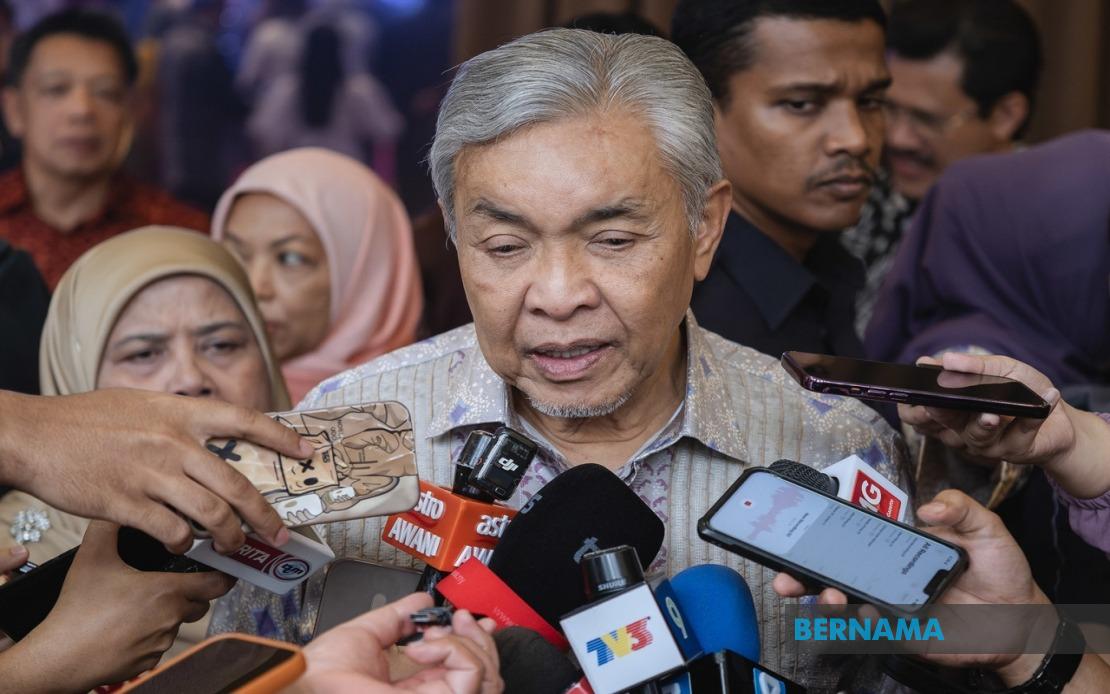
Barisan Nasional has given explicit assurance that it will refrain from involvement in matters concerning the Negeri Sembilan royal institution and the state's Council of Justice and Laws (DKU) as the coalition gears up for the upcoming state election on August 1. Deputy Prime Minister Datuk Seri Dr Ahmad Zahid Hamidi, who also leads UMNO, made this declaration following discussions with party officials in the state, signalling the coalition's intent to maintain clear boundaries between electoral politics and the sphere of royal and judicial institutions.
The commitment reflects broader political sensitivities surrounding Malaysia's constitutional monarchy and the delicate position of state-level institutions. Ahmad Zahid's remarks come at a critical juncture, with the 16th Negeri Sembilan state election set for August 1, involving 36 state seats. By explicitly stating that BN will not cross into matters involving the royal palace or the DKU, the coalition appears to be managing expectations and preempting potential criticism that it might seek to leverage institutional matters for electoral advantage during the campaign period.
The DKU, or Negeri Sembilan Council of Justice and Laws, holds significant authority in the state's governance structure, particularly in legal and constitutional matters. In Malaysia's constitutional framework, such councils serve as important institutional checks and maintain the integrity of the legal system at the state level. Ahmad Zahid's emphasis on keeping the electoral campaign separate from these institutions underscores recognition that electoral politics and constitutional institutions must operate in distinct spheres to preserve public confidence in both systems.
This positioning also reflects lessons learned from previous electoral cycles. During the 15th Negeri Sembilan state election, BN operated under a cooperative arrangement with component parties from Pakatan Harapan (PH), a power-sharing model that was specific to that electoral moment. The Deputy Prime Minister indicated that such a collaborative approach will not be repeated in the upcoming contest, marking a significant shift in the coalition's electoral strategy for this particular state. The decision to contest separately rather than through multi-coalition arrangements requires stronger internal cohesion within BN itself.
Internal party unity has consequently become the focal point of BN's preparation strategy. Ahmad Zahid stressed that the coalition's immediate priority is cultivating alignment and solidarity among leaders and party members across all organizational levels. This emphasis on unity suggests that BN recognizes the competitive dynamics in Negeri Sembilan will be more challenging without PH partnership, necessitating a tightly coordinated grassroots operation and consistent messaging from party machinery. The shift from coalition to solo contest demands greater discipline and resource mobilization across UMNO and BN's other component parties operating in the state.
For Negeri Sembilan specifically, the August 1 election carries considerable political weight. The state has historically been a competitive battleground where BN's dominance has been contested, and recent electoral trends across Malaysia have shown increased voter volatility. By publicly committing to institutional propriety and focusing messaging on party unity rather than exploiting constitutional machinery, BN appears to be adopting a more cautious approach designed to maintain credibility among voters concerned about the integrity of state institutions and governance.
The distinction Ahmad Zahid drew between what BN will and will not do during the election campaign also serves a practical communication function. By clarifying that party activities will remain confined to legitimate electoral campaigning and organizational matters, BN seeks to inoculate itself against accusations of using institutional leverage or judicial processes for political ends. This clarity is particularly important in Malaysia's current political climate, where public discourse frequently examines the relationship between political parties and state institutions.
Beyond the immediate Negeri Sembilan context, these statements carry implications for how Malaysia's federal government coalition conducts itself across all states. As the federal power holder, BN faces constant scrutiny regarding whether it might deploy institutional resources or constitutional apparatus to advantage itself electorally. Ahmad Zahid's explicit disavowal of interference in royal and legal matters, delivered at an official ceremony by the Ministry of Rural and Regional Development, functions as a public statement of institutional restraint that extends beyond a single state election.
The timing of these remarks, made during a ceremony honouring the ministry's service values, also connects BN's electoral positioning to broader governance narratives around administrative integrity and proper conduct. By tying these assurances to an event celebrating government service excellence, the Deputy Prime Minister links BN's electoral campaign to broader themes of responsible governance and respect for institutional boundaries. This framing attempts to position the coalition as committed to principled conduct rather than purely competitive advantage-seeking.
For Malaysian readers and observers across Southeast Asia monitoring institutional health in the region, such explicit commitments regarding the separation of electoral politics from constitutional institutions merit close attention. Malaysia's democratic system depends substantially on public confidence that state institutions will operate free from partisan manipulation. When senior political figures publicly commit to respecting institutional boundaries, they either reinforce that confidence or, if the commitment proves hollow during actual campaigning, undermine it significantly.
The Negeri Sembilan election ultimately serves as a test case for whether such institutional restraint will be maintained under electoral pressure. As the campaign intensifies through July and into August, the extent to which BN and its competitors honour the boundaries between political competition and institutional integrity will provide important signals about the health of Malaysia's federal democratic system and the degree to which constitutional protections for institutions enjoy genuine commitment from major political actors.

