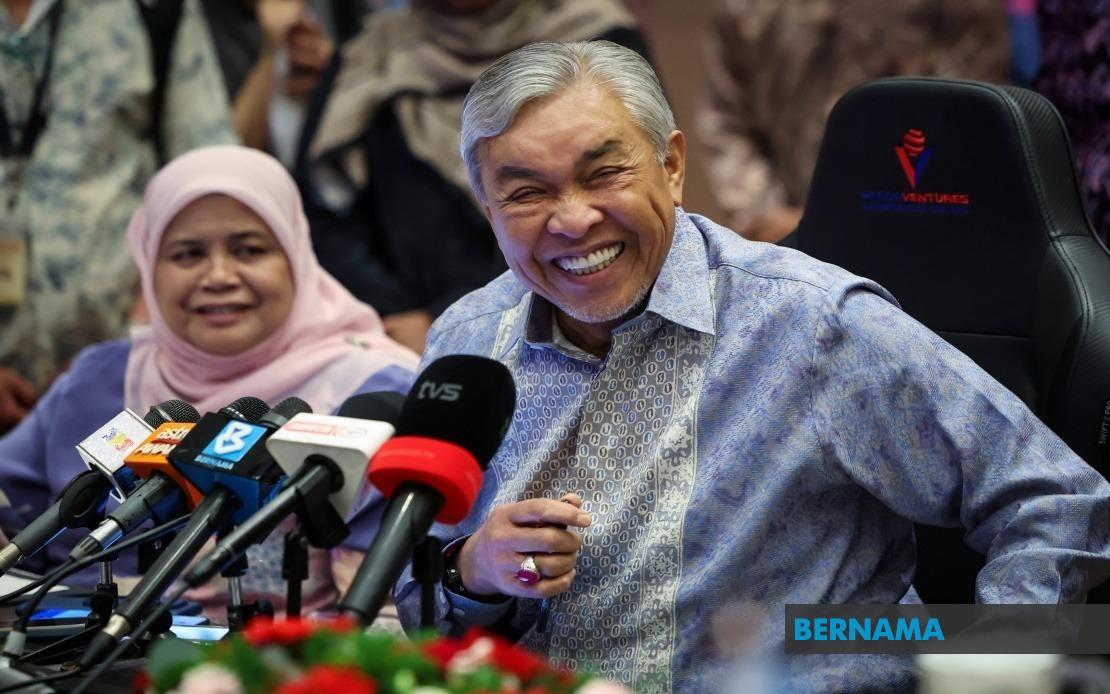
Barisan Nasional's leadership has moved to firmly extinguish speculation about the coalition's future political direction, with Deputy Prime Minister Datuk Seri Dr Ahmad Zahid Hamidi issuing an unequivocal statement of continued backing for Prime Minister Datuk Seri Anwar Ibrahim's administration. Speaking in George Town following a coordination meeting on rural development matters, Ahmad Zahid dismissed persistent rumours of backroom negotiations and alternative power arrangements that have periodically surfaced in Malaysian political discourse.
The BN chairman's declaration carries particular weight given the coalition's pivotal role in the current political architecture. Since the 2022 General Election, BN has functioned as a cornerstone of the Unity Government arrangement, a configuration mandated by royal decree following that election's fragmented outcome. Ahmad Zahid's statement reinforces that this foundational commitment remains intact, countering suggestions that the coalition might be exploring alternative alliances or seeking to engineer administrative change through extra-parliamentary means. The categorical rejection of what Ahmad Zahid termed "Bangkok Move" or "Dubai Move" scenarios underscores BN's determination to dispel narratives about covert political engineering.
The timing of Ahmad Zahid's remarks reflects the heightened political sensitivities surrounding the ongoing Negeri Sembilan state election campaign, where BN and Pakatan Harapan are competing in opposite camps. This electoral contest has exposed internal organizational tensions within BN itself, most notably the suspension of a party polling district centre in Klawang. According to reports, the Klawang facility halted operations as a protest against BN's failure to field a candidate for the state assembly seat in that locality, leaving the contest to unfold as a three-cornered battle among Pakatan Harapan, Perikatan Nasional, and Bersatu competitors.
Ahmad Zahid's handling of the Klawang situation reveals the practical complexities underlying BN's formal commitment to political stability. Rather than dismissing the operational suspension as inconsequential, he engaged directly with the issue by conferring with Negeri Sembilan UMNO leadership, specifically with Datuk Seri Jalaluddin Alias whose parliamentary constituency encompasses the affected polling district. This administrative intervention signals BN's recognition that maintaining grassroots organizational morale and operational coherence remains essential to sustaining the broader political framework. The Deputy Prime Minister's confidence that the matter would be resolved within the nine-day window before polling suggested an underlying belief that localized grievances could be managed without threatening the overarching coalition structure.
The broader context for these statements involves persistent speculation about a potential realignment involving BN and Perikatan Nasional under a proposed "Perikatan Barisan Nasional" framework. Ahmad Zahid's clarification that no formal discussions have occurred between these two coalitions regarding such an arrangement provides important clarity. He acknowledged that the concept had featured in campaign rhetoric but emphasized that it remained purely rhetorical rather than substantive. This distinction matters because it demonstrates that while political figures may deploy rhetorical possibilities for tactical advantage, the foundational commitment to the present governmental arrangement has not shifted into active negotiation mode.
For Malaysian political observers, Ahmad Zahid's statements offer reassurance about institutional continuity during a period when external observers sometimes question the durability of Malaysia's governmental structures. The Unity Government model itself represents an experiment in cross-ideological collaboration unprecedented in modern Malaysian politics, bringing together competitors from different electoral traditions into a shared executive framework. The success of this model depends fundamentally on the commitment of major stakeholder coalitions, particularly BN, which retains substantial parliamentary representation and therefore meaningful leverage over governmental stability.
The cordial relationship between Ahmad Zahid and Prime Minister Anwar Ibrahim, despite their respective coalitions competing in the Negeri Sembilan campaign, further illustrates the compartmentalization that the Unity Government arrangement demands. The two leaders' exchange of pantun verses, in which Anwar had highlighted unity and discipline themes while Ahmad Zahid responded in kind, suggests a deliberate cultivation of personal rapport that transcends electoral competition. This interpersonal dimension provides valuable insurance against the kind of institutional breakdown that could occur if coalition partners viewed each other purely as adversaries rather than partners operating within distinct but interconnected political structures.
For Southeast Asian political analysts, Malaysia's Unity Government represents an interesting case study in institutional adaptation and coalition management. Unlike systems where single-party dominance has traditionally characterized governance, or where coalition politics follows more predictable patterns, the Malaysian arrangement requires constant calibration and renegotiation of interests. The presence of multiple political players operating simultaneously as partners within government and competitors in electoral contests creates structural tensions that must be managed through explicit commitment statements and regular reinforcement of foundational agreements.
The implications of BN's reaffirmed commitment extend beyond immediate political stability into longer-term questions about Malaysia's developmental trajectory. A fragmented parliament backing competing visions of governance creates decision-making constraints that can impede policy implementation, particularly in domains requiring legislative consensus around significant structural or financial commitments. Conversely, the necessity of building broader coalitions can encourage more inclusive policy deliberation and reduce the risk of governance concentrated in narrower power networks. The sustainability of the Unity Government therefore carries consequences not merely for the political careers of individual leaders but for Malaysia's institutional effectiveness across multiple policy domains.
Looking forward, Ahmad Zahid's crystalline articulation of BN's commitment through the 15th Parliament's conclusion provides a temporal anchor for political expectations. The parliamentary term provides a defined endpoint for evaluating the unity arrangement's performance and a natural juncture at which political realignment might occur through electoral processes rather than administrative rupture. This framing allows all stakeholder coalitions to operate with greater certainty regarding the timeframe within which current arrangements will persist, facilitating medium-term planning and reducing the constant uncertainty that perpetual speculation about imminent governmental collapse might otherwise generate.

