The Barisan Nasional coalition is projecting robust prospects in the upcoming Johor state election scheduled for July 11, with party officials publicly confident of securing enough seats to retain control of Malaysia's second-largest state by economic output. At the core of this optimism is a specific numerical goal: capturing more than 40 of the 56 seats available in the Johor State Legislative Assembly, a threshold that would provide a comfortable working majority and affirm the coalition's continued dominance in a traditionally Barisan-friendly region.
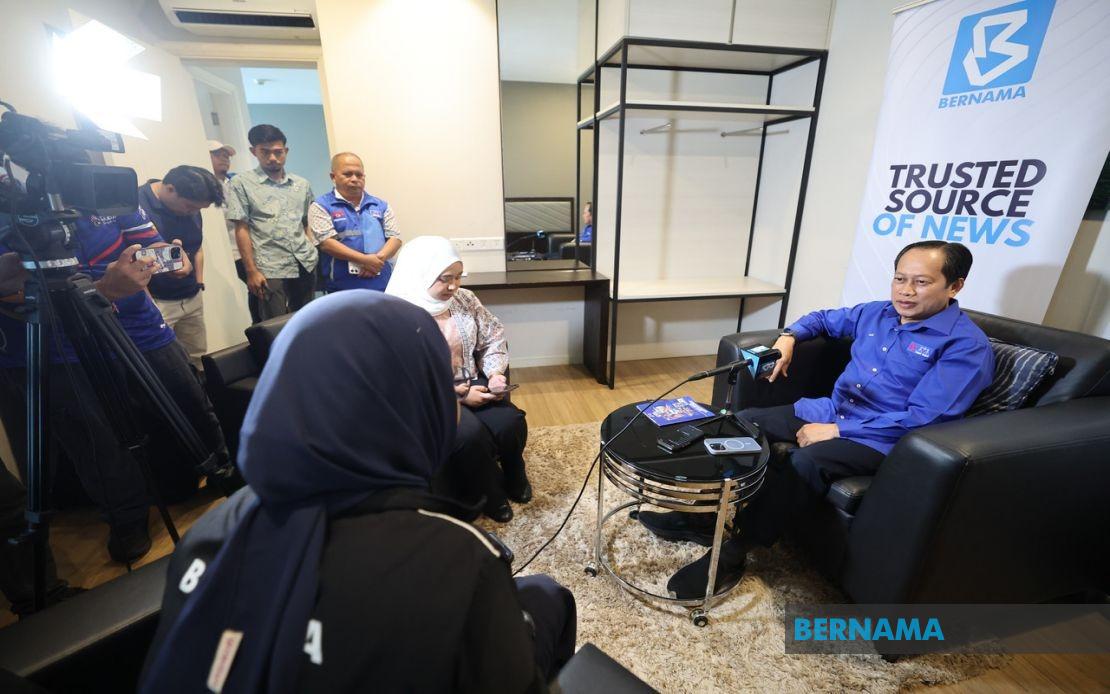
Datuk Seri Dr Ahmad Maslan, who serves as deputy chairman of the Johor UMNO liaison committee and division chief for Pontian, articulated this confidence during an interview after conducting extensive assessment work across the state's parliamentary constituencies. He grounded his assessment not on abstract projections but on what he characterised as direct observations from the campaign trail itself, where he had personally participated in organizing and monitoring activities across 25 of Johor's 26 parliamentary divisions. This hands-on involvement provided him with a granular understanding of ground sentiment and campaign momentum that extended beyond traditional polling data.
The calculations underlying Barisan's target rest on three interconnected factors that party strategists view as favourable indicators. The first concerns voter responsiveness, with campaign teams reporting what they characterise as encouraging reception during community engagement efforts. The second relates to the quality of individual candidate performance across constituencies, suggesting that nominated candidates have effectively articulated party messaging and connected with constituents. The third and perhaps most critical element involves the operational capacity of the party machinery itself, particularly at the District Polling Centre level, where ground-level organisation determines election day effectiveness and voter turnout management.
The campaign infrastructure deployed across Johor reflects substantial resource allocation and sustained effort. According to Ahmad's account, Barisan's operational teams have maintained intensive activity schedules throughout the campaigning period, moving from dawn until late evening to execute a multi-faceted engagement strategy. This includes traditional house-to-house canvassing, sophisticated voter data analysis using digital tools, campaign simulation exercises to test messaging effectiveness, and coordination through operations rooms that serve as nerve centres for each locality's campaign activities. The consistency and scale of these operations suggest an organisation that has mobilised significantly for this electoral contest.
A distinctive feature of Barisan's Johor campaign has been the deployment of reinforcement teams drawn from other states, a practice that reflects broader coalition strategies in significant electoral contests. These external teams bring personnel with campaign experience from different regional contexts, potentially offering fresh approaches and techniques that complement local knowledge. Ahmad specifically highlighted the contribution of Pahang's Menteri Besar in leading a reinforcement contingent focused on the Pontian parliamentary constituency and several adjacent state assembly seats including Pulai Sebatang, Benut, Kukup, and Pekan Nanas. The presence of such high-ranking officials from other states serves a dual purpose: it signals investment and confidence in winning particular constituencies, while also providing psychological reinforcement for local campaign workers.
The strategic rationale for such reinforcement arrangements reflects several calculations. External teams can operate with reduced local political constraints, potentially delivering messaging that local politicians might hesitate to articulate. They bring techniques and frameworks proven effective in different electoral environments, potentially identifying persuasion strategies that local teams had not considered. Furthermore, their presence implicitly demonstrates that the coalition considers particular constituencies competitive enough to warrant senior leadership attention, thereby raising the morale of volunteer workers and conveying signals of party commitment to affected communities. Ahmad emphasised that these fresh perspectives and novel approaches had tangibly improved his own team's strategic thinking and voter outreach methodology.
For the broader Malaysian political context, Johor's significance extends beyond its 56 state seats. The state represents a crucial testing ground for Barisan Nasional's capacity to maintain electoral dominance in a post-2018 environment when the coalition experienced dramatic losses nationally. A decisive victory in Johor would reinforce perceptions of Barisan's resilience and continued relevance in Malaysian politics, particularly among Malay-Muslim voters who form the electoral backbone of both UMNO and the coalition. Conversely, an underperformance relative to the 40-seat target might raise questions about whether Barisan's recovery trajectory has plateaued or whether new electoral trends are emerging that complicate its traditional support bases.
The specific target of 40 seats merits analytical attention. The Johor state assembly comprises 56 seats, meaning 40 seats represents approximately 71 per cent of available seats. This threshold is substantially above the bare majority of 29 seats required to form government, suggesting that Barisan is not simply seeking to retain power but aiming for a commanding mandate that would provide significant buffer against potential future defections or by-election losses. Such supermajorities enable state governments to pursue legislation and policies with minimal legislative obstruction, and they often translate into electoral momentum that extends to subsequent contests. The confidence expressed by Ahmad reflects calculations that this aggressive target is genuinely achievable rather than merely aspirational rhetoric.
The deployment of campaign resources across all 26 parliamentary constituencies indicates a strategy designed to prevent the emergence of any significant regional pockets of opposition strength. Rather than concentrating resources on marginal constituencies while conceding opposition strongholds, Barisan appears committed to contesting comprehensively across the state. This approach, if successful, would produce not simply a victory but a demonstration of broad-based support across Johor's diverse communities and regions. It would also serve notice to potential coalition partners and supporters that Barisan remains the dominant political force capable of mobilising resources and voter support at scale.
For Malaysian political observers and regional analysts monitoring developments in Southeast Asia's electoral politics, the Johor contest represents a significant data point in assessing whether Malaysia's dominant political coalitions have genuinely stabilised following the dramatic 2018 watershed election. Barisan's performance in Johor will offer empirical evidence regarding whether its electoral rehabilitation has proven durable or whether underlying shifts in voter behaviour continue to constrain its capacity to reproduce its pre-2018 dominance. The difference between winning 40 seats and winning fewer seats would carry substantial implications for how Malaysian political commentators assess the current balance of forces and the trajectory of national politics beyond 2023.

