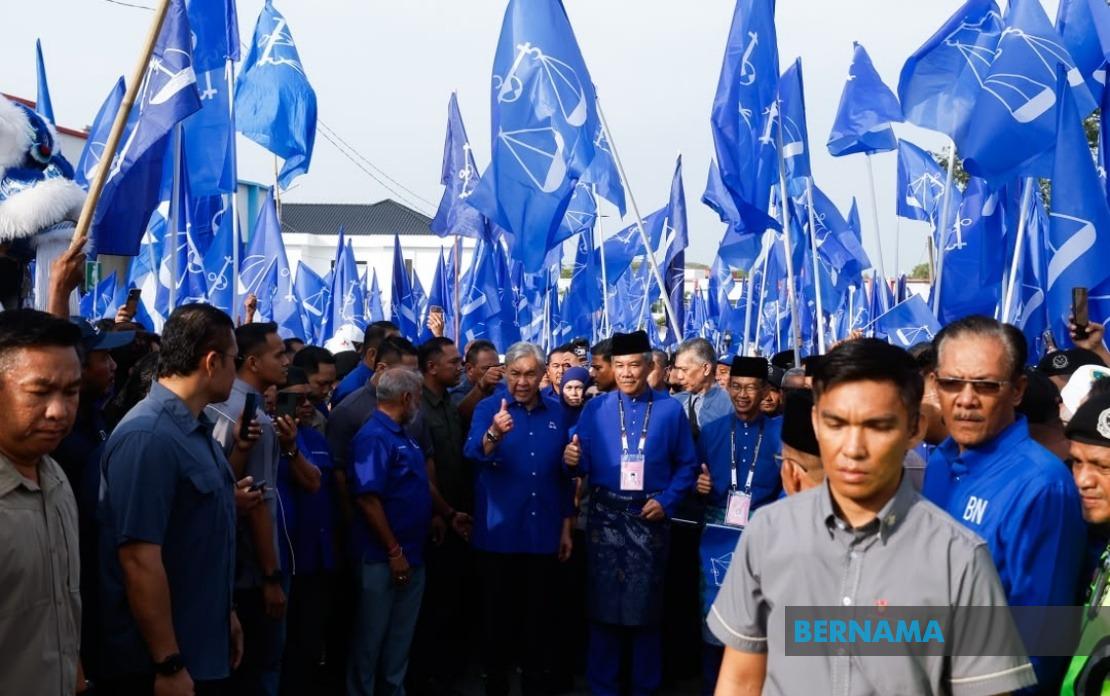
The leadership ranks of Barisan Nasional turned out in force across Negeri Sembilan on Thursday, personally escorting coalition candidates through the nomination process for the 16th state election. Datuk Seri Dr Ahmad Zahid Hamidi, who leads both BN and UMNO, arrived at the Dewan Seri Rembau nomination centre at 8.40 am alongside his deputy, Datuk Seri Mohamad Hasan, to file papers for the Rantau seat. The show of solidarity from the party hierarchy underscores the strategic importance BN places on the state contest, where it seeks to maintain influence amid broader political competition.
The nationwide nomination exercise proceeded smoothly, with all eight centres opening simultaneously at 9 am and concluding sixty minutes later. This compressed timeframe meant candidates and their supporting delegations moved rapidly through submission formalities, though the presence of party figures created a visible display of organisational strength. Across multiple constituencies, senior BN figures ensured they were physically present to back their nominees, a practice that serves both symbolic and practical purposes in Malaysian electoral politics.
In Port Dickson, BN secretary-general Datuk Seri Dr Zambry Abd Kadir stood alongside Datuk Mohd Faizal Ramli, who is pursuing the Linggi state seat. Simultaneously, UMNO vice-president Datuk Seri Johari Ghani supported Suhaimizan Bizar's candidacy in the Gemencheh constituency within Tampin parliamentary division. The geographic distribution of senior party officials across multiple nomination venues demonstrates careful coordination within BN's campaign machinery, ensuring maximum party visibility and messaging reach throughout the state.
Jempol parliamentary constituency received particular organisational attention, with UMNO secretary-general Datuk Dr Asyraf Wajdi Dusuki shepherding three BN candidates through their nomination submissions. Datuk Mustapha Nagoor, Datuk Mohd Zaidy Abdul Kadir, and Chong Fui Ming are respectively seeking the Palong, Jeram Padang, and Bahau state seats. This concentrated deployment of party machinery in a single constituency suggests BN views this area as either strategically vulnerable or a priority stronghold requiring reinforcement.
Mohamad Hasan, the nominee in Rantau, carries significant electoral history. He has represented this constituency since 2004, spanning two decades of legislative tenure. His re-nomination reflects BN's confidence in retaining this seat, though the high-profile accompaniment by Ahmad Zahid indicates the party recognises the broader competitive environment in which all candidates must operate. Malaysian state elections have become increasingly fluid, with voter sentiment shifting based on both state-level and national political dynamics.
The coalition opposition also mobilised for the nomination day. Parti Islam Se-Malaysia (PAS) president Tan Sri Abdul Hadi Awang personally accompanied Mohd Fairuz Mohd Isa, who filed for the Serting seat. This reflects PAS's strategic engagement in Negeri Sembilan politics, where the party continues building its presence within the broader opposition ecosystem. Similarly, smaller political formations such as Parti Orang Asli Malaysia (ASLI) fielded candidates, with party president Rashid Ka backing Dayana Dal's bid for the Jeram Padang seat.
The Negeri Sembilan State Legislative Assembly reached the election threshold following official dissolution on June 5, after the Yang Dipertuan Besar, Tuanku Muhriz Tuanku Munawir, granted formal consent. This procedural milestone initiated the formal campaign period, allowing parties to conduct their candidacy nominations and subsequently campaign until polling day. The election cycle compresses significant political activity into a relatively brief window, placing premium value on early organisational momentum and public visibility.
August 1 has been designated as polling day, with early voting scheduled for July 28. This timing creates a fortnight-long campaign environment in which parties must communicate their platforms, galvanise voter support, and counter opposition messaging. For Malaysian states, this compressed timeframe means that the initial showing at nomination centres—how parties marshal their leadership, candidate quality, and organisational capacity—shapes early media narratives that can influence voter perception throughout the campaign.
The high visibility of top-tier party leadership at nomination venues carries multiple implications for the broader Malaysian political landscape. It signals organisational readiness, demonstrates party unity to supporters and observers, and creates opportunities for media engagement and messaging dissemination. However, it also elevates stakes for individual candidates, as their performance and public reception become intertwined with national party fortunes. For Malaysian voters watching these developments, the degree of senior leadership attention sometimes indicates which seats parties view as genuinely competitive versus those considered safely held or likely to be lost.
Negeri Sembilan elections typically influence broader peninsular political calculations, given the state's position as part of Malaysia's central corridor and its mix of urban, semi-urban, and rural constituencies. Electoral outcomes here often provide early indicators of voter sentiment trends that may subsequently manifest in parliamentary and other state contests. For this reason, major parties contest energetically despite the state's relatively modest size, viewing Negeri Sembilan results as potentially predictive of wider electoral trajectories.
The nomination day proceedings reflected Malaysia's established electoral calendar and constitutional frameworks, which function efficiently despite occasional disputes over specific candidacies or regulatory interpretations. The smooth opening and closure of all nomination centres within the prescribed hour demonstrates logistical competence from the Election Commission, though the substantive political contests—those decided by voters—remain weeks away. The immediate campaign period will test whether the leadership visibility displayed on nomination day translates into sustained voter engagement and ultimately electoral success for the various parties involved.

