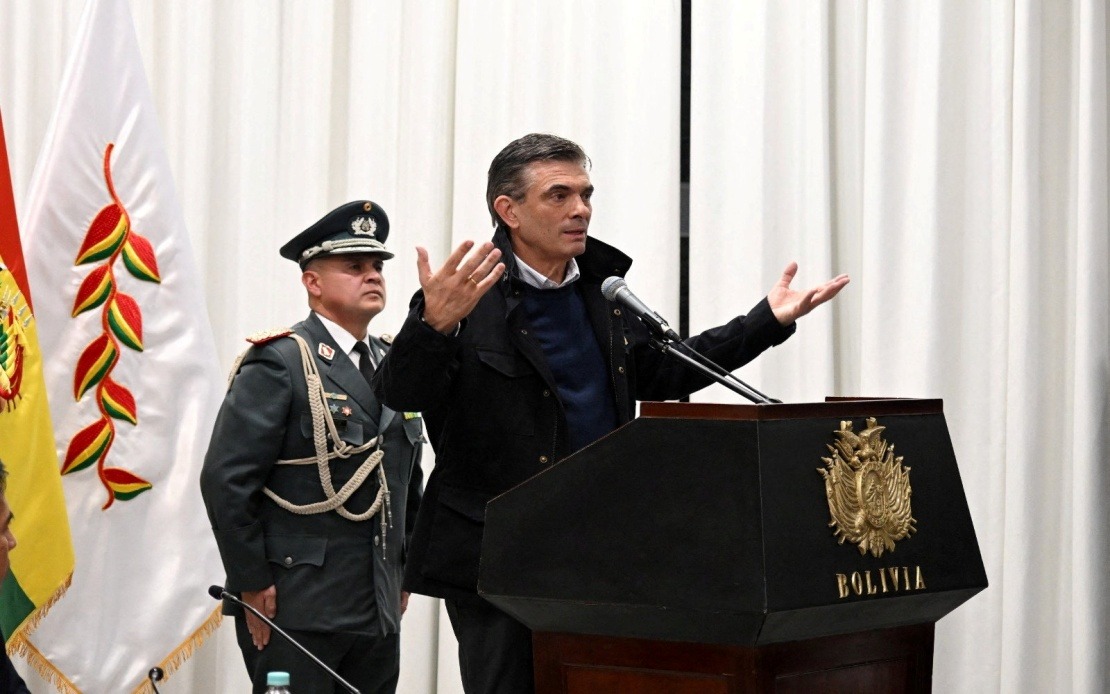
Bolivian President Rodrigo Paz has declared a state of emergency in response to an escalating political and economic crisis triggered by sustained road blockades and anti-government demonstrations. The declaration, announced via televised address on Saturday, represents a dramatic escalation in the standoff between the government and opposition groups demanding Paz's resignation. The move authorizes military deployment across the country to restore access to blocked roads and resume critical supply chains that have been disrupted for nearly two months.
The roots of the current crisis lie in widespread discontent over economic conditions, with workers' unions and farming organizations leveraging blockades as their primary negotiating tool. Grievances centre on rising living costs, stagnant wages, and broader economic pressures that have squeezed household budgets across Bolivia's population. These groups have mobilized thousands to maintain the blockades despite mounting civilian hardship, viewing the pressure campaign as necessary to force government concessions. The strategy reflects deeper frustrations with Paz's administration's economic policies and perceived inability to address fundamental concerns affecting ordinary Bolivians.
The human toll of the blockade crisis has grown severe over the past 50 days. Food supplies have dwindled in multiple regions as transportation routes remain closed, leaving supermarket shelves bare and forcing families to ration essential provisions. Fuel shortages have cascaded through the economy, disrupting not only private transportation but also delivery networks and industrial operations. Medical supply chains have fractured, preventing hospitals and clinics from receiving critical pharmaceuticals and equipment, creating dangerous gaps in healthcare access across rural and urban areas alike. The cumulative effect has transformed what began as a labour dispute into a genuine humanitarian concern affecting millions of ordinary citizens uninvolved in the original protest movements.
Paz's public statements underscore the desperation within government circles as the crisis deepens. In his televised address, the president framed the blockades not as legitimate political expression but as illegitimate coercion that strips citizens of fundamental freedoms. His language emphasized the hostage-like situation facing ordinary Bolivians unable to work, attend school, access medical care, or obtain food for their families. This rhetorical approach attempts to reframe the narrative away from government economic failures toward the demonstrators' tactics, positioning the emergency declaration as a necessary intervention to protect vulnerable populations rather than a suppression of dissent.
The authorization for military deployment carries significant implications for Bolivia's democratic institutions and civil liberties. Emergency declarations typically grant security forces expanded powers with reduced oversight, including authority to detain individuals, conduct searches, and enforce curfews without normal legal constraints. While framed as temporary measures to restore order, such declarations risk becoming tools for suppressing legitimate opposition voices and establishing precedents for future government actions against protesters. Bolivia's history includes periods of military rule and authoritarian control, making military mobilization a particularly charged decision carrying historical weight and symbolic meaning beyond its immediate operational purposes.
The blockade strategy itself reflects the limited formal political channels available to marginalized groups in Bolivia. When traditional advocacy, electoral competition, and institutional negotiation fail to produce responses to economic grievances, protest movements often escalate to confrontational tactics that impose costs on broader society. The blockades work precisely because they create widespread disruption that politicians cannot ignore, forcing government attention to previously dismissed demands. However, this mechanism creates intense civilian suffering that can turn public opinion against the protesters themselves, potentially undermining their long-term political objectives even if short-term tactics succeed.
Bolivia's economic context provides essential background for understanding the crisis. The country has experienced commodity price volatility, currency pressures, and structural economic challenges that limit government options for addressing popular demands for improved living standards. These constraints may explain Paz's apparent inability to offer concessions that would satisfy protesters, even as the blockades impose enormous costs on the economy and civilian population. Without addressing underlying economic fundamentals, emergency declarations and military deployments may restore short-term order without resolving the grievances that generated the crisis, potentially setting conditions for renewed conflict.
Regional stability concerns add another dimension to Bolivia's emergency declaration. Neighbouring countries including Peru, Chile, and Argentina maintain significant economic relationships with Bolivia and depend on transport corridors crossing Bolivian territory. Extended blockades disrupt regional trade networks and supply chains that extend well beyond Bolivia's borders. Additionally, Bolivia's mineral wealth, including lithium deposits critical for battery production, means that internal instability reverberates through global supply chains. The international dimensions of Bolivia's crisis suggest that external pressure from regional partners or international institutions may influence how long the emergency declaration remains in effect.
The declaration's success will depend on military effectiveness in clearing blockades while avoiding excessive force that could deepen political divisions. Precedent suggests that security operations against entrenched protest movements rarely produce sustainable solutions without addressing underlying grievances. Bolivia faces the difficult challenge of simultaneously restoring order, maintaining democratic legitimacy, and addressing economic concerns that motivated the protests. How the government manages this balance will determine whether the emergency declaration marks a turning point toward stability or merely a temporary pause in a deeper crisis awaiting resolution.
For Malaysia and other developing economies in Southeast Asia, Bolivia's crisis offers instructive lessons about managing economic discontent and protest movements. Countries facing similar pressures from rising costs of living, employment challenges, and unequal economic growth must consider how to build institutions and policies that allow legitimate grievances to be heard and addressed through democratic channels. The Bolivian experience demonstrates that relying primarily on security force deployment without tackling substantive economic demands risks creating cycles of escalating conflict that ultimately prove costlier to society than addressing root causes earlier.

