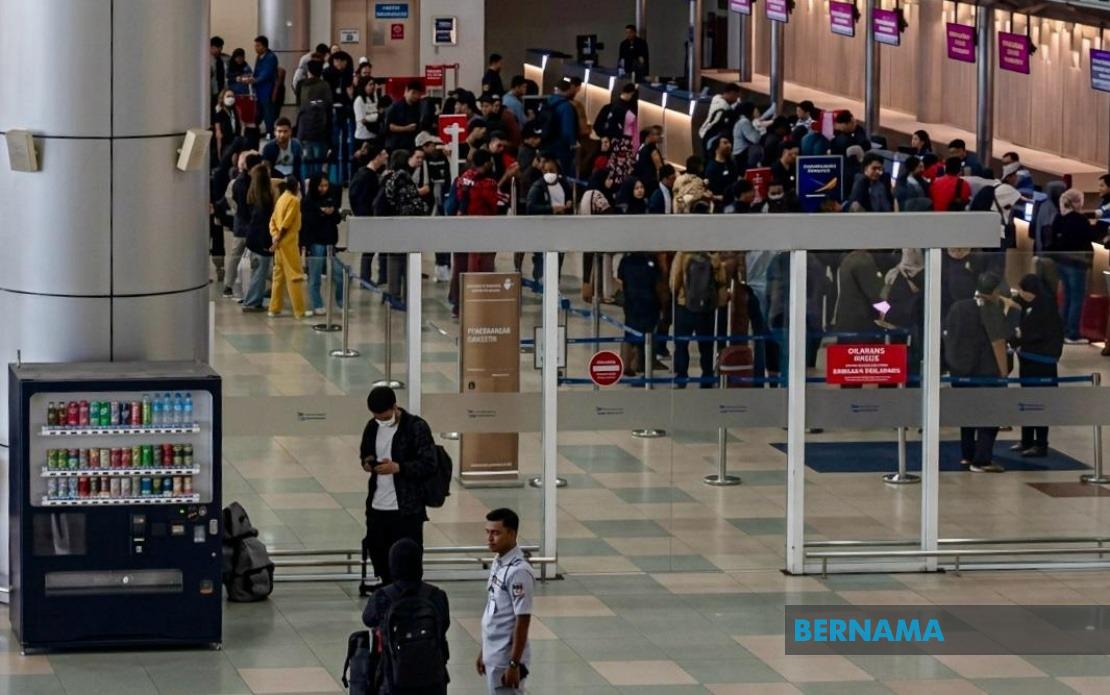
Labuan Airport suspended runway operations on June 26 after explosive devices were found in the vicinity, forcing authorities to implement sweeping security measures that rippled across regional flight schedules. The Royal Malaysian Air Force (RMAF) issued a Notice to Airmen (NOTAM) at 5pm, effectively closing the runway to all traffic pending comprehensive safety inspections and formal clearance from relevant authorities. The discovery, positioned approximately 150 metres from the active runway, triggered an immediate coordinated response between RMAF personnel and airport management to secure the facility and determine whether operations could resume safely.
The incident proved particularly disruptive during evening peak travel hours, with at least five scheduled departures directly affected within a three-hour window. Flights scheduled for 4:05pm, 5:15pm, 6:05pm, 6:15pm, and 7:25pm serving Kuala Lumpur, Kota Kinabalu, and Miri experienced immediate operational changes. Airlines operating these services faced difficult decisions about whether to divert aircraft to alternative airports, delay departure pending clearance, or cancel services entirely. The temporary nature of the closure left operators in a holding pattern, unable to commit resources definitively until authorities signalled the all-clear.
Labuan Airport, serving the Federal Territory of Labuan as a crucial air bridge connecting the island to Sarawak and Peninsular Malaysia, handles relatively modest passenger volumes compared to major regional hubs. However, its limited route network and frequency means disruptions create outsized inconvenience for travellers relying on these connections for business, government work, and essential travel. The Labuan-Miri and Labuan-Kota Kinabalu routes particularly bore the impact, with several scheduled services completely cancelled rather than diverted, suggesting saturation at alternative airports or aircraft unavailability.
Airport authorities and the RMAF conducted a methodical joint inspection process, withholding runway reopening until both internal assessments and external security clearances aligned. This measured approach, while frustrating for stranded passengers, reflects heightened security consciousness across Malaysian aviation infrastructure following regional incidents. The necessity for formal safety clearance documentation before resumption indicated the seriousness with which authorities treated the discovery, avoiding any risk of premature reopening that might jeopardise passenger safety.
Passenger communication emerged as a critical challenge during the disruption. The airport authorities issued advisories recommending that travellers contact their respective airlines directly for updated flight information rather than appearing at the airport without confirmation. This placed onus on individual carriers to manage customer expectations and rearrange bookings, a process often complicated by limited alternative capacity, particularly on longer regional routes where substitute aircraft may not be readily available.
The incident underscores vulnerability in airport infrastructure across smaller regional facilities. While major Malaysian airports maintain sophisticated security screening and perimeter controls, remote and secondary airports like Labuan sometimes operate with leaner security resources. The discovery of explosive devices within 150 metres of an active runway suggests either a security lapse or an intentional placement requiring investigation by law enforcement authorities. The nature of the discovery—whether abandoned ordnance, deliberate placement, or other circumstances—remained unspecified in official communications, leaving room for speculation about underlying causes.
For Malaysian travellers accustomed to seamless regional connectivity, such disruptions highlight the fragility of air transport networks servicing dispersed populations. Labuan's economic importance as a financial centre and offshore hub means business interruptions carry tangible costs beyond mere travel inconvenience. Corporate executives, finance professionals, and government officials whose meetings depend on reliable air access face downstream productivity losses when flights cancel unexpectedly.
The incident also raises questions about emergency response protocols at secondary airports. RMAF involvement, while providing authoritative military assessment, also consumed time that might have been accelerated through different procedures. Learning from the incident should prompt aviation authorities to review whether standardised emergency response frameworks could maintain security rigor while reducing operational downtime during false alarms or minor incidents.
As regional aviation continues expanding post-pandemic, maintaining infrastructure security without unnecessarily hobbling efficiency remains a persistent balancing act. Labuan Airport's temporary closure, while appropriate given the circumstances, demonstrated both the seriousness with which authorities treat potential threats and the cascading consequences such disruptions impose across connected networks. Passenger frustration is inevitable during such events, but confidence in aviation safety depends on uncompromising security standards even when they inconvenience travellers significantly.

