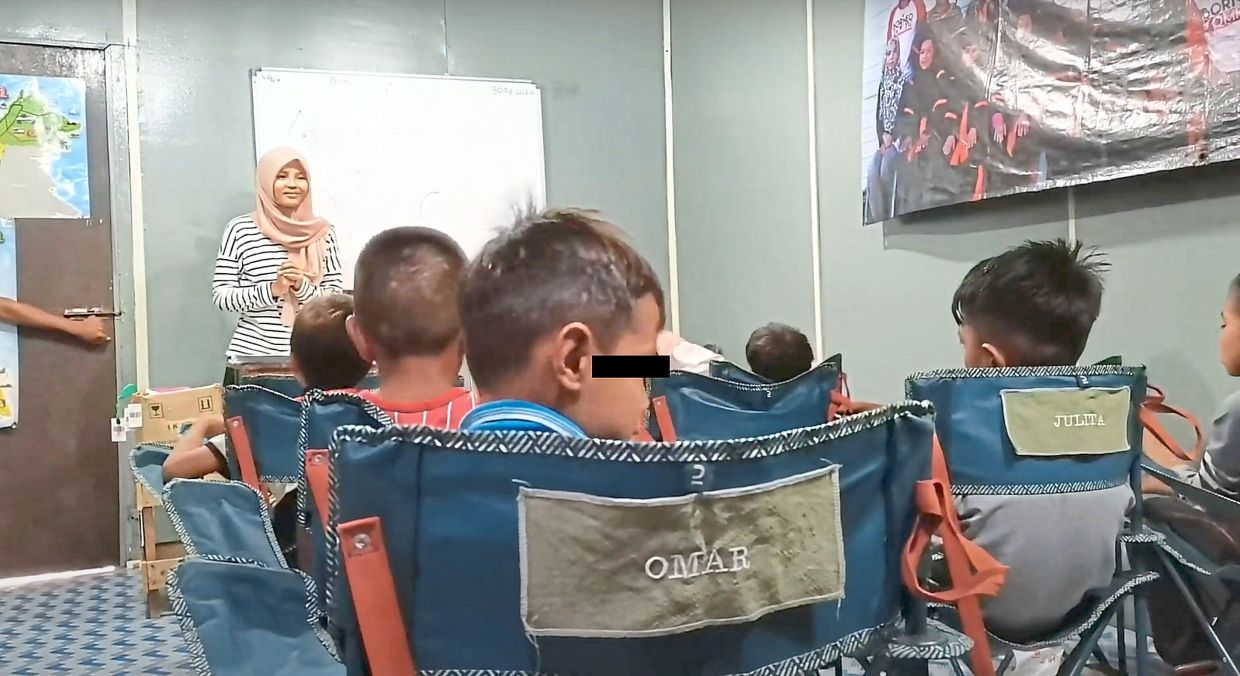
Malaysia's courts have once again thrust the question of belonging into sharp focus. In two recent cases, the Court of Appeal upheld a constitutional interpretation that denies Malaysian citizenship to children who were born in Malaysia, raised in Malaysia, and have never known any other home—solely because their Malaysian fathers and foreign mothers were not married at the time of their birth. Despite DNA evidence confirming biological paternity beyond dispute, the law dictated that these children's nationality must follow their mothers, who had departed Malaysia when the children were young. Both cases involve youngsters with no meaningful ties to their mothers' home countries of Indonesia and the Philippines, yet they remain locked out of Malaysian citizenship by an inflexible constitutional provision.
The constitutional architecture governing citizenship in Malaysia was constructed in a different historical moment. Article 14 of the Federal Constitution establishes that children born to Malaysian parents acquire citizenship automatically, but it creates a critical distinction for those born outside marriage. When a child's parents are unwed, the law treats the mother as the determining factor for nationality purposes. This framework made certain assumptions about family structure and social legitimacy that reflected mid-twentieth-century values. Yet the world has transformed dramatically since independence. Modern DNA testing has rendered questions of biological paternity almost scientifically certain, eliminating the evidentiary uncertainties that may have once justified treating married and unmarried births differently in law.
The implications of this legal position extend far beyond the two families in question. Child rights organisations and civil society groups have begun mounting a sustained critique of how Malaysia's citizenship regime treats children born outside wedlock. The Development of Human Resources for Rural Areas (DHRRA) has pointed out that Malaysia occupies an increasingly rare position globally—it is one of only two countries where fathers cannot transmit citizenship to their children in such circumstances. This isolation suggests that Malaysia's approach has fallen out of step with international norms and evolving understandings of children's rights. Advocates emphasise that the constitutional framework fails to prioritise what legal systems across the world now recognise as paramount: the best interests of the child.
When one examines the practical consequences, the disconnect between legal logic and human reality becomes impossible to ignore. The court's reasoning treats marital status as the decisive factor, but this approach conflates two distinct legal concepts that serve fundamentally different purposes. Marriage is a voluntary commitment between consenting adults; it governs how two people choose to structure their relationship before the law. Citizenship, by contrast, is a child's foundational legal identity—it determines access to a nation's institutions, protections, and opportunities. Conflating these two serves neither purpose well. A child bears no responsibility for their parents' decision to marry or remain unmarried, yet the current interpretation imposes lifelong consequences on that child for choices made entirely by adults.
The analogy to criminal and civil law illustrates the unusual nature of this burden. When an adult violates the law—driving recklessly, evading taxes, or committing fraud—the consequences fall upon the wrongdoer. The adult pays the penalty. But in the citizenship cases discussed here, the penalty is paid by a child who committed no wrong and made no choice. A youngster who has spent their formative years in Malaysian schools, speaking Malaysian languages, and forming Malaysian friendships suddenly discovers they belong nowhere in law, despite belonging everywhere in practice. This reversal of accountability appears to contradict basic principles of legal fairness.
Consider also the globalised reality of modern relationships. For centuries, many legal systems imposed inferior status on children born outside marriage, affecting inheritance, family naming, and social standing. But over recent decades, countries worldwide have dismantled such distinctions, recognising that distinctions based on parental marital status represent discrimination against children for circumstances beyond their control. Humans have always moved, loved across borders, and formed families in diverse configurations. Migration, cross-cultural relationships, and varying relationship choices are not aberrations—they are intrinsic features of modern life, particularly in a region like Southeast Asia where people traverse borders regularly for work, education, and family reasons. Laws that penalise children for these realities strain credibility.
A significant moment came in 2024 when Parliament amended the Federal Constitution to allow Malaysian mothers to pass citizenship automatically to their children born overseas. This reform represented explicit recognition that citizenship law must evolve to reflect contemporary realities and gender equality principles. The amendment acknowledged that a parent's gender should not determine a child's rights, and that citizenship laws must adapt to modern family structures. Yet the constitutional provision governing unwed fathers remains unchanged, creating an asymmetry difficult to defend on principled grounds. If Parliament could see the wisdom in updating the law to reflect modern realities for mothers, the same reasoning applies with equal force to fathers.
The statelessness problem deserves particular emphasis because it exposes how legal abstractions translate into concrete human suffering. Children without recognised nationality face significant barriers throughout their lives. Education becomes complicated when schools require citizenship documentation. Healthcare access is restricted. Employment opportunities shrink dramatically, as most formal employers require proof of legal status. Basic transactions like opening a bank account, obtaining a driving license, or renting housing become extraordinarily difficult. These are not minor inconveniences; they represent systemic exclusion that traps individuals in poverty, vulnerability, and marginalisation. A child born stateless through no fault of their own must navigate adulthood perpetually on society's margins.
This issue is not entirely novel to Malaysia. Variants of the same problem have surfaced repeatedly—involving foundlings, children born in remote indigenous communities where birth registration has proven difficult, and youngsters whose circumstances have left them undocumented. In each instance, children become trapped in legal limbo through accidents of circumstance rather than because of their own actions or characteristics. The pattern reveals a systemic flaw in how the law treats vulnerable children who lack powerful advocates. Addressing this requires moving beyond individual cases to confront the underlying constitutional framework.
The question ultimately distils to something deceptively simple: Does this child belong here? For the young people in these Court of Appeal cases, the answer is unambiguous. They were born in Malaysia, they grew up in Malaysia, they went to school in Malaysia, and they know no other place as home. They have Malaysian fathers and Malaysian identities in every meaningful sense except the legal one. The second question—will this child become stateless?—also admits of a clear answer: yes, without reform, they will. Statelessness is not an abstract theoretical concern; it is a genuine human tragedy that diminishes both individual lives and national society.
Malaysia has demonstrated through the 2024 constitutional amendment that Parliament recognises the need to update citizenship law for contemporary realities. That same spirit of reform should extend to the position of children born to Malaysian fathers and foreign mothers outside wedlock. The Constitution is not immutable—it has been amended many times to reflect changing circumstances and values. The principle at stake here is whether children should be penalised for parental choices made before their birth, or whether they deserve the opportunity to begin life on level ground. In 2026 and beyond, Malaysia has an opportunity to ensure that every child born within its borders, growing up within its communities, and identifying with its future, can claim that they truly belong.

