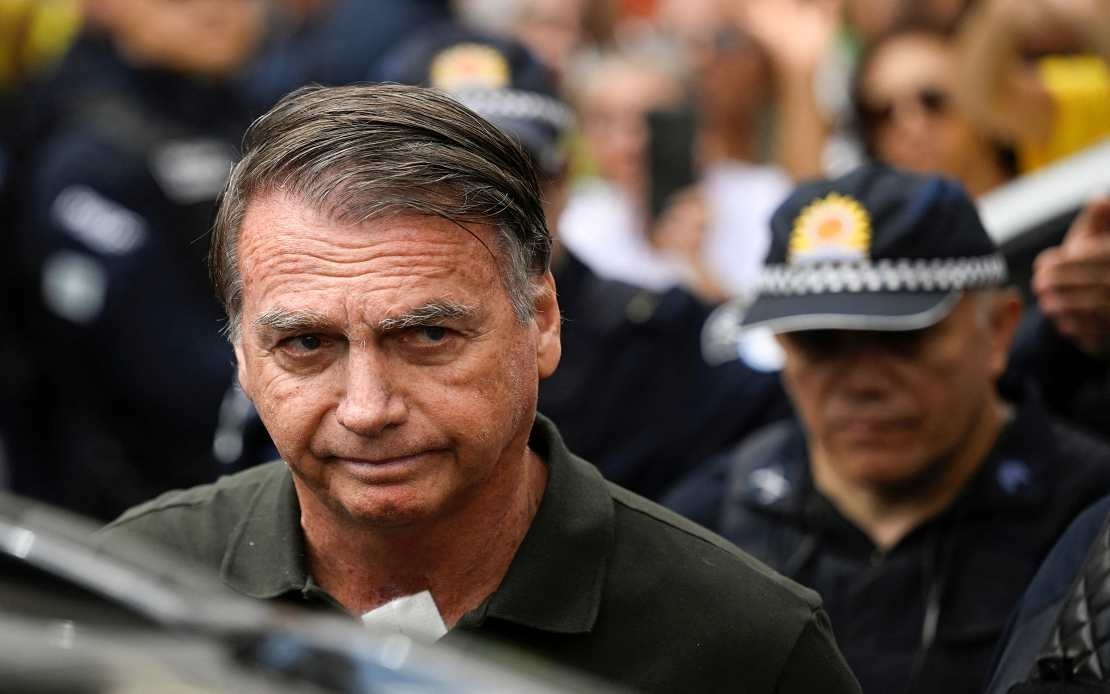
A Brazilian court has barred Argentine President Javier Milei from visiting former Brazilian president Jair Bolsonaro, who remains under house arrest in the capital. Judge Alexandre de Moraes rejected the request on July 19, citing restrictions that had been imposed just one day earlier on Bolsonaro's confinement conditions. The decision reflects escalating judicial scrutiny of the imprisoned leader's activities as Brazil's presidential election approaches in October, with high-stakes political maneuvering intensifying across South America's largest economy.
Bolsonaro had arranged for Milei to visit his residence in Brasília on July 25, according to statements from his legal team. The Argentine president had planned the Brazil trip specifically to demonstrate solidarity with Flávio Bolsonaro, the former president's eldest son, who is positioning himself as a presidential candidate in the upcoming election cycle. The meeting would have served as a high-profile show of support from one of South America's most influential right-wing leaders to another, signalling transnational alignment within the region's conservative political movements.
The relationship between Milei and Bolsonaro represents a significant axis within contemporary South American right-wing politics. Both leaders have cultivated images as outsider candidates challenging establishment elites, though they operate within vastly different contexts. Milei's recent election in Argentina and his libertarian-inflected economic agenda have made him influential across the continent, while Bolsonaro retains substantial political capital despite his legal troubles. Their alignment demonstrates the interconnected nature of regional conservative politics and the importance placed on personal relationships and symbolic gestures in maintaining ideological cohesion.
Judge Moraes issued the tightened house arrest conditions on Friday, July 18, imposing a blanket prohibition on Bolsonaro receiving any visits of political or electoral significance until the conclusion of the October election. The judge simultaneously banned the former president from transmitting political communications through intermediaries, effectively restricting his ability to participate in campaign activities even from confinement. Moraes formally dismissed the defence's application for the Milei meeting as lacking legal merit, describing it as "moot" under the revised restrictions now governing Bolsonaro's situation.
The immediate trigger for these heightened restrictions was a handwritten letter from Bolsonaro in which he publicly endorsed his son Flávio's presidential ambitions. Flávio Bolsonaro published the letter on social media platforms, ensuring widespread visibility of his father's backing during a critical period of the electoral cycle. The court determined that this communication constituted a violation of Bolsonaro's existing house arrest conditions, which had previously permitted limited personal activities but prohibited direct participation in electoral affairs. The incident prompted judicial action to close perceived loopholes in the confinement regime.
Bolsonaro's current legal predicament stems from a conviction related to an alleged attempted coup plot, for which he received a sentence exceeding 27 years in prison. Rather than serving time in a conventional detention facility, he has been permitted to serve his sentence under house arrest due to health considerations. This arrangement has nonetheless remained contentious, with prosecution and judicial authorities maintaining vigilant oversight of his activities to prevent political interference. The case exemplifies the intense polarization surrounding Bolsonaro in Brazilian politics, where his supporters view the prosecution as politically motivated while critics argue it represents legitimate accountability for serious constitutional violations.
Incumbent President Luiz Inácio Lula da Silva appears positioned to seek re-election in October, setting up a potential rematch with Bolsonaro's political heirs. Flávio Bolsonaro's presidential candidacy represents an attempt by the former president's political machine to maintain influence despite Bolsonaro's imprisonment and barring from holding office. This succession strategy underscores how restrictions on individual candidates do not automatically translate into diminished political power for their allied movements. The Bolsonaro family's continued political prominence demonstrates the challenges democratic institutions face in containing influence when legal restrictions target individuals rather than underlying organizational structures.
The timing of Milei's planned visit carries significance for regional geopolitics. Argentine-Brazilian relations have historically oscillated between cooperation and competition, with ideological alignment between leaders often determining the character of bilateral engagement. Milei's visit would have symbolized a new era of right-wing coordination across the region's two largest economies, potentially influencing other centre-right and conservative governments in South America. By blocking this meeting, the Brazilian court has inadvertently elevated its symbolic importance while simultaneously preventing the physical realization of such an alliance.
For Malaysia and Southeast Asia, this Brazilian court decision illustrates broader patterns concerning judicial independence and executive authority in emerging democracies. The episode raises questions about whether restrictions on opposition figures serve legitimate constitutional purposes or function as tools of political suppression. Brazil's experience offers instructive lessons regarding the dangers of allowing courts to become instruments of electoral management, a concern relevant to nations across the region where institutional checks and balances remain under stress. The case demonstrates how even large, relatively institutionalized democracies can experience erosion of norms governing political competition and judicial impartiality.
The broader implications extend to how democracies manage politically convicted leaders and their ongoing influence. Bolsonaro's ability to shape electoral outcomes through his family members and allied candidates despite confinement suggests that formal legal restrictions may prove insufficient to contain determined political movements. The court's increasingly stringent conditions on his house arrest reflect judicial frustration with this situation, yet raise concerns about whether the response respects principles of proportionality and due process. For regional observers, Brazil's handling of this dilemma will likely influence approaches to similar challenges elsewhere, particularly in countries grappling with post-authoritarian transitions and unresolved questions about accountability versus political reconciliation.

