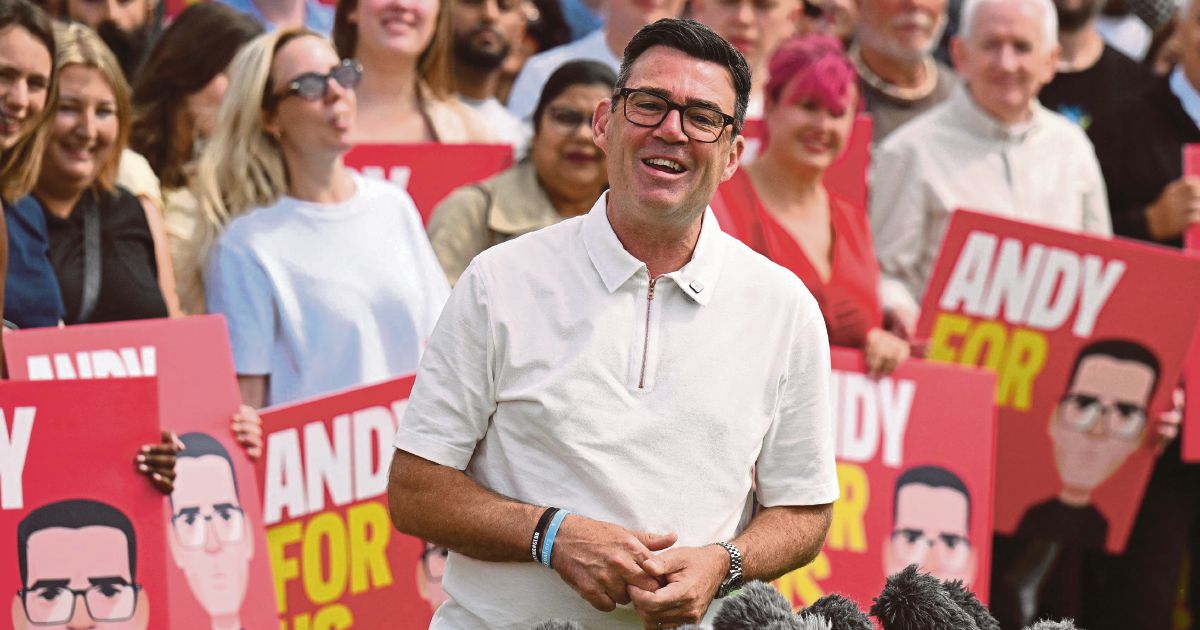
Andy Burnham took office as Britain's seventh prime minister in ten years on Monday, arriving at 10 Downing Street with a mandate to fundamentally reshape how government operates and addresses the everyday concerns of ordinary citizens. The appointment marks a significant moment in British politics, elevating a figure long associated with defending the interests of England's industrial heartlands to the country's highest elected office.
Burnham's ascent reflects a broader political recalibration in Westminster. The Labour politician has earned his nickname 'King of the North' through decades of advocacy on behalf of communities often overlooked by centralised policymaking in London. His career trajectory—from parliamentary backbencher to regional figurehead—demonstrates a deliberate strategy of building credibility at grassroots level before ascending to national leadership. This contrasts sharply with the revolving-door premierships that have characterised Britain since 2014, when David Cameron held the post.
The incoming premier has staked his early authority on a specific pledge: to "rewire" the nation's institutional apparatus. This framing suggests dissatisfaction with how government currently prioritises and responds to citizen demands. Rather than offering a detailed policy prospectus, Burnham has emphasised a wholesale rethinking of governmental priorities and mechanisms. The language reflects recognition among British voters and political analysts that the country faces fundamental challenges requiring more than incremental adjustment.
The cost-of-living crisis remains front and centre in British public consciousness. Households across the United Kingdom have endured years of pressure from rising energy bills, food inflation, and stagnant wage growth. For working families and pensioners alike, these pressures have been relentless. Burnham's emphasis on this issue during his transition to office signals that addressing economic hardship will command immediate attention. The political urgency is evident: public satisfaction with government economic management has reached historic lows, and voters have consistently ranked living costs as their primary concern in successive polling.
Public service reform constitutes Burnham's second major stated priority. Britain's National Health Service, schools, and local government agencies have all faced years of underfunding and rising demand. Healthcare waiting lists have stretched to record lengths, with some patients waiting months for routine procedures. Schools report inability to recruit and retain teachers, while councils struggle to maintain basic services from social care to waste collection. These failures, visible in every constituency, have created deep public frustration that no single government initiative can quickly remedy.
The rapid succession of prime ministers preceding Burnham—each serving comparatively brief tenures marked by internal party strife or electoral reversal—has left many observers questioning whether any leader can genuinely command sufficient parliamentary support and public goodwill to implement transformative change. The political landscape remains fractious, with regional variations in electoral strength and persistent tensions between central government and devolved authorities in Scotland, Wales, and Northern Ireland. Burnham must navigate these competing pressures while maintaining coalition support in parliament.
For Malaysian and Southeast Asian observers, the British political turmoil offers instructive lessons regarding institutional stability and the challenges of managing expectations in democracies facing economic headwinds. The speed of leadership change in Westminster—seven prime ministers in a decade—stands in sharp contrast to more stable political systems, yet also illustrates democratic mechanisms for removing ineffective leaders. British voters have repeatedly punished governments they perceived as failing to address priorities like living costs and public service quality.
Burnham's northern credentials carry particular symbolic weight in a country where regional inequality has become a defining political issue. London and the southeast have concentrated wealth, opportunity, and political influence in ways that leave northern cities—Manchester, Liverpool, Leeds—feeling structurally disadvantaged. The new prime minister's deep roots in these communities position him as someone genuinely conversant with regional challenges rather than parachuted in from Westminster elite circles.
The scale of challenges confronting the new administration extends beyond domestic economics. Britain's international relationships, its role in European affairs following Brexit, and defence commitments to NATO allies all require sustained attention. A prime minister focused on fundamental institutional reform must balance these external obligations with domestic imperatives. Whether Burnham can achieve meaningful progress on both fronts within a typical parliamentary term remains uncertain.
Early commentary suggests both cautious optimism and scepticism about the new premier's capacity to deliver on his ambitious framing. Political allies highlight his negotiating experience and consensus-building skills demonstrated during his tenure as mayor of Manchester, where he developed relationships across party lines and with business leaders. Critics question whether any prime minister can simultaneously rewire government systems while managing an economically constrained state apparatus and meeting immediate public expectations for improved services.
Burnham inherits not merely a portfolio of policies but a mandate for legitimacy itself. After years of prime ministerial instability and public disenchantment with Westminster, his success will be measured not only by specific achievements but by whether he can restore faith in government institutions and demonstrate that democratic leadership can tangibly improve citizens' lives. The 'rewiring' he promises begins with restoring public confidence that government serves the many rather than privileged minorities.

