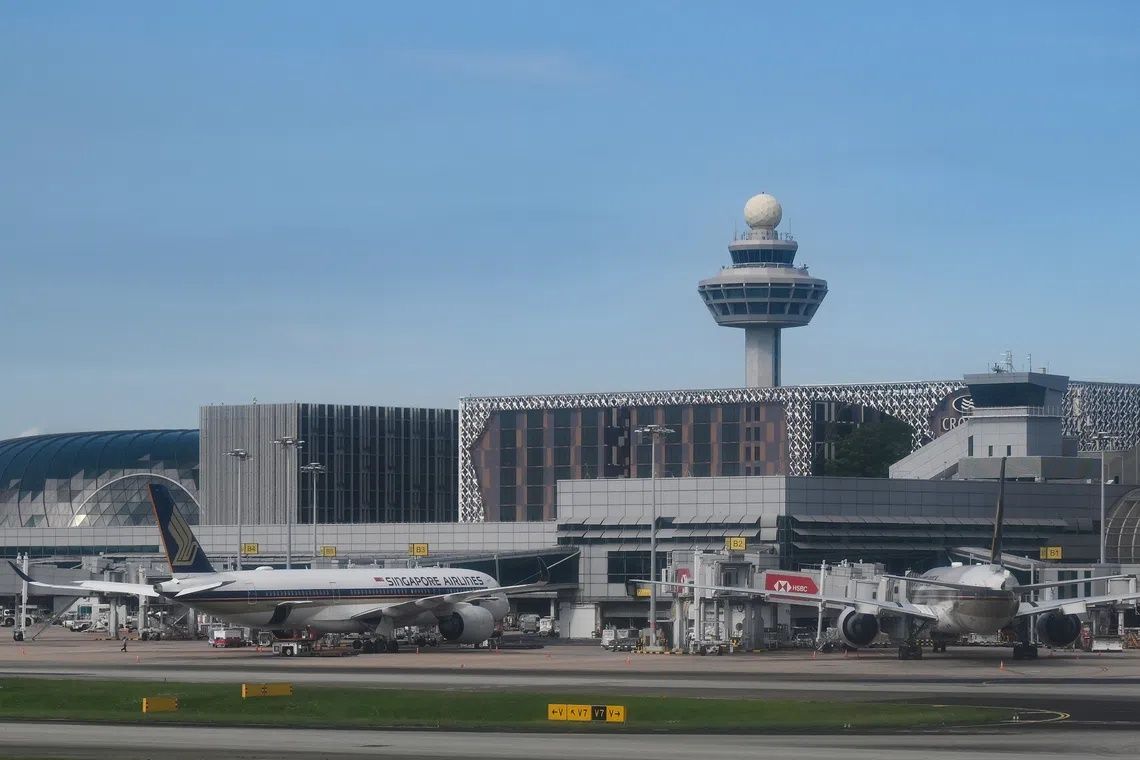
A 25-year-old British national faces multiple charges in Singapore following an incident at Changi Airport Terminal 1 in which he allegedly became aggressive with airport staff, pushed past employees attempting to prevent his unauthorised entry, and caused nearly an hour of disruption to flight operations. The incident, which occurred on July 20, has prompted a broader conversation about passenger conduct and airport security protocols in one of Asia's busiest aviation hubs, with implications for how regional airports manage intoxicated or disruptive travellers.
Singapore police responded to a report filed at approximately 4:05 pm that day concerning a passenger creating a disturbance at a boarding gate serving a service to Kuala Lumpur. Upon arrival, officers discovered that the man had been displaying disruptive behaviour whilst waiting to board, speaking and shouting loudly enough to disturb neighbouring passengers and create an uncomfortable atmosphere in the departure area. Initial observations suggested the passenger was intoxicated, a factor that would later form the basis of one charge against him.
When two airline staff members approached the man to address his conduct, the situation escalated rapidly. The passenger responded with anger, directing abusive language at one of the employees in what police characterised as a flagrant disregard for airport decorum and professional boundaries. Given the passenger's intoxicated state and increasingly hostile demeanour, airline management made the decision to remove him from the passenger manifest and prevent his boarding. This decision, though necessary for maintaining order and safety, appears to have triggered a more severe reaction from the traveller.
Rather than accepting the airline's determination, the man allegedly became even more combative, attempting to force his way back towards the aircraft by pushing forcefully past airline staff members who were positioned to maintain the integrity of the boarding process. In breaking through their cordon, he entered a secured area of the airport—a zone restricted to authorised personnel only—without any legitimate right of access. During this altercation, one staff member was knocked to the ground, sustaining injuries to her left arm and wrist that required medical attention, transforming what might have been a simple conduct violation into an incident involving physical harm.
The situation continued to deteriorate as the man persisted in his aggressive conduct, now directing profanities and threatening language at airport security personnel who had been called to contain the disturbance. The cumulative effect of his actions, resistance, and belligerence resulted in a 45-minute delay to the flight's scheduled departure, creating a cascade of inconvenience for all passengers aboard and subsequent flights affected by the scheduling disruption. For regional travellers and airlines operating within Southeast Asia, such delays reverberate throughout connecting networks and have commercial consequences extending well beyond the immediate incident.
Police announced on Tuesday, August 11, that the man would face three distinct charges reflecting the seriousness and breadth of his conduct. The first charge relates to causing annoyance whilst intoxicated in a public place—a provision designed to protect public spaces from disruption fuelled by alcohol consumption. The second charge concerns the use of threatening, abusive, or insulting words and behaviour, addressing the verbal component of his aggression. The third charge, arguably the most serious, pertains to unauthorised entry into a protected area, directly referencing his forced passage into the restricted boarding zone.
Singapore's sentencing framework for these offences reflects the jurisdiction's serious approach to airport security and public order. A conviction on the intoxication charge carries a maximum fine of S$1,000 or imprisonment for up to six months, or both penalties combined. The abusive language charge carries a maximum fine of S$5,000. However, the unauthorised entry charge carries substantially heavier penalties—a fine up to S$20,000, imprisonment up to two years, or a combination of both—underscoring how Singapore's legal system treats breaches of airport security zones with particular gravity.
This incident arrives at a moment when airports across Southeast Asia have been grappling with an apparent uptick in passenger misconduct, ranging from minor irritations to serious security breaches. Airlines and airport authorities in the region have increasingly implemented stricter policies governing intoxicated passengers, recognising that alcohol-fuelled disruptions present safety risks, operational challenges, and financial costs. The incident at Changi, one of the world's premier aviation facilities, demonstrates that even world-class airports must contend with the unpredictability of human behaviour and the challenges posed by passengers whose judgement is impaired.
For Malaysian readers with regular connections through Singapore's transport hub, the case underscores both the capability and the firmness with which Changi Airport authorities enforce conduct standards. The incident also illuminates the physical and emotional toll such altercations exact on airport staff, who operate in high-pressure environments and are often on the receiving end of passenger frustration, much of which stems from factors beyond their control. The injury sustained by the staff member in this case serves as a stark reminder that breaches of professional boundaries can result in genuine harm.
The broader ramifications extend to questions about pre-departure protocols and early intervention. Airlines and airports face a delicate balance between accommodating passenger needs and maintaining security; identifying intoxicated or potentially volatile individuals early in the boarding process allows for smoother resolution, whilst delayed interventions risk the kind of escalation witnessed in this case. Changi Airport's response—involving police intervention, careful documentation, and prosecution—reflects institutional commitments to accountability and deterrence, sending a clear message to the travelling public that disruptive conduct carries real legal consequences.
As the man prepares for his court appearance, the case will likely serve as a cautionary tale for travellers transiting through Singapore and other regional hubs. Beyond the immediate legal jeopardy the British national faces, the incident illustrates how momentary lapses in judgment—in this instance apparently fuelled by alcohol—can result in criminal charges, substantial fines, potential imprisonment, and lasting reputational damage. For the airline, airport operators, and fellow passengers, the incident represents a vindication of protocols designed to maintain order and safety in increasingly complex and crowded transportation environments.

