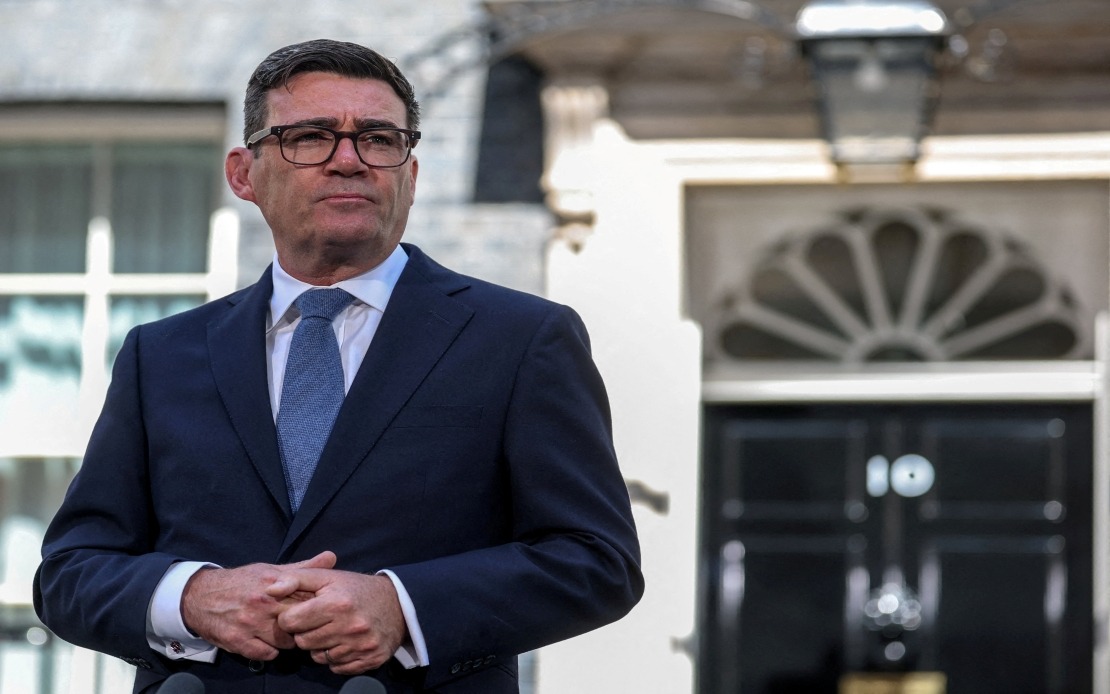
Prime Minister Andy Burnham on Thursday activated a new government office in Manchester as a centerpiece of his administration's effort to redistribute economic power away from the Westminster establishment and towards regional bodies. The facility, housed at Heron House in the city centre, carries the symbolic name No10 North and is positioned as a control centre for growth initiatives that will coordinate local economic development efforts and advance the devolution agenda across Britain.
The opening of this northern base represents a tangible break with decades of Whitehall-centric governance. Rather than confining senior policymaking to the capital, the Prime Minister has committed to working from the Manchester office on a weekly basis, establishing it as a genuine seat of government rather than a mere regional outpost. Senior ministers will likewise be expected to maintain regular presence there, transforming it from a symbolic gesture into a functioning hub for decision-making. This structural arrangement signals that Westminster's grip on economic strategy is being deliberately loosened in favour of a more geographically distributed model of power.
Burnham framed the initiative in characteristically bold language, describing No10 North as a "situation room for making Britain better" and declaring that "the days of Whitehall resisting devolution are over, for good." This phrasing carries particular weight given the historical resistance from civil service and political establishments to surrendering centralised control. The devolution agenda has long been contentious in British politics, with regions outside London frequently complaining of inadequate resources and decision-making authority. The establishment of a permanent Manchester office suggests this administration is serious about changing the dynamics.
The immediate practical manifestation of this commitment comes on Friday, when Burnham will convene the first gathering of the revived National Economic Council at the Manchester location. This body brings together cabinet-level ministers alongside regional mayors—figures who previously occupied a peripheral role in national economic planning. The inclusion of elected local leaders in high-level economic discussions represents a structural change in how Westminster relates to regional governance. By holding this inaugural session in Manchester rather than Downing Street, the symbolism reinforces that decision-making power is genuinely being redistributed rather than merely being discussed in principle.
The National Economic Council itself carries historical significance. Originally formed in 2008 as a crisis-response mechanism during the global financial crisis, its resurrection in 2024 reflects the current administration's view that economic growth cannot be achieved through Whitehall diktat alone. The Council's structure remains flexible by design—participation will expand or contract depending on the particular economic issues under discussion. Business leaders, trade union representatives, and other stakeholder organisations may be invited to contribute to specific discussions, creating a more inclusive economic policymaking process than the traditional civil service model.
For Malaysian readers observing British governance reforms, this development offers instructive parallels to longstanding debates about centralisation versus decentralisation in Southeast Asian governance. Many countries in the region have grappled with similar tensions between capital-city-based administrations and provincial authorities seeking greater fiscal and policy autonomy. The British experience demonstrates both the political appeal of decentralisation rhetoric and the practical difficulties of implementing genuine power-sharing arrangements between national and regional institutions. How effectively Burnham's government manages this transition will likely influence thinking elsewhere about the feasibility of such structural reforms.
The Manchester initiative also reflects broader transformations within British politics, particularly the relationship between traditional Labour strongholds in the north and the Westminster political class. For decades, northern England has expressed frustration at being treated as a periphery by London-based policymakers. The devolution agenda, championed by figures including the Mayor of Greater Manchester, has positioned regional autonomy as essential to addressing economic inequality between southern and northern regions. By physically relocating parts of the government apparatus, Burnham is attempting to translate this political commitment into institutional reality.
The practical implications remain to be determined. Maintaining regular ministerial presence in Manchester while government operations remain substantially based in London will require significant logistical coordination and cultural shift within the civil service. Questions persist about whether genuine decision-making authority will follow ministerial presence or whether Manchester becomes primarily a consultation venue while real power remains concentrated in the capital. The credibility of the devolution initiative will ultimately depend on whether regional leaders can demonstrably influence major economic decisions, rather than simply having their voices heard before Westminster makes predetermined choices.
The investment in physical infrastructure—establishing Heron House as a functioning government office—suggests genuine commitment rather than performative politics. However, devolution initiatives in various democracies have frequently encountered obstacles when regional stakeholders discover that symbolic gestures precede substantive power transfers. The National Economic Council's revived format will be instructive; if it becomes a genuine forum where regional mayors exercise meaningful influence over national economic priorities, it will validate the devolution project. If it devolves into another consultative body that rubber-stamps pre-determined policies, scepticism about the reform's substance will intensify.
For regional development specialists and governance experts across Southeast Asia, the Burnham administration's experiment offers both cautionary tales and potential models. Successfully redistributing economic decision-making requires not just structural reorganisation but sustained political will to accept outcomes that diverge from what the centre prefers. The test will come when Manchester-based discussions generate recommendations that Westminster's traditional power structures find inconvenient. Whether the Prime Minister proves willing to implement decisions genuinely made through this more inclusive process, rather than merely appearing to do so, will determine whether No10 North becomes a genuine innovation in British governance or remains primarily symbolic.

