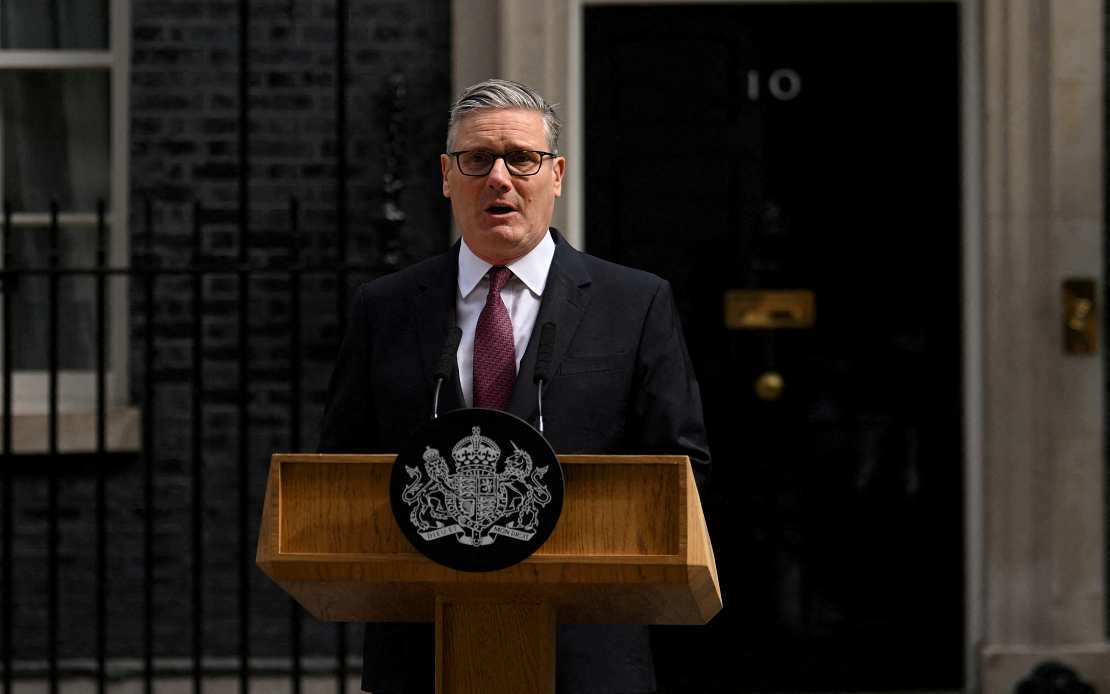
British Prime Minister Keir Starmer has announced plans to step down from his position, with a replacement expected to assume office by the time parliament reconvenes in September. The announcement marks a dramatic reversal for a leader who just under two years ago secured a commanding electoral mandate on a platform promising to restore stability to British governance after years of political turbulence.
Starmer's decision to relinquish his grip on power represents a stark acknowledgement of eroding support both within his own Labour Party and among the broader electorate. His personal approval ratings have slipped to historically low levels for any sitting British prime minister, reflecting widespread disillusionment with his administration's performance on key issues including living costs and public service delivery.
The precise moment that sealed Starmer's fate arrived on Friday when Andy Burnham, the high-profile mayor of Greater Manchester, secured a decisive parliamentary by-election victory that saw him return to Westminster. Burnham's win carried particular symbolic weight: he defeated a candidate from Nigel Farage's Reform UK party, which has consistently topped national opinion polling for over a year and represents the most significant threat to Labour's electoral dominance. The result energised backbench Labour MPs who had been quietly plotting to oust Starmer, suggesting that Burnham possessed the political capital and communication prowess to arrest the party's decline.
Burnham's political career has been carefully cultivated over decades, establishing him as a skilled operator capable of navigating complex governance challenges. His emergence as a potential successor carries implications far beyond domestic Labour politics. However, his policy framework remains poorly defined in critical areas. While he has articulated general principles around fundamental national transformation and reducing living expenses, his positions on foreign policy, economic management, and defence spending remain largely opaque—a gap that investors and international partners will scrutinise closely.
The incoming prime minister, whether Burnham or another candidate, will inherit a profoundly constrained governing environment. The British economy labours under multiple structural pressures that severely limit policy flexibility. The country already carries the highest borrowing costs within the Group of Seven industrialised nations, a consequence of elevated sovereign debt levels, substantial interest payment obligations, years of sluggish economic expansion, inflexible spending patterns, and urgent requirements to strengthen defence capabilities and critical infrastructure.
Market participants remain deeply sceptical about Labour's fiscal room for manoeuvre. Financial analysts at Citibank warned that a Burnham administration would confront "a precarious fiscal situation with few tools to deliver meaningful change." This assessment reflects broader investor anxiety about whether any new Labour leader can simultaneously satisfy voter demands for improved public services and lower living costs while maintaining the confidence of bond markets that have grown increasingly risk-conscious about British debt sustainability.
Burnham's own prior rhetoric complicates this outlook. Last September, he declared publicly that Britain must move beyond "being in hock to the bond markets," language suggesting potential willingness to challenge the orthodox fiscal consensus that has dominated Westminster policymaking. Financial institutions are now divided on whether such rhetoric translates into genuine policy divergence or merely campaign positioning. The tension between populist demands for state intervention and market demands for restraint will define the incoming administration's actual governing choices.
Starmer initially indicated on Friday that he would contest any formal party leadership election designed to replace him. That position underwent a sudden revision over the following weekend, suggesting internal party dynamics and backbench pressure forced his hand more rapidly than initially anticipated. His commitment to remain as caretaker until the leadership process concludes reflects both procedural convention and an attempt to maintain some personal dignity during an otherwise humiliating departure.
The turnover in British prime ministerial office has reached extraordinary levels. Starmer's successor will represent the seventh individual to occupy 10 Downing Street since the June 2016 Brexit referendum, a rate of leadership rotation unmatched in nearly two centuries of British parliamentary history. This unprecedented churn underscores the fundamental difficulty any government faces in maintaining voter confidence when successive administrations fail to demonstrably improve living standards, strengthen public services, or effectively manage immigration pressures that animate public anxiety.
For Southeast Asian observers, Starmer's downfall offers instructive lessons about the fragility of electoral mandates in democratic systems and the persistent gap between campaign promises and governing capacity. The timing of his departure also carries diplomatic significance: political advisers at Eurasia Group had suggested the optimal outcome would position Starmer to attend a planned UK-European Union reset summit in July before fully stepping aside, allowing his successor adequate preparation time to assume office. This choreography illustrates how domestic political crises increasingly intersect with international diplomatic calendars, potentially disrupting carefully planned bilateral and multilateral engagement.
The succession process will determine not only Labour's electoral prospects but also Britain's international positioning at a moment when geopolitical tensions demand stable, consistent leadership. A protracted internal party contest could undermine Britain's ability to present a coherent foreign policy stance to regional partners in Asia and beyond, introducing additional uncertainty into an already complex global environment. The manner in which the Labour Party manages this transition will shape perceptions of British governmental stability for years to come.

