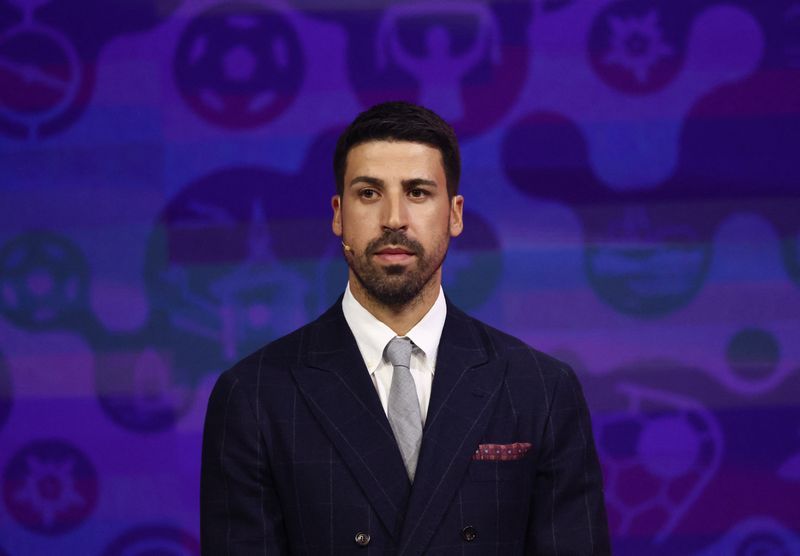
Sami Khedira, the midfielder who lifted the World Cup with Germany in 2014, has emerged as an unlikely voice championing the growing trend of siblings representing rival nations at international football's biggest stage. Rather than viewing such arrangements as problematic, the 37-year-old has reframed them as authentic expressions of our interconnected world, dismissing any notion of divided loyalty as a misunderstanding of contemporary identity. Speaking at the Home of Football museum in New York, Khedira articulated a perspective born from lived experience: his own brother Rani currently competes for Tunisia—their father's birthplace—while he built his international career representing Germany, the country where both were raised.
The premise underlying Khedira's argument touches on something increasingly familiar across professional football. The current World Cup cycle features eight sets of brothers, split evenly between those who share squad colours and those wearing different national jerseys. This diversity of arrangement itself tells a story about global migration patterns and the blurred boundaries of national identity in the modern era. Spanish club Athletic Bilbao provides one particularly striking example: brothers Inaki and Nico Williams are teammates at club level yet pursue separate international paths, with Inaki representing Ghana and Nico playing for Spain. The Doue siblings present another variation, with Guela and Desire divided between Ivory Coast and France respectively.
Khedira's own narrative illuminates why this phenomenon matters beyond the statistical curiosity it might otherwise represent. Born to a German mother and Tunisian father, he grew up navigating the complexity of straddling two cultures without viewing one as subordinate to the other. He candidly acknowledged that his Germanness was sometimes questioned—both within Germany due to his name and appearance, and paradoxically in Tunisia where he might be perceived primarily as German. This dual displacement, rather than diminishing either identity, enriched both. His framework suggests that the question itself—which nation should claim primary allegiance—may be fundamentally misguided when applied to individuals shaped by genuine belonging to more than one community.
The 2026 World Cup format, expanded to accommodate 48 nations, has created unprecedented opportunities for smaller footballing nations to compete at the tournament's apex. This structural change has particular relevance for smaller Caribbean and African territories that previously struggled to qualify. Cape Verde, Curaçao, and Haiti, nations that might once have remained absent from the global stage, now field competitive squads. Khedira pointed to this democratization of access as genuinely transformative for international football's health, particularly given the investment these smaller nations have made in youth development, coaching infrastructure, and technical education over recent years. The trend has also accelerated a subtle but significant shift in the competitive balance, with African and Asian teams demonstrably narrowing historical gaps with established European and South American powerhouses.
Yet Khedira's analysis extends beyond mere celebration of inclusivity. He articulated a measured critique of how wealthier European nations have historically benefited from dual-nationality arrangements. Rather than fostering development in emerging footballing nations, wealthy countries often simply recruit talented players from diaspora communities, creating a kind of brain drain. Khedira suggested that European footballing institutions and federations should shoulder responsibility for genuine capacity-building in developing regions rather than merely harvesting the fruits of other nations' investment in young talent. This argument carries particular weight across Southeast Asia, where emerging markets like Vietnam, Thailand, and Indonesia have invested heavily in youth development infrastructure, only to see promising young players absorbed by established European academies.
The most emotionally resonant moment in Khedira's reflection came when recounting his observation of the Doue brothers singing both national anthems before France and Ivory Coast contested a friendly match. That image—two siblings honouring both their nations with genuine reverence—encapsulated something that transcends tactical analysis or competitive outcomes. It represented football's capacity to articulate deeper truths about human belonging and cultural identity. Khedira framed this not as sentimental but as genuinely powerful communication, particularly important in an era when nationalist sentiment frequently overshadows nuance. For him, the spectacle revealed something beautiful about the sport's ability to accommodate complexity and honour multiple truths simultaneously.
The psychological burden on young athletes navigating these decisions cannot be understated, however, and Khedira spoke with palpable empathy about this dimension. When multiple national federations court promising teenagers, the pressure can be overwhelming and frequently misguided by political considerations, heritage expectations, or parental guidance. He reflected on his own experience at eighteen, still developing emotionally and intellectually, facing a choice that would define his entire career and life trajectory. The decision, he emphasised, cannot be rationally engineered through external pressure or historical obligation. Instead, it emerges from an intuitive understanding of where one belongs—a feeling rather than an intellectual calculation.
Khedira acknowledged having conversed respectfully with Tunisia's football authorities precisely because he respected the weight of such decisions. He seemed to suggest that while external parties might advocate for particular outcomes, the ultimate choice must remain genuinely autonomous. Young players deserve space to explore their own identities without feeling obligated to honour family heritage through football commitments, yet they equally deserve guidance that acknowledges the significance of the choice. This nuanced stance recognises both the legitimacy of national footballing programs seeking to develop talent and the fundamental right of young athletes to make deeply personal decisions about representation.
The practical implications of this perspective ripple across global football. Southeast Asian nations increasingly find themselves in positions similar to those Khedira described—developing young talent with international heritage connections and watching as European academies pursue recruitment. Malaysia, for instance, has seen promising players courted by English, German, and Dutch clubs before their footballing identities fully crystallised. Khedira's framework suggests that rather than viewing this phenomenon as inherently problematic, national federations might better serve their communities by respecting athlete autonomy while creating compelling reasons for talented players to commit to regional football development.
Ultimately, Khedira's position reflects a maturation in how international football might view identity and belonging. Rather than insisting on singular, exclusive loyalty, his worldview accommodates the reality that many athletes—particularly those from immigrant communities or smaller nations—carry multiple legitimate attachments. The brothers competing in different colours at the 2026 World Cup will represent not a problem requiring solution but rather a portrait of football's modern reality, where identity itself has become wonderfully, complexly plural.

