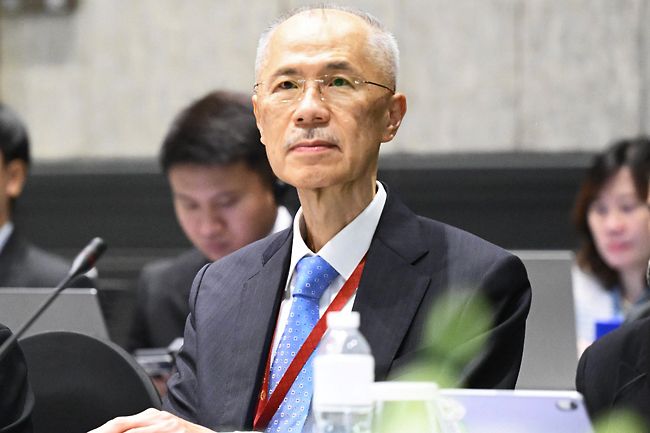
Brunei Darussalam has reinforced its commitment to deepening judicial collaboration across Southeast Asia and advancing the rule of law throughout the region, as the bloc's top courts grapple with unprecedented legal challenges emerging from technological transformation and environmental concerns. Chief Justice Dato Seri Paduka Steven Chong delivered this message at the 13th Meeting of the Council of Asean Chief Justices in Bangkok last month, underscoring how Asean's judiciaries must evolve to serve their populations effectively in an increasingly complex world.
The gathering, which convened from July 21 to 23, brought together the senior judicial leadership of all ten Asean member states to address shared priorities and coordinate responses to challenges that transcend national borders. Chong's participation, leading a delegation of Brunei judges and judicial officers at the invitation of Thailand's Supreme Court President Adisak Tantiwong, demonstrated the small sultanate's active role in shaping the region's judicial agenda despite its modest population and economy.
At the heart of Chong's remarks lay a recognition that the traditional boundaries of judicial administration are rapidly dissolving. Artificial intelligence applications in courtrooms, the emergence of digital assets as subjects of dispute, and an expanding body of litigation concerning climate change represent fundamentally new domains where Asean judiciaries lack established precedent and procedure. Rather than viewing these developments as threats to judicial authority, Chong framed them as opportunities for collective learning and institutional adaptation. This perspective reflects a pragmatic acknowledgment that no single nation-state court system possesses sufficient expertise to navigate these novel legal territories alone.
In response to these emerging challenges, the Council of Asean Chief Justices has launched a suite of coordinated initiatives designed to build judicial capacity across the region. These efforts include advancing court technology infrastructure and establishing governance frameworks for artificial intelligence deployment in judicial settings. Additionally, the CACJ has expanded its E-Learning Portal, a regional resource that allows judges and court personnel across Asean to access standardised training materials and share best practices without requiring expensive and time-consuming international travel. For a region where economic disparities between member states create significant variations in judicial resources, such technological platforms offer a mechanism for levelling the playing field.
Beyond technology, the Council's work encompasses what Chong characterised as the human dimensions of justice. Judicial education and training programmes help ensure that judges across Asean maintain consistent professional standards and exposure to comparative jurisprudence. Initiatives focused on judicial wellbeing address the significant mental health and burnout challenges facing court personnel across the region. Victim-sensitive approaches to adjudicating human trafficking cases represent a deliberate shift away from purely adversarial proceedings toward frameworks that recognise the trauma experienced by vulnerable populations. Therapeutic justice initiatives, which aim to rehabilitate rather than merely punish, reflect an emerging regional consensus that courts should serve broader social healing functions.
Brunei's own contributions to these regional efforts extend beyond diplomatic participation. Earlier this year, the sultanate hosted the Second Asean Multilateral Judicial Knowledge Exchange on Victim-Sensitive Adjudication of Trafficking in Persons Cases, an event that Chong highlighted as exemplifying the value of direct professional engagement among regional judiciaries. Such exchanges do more than transfer knowledge; they forge personal relationships among judges from different countries, creating informal networks that facilitate future cooperation on specific cases and policy challenges. For trafficking cases, which frequently involve victims and perpetrators from multiple Asean nations, these judicial networks prove essential for coordinating investigation, prosecution, and victim protection across borders.
The bilateral meeting between Chong and Singapore's Chief Justice Sundaresh Menon, held on the margins of the Bangkok gathering, illustrated how Asean's smallest states maintain meaningful legal partnerships with better-resourced neighbours. Though Brunei and Singapore differ significantly in constitutional structure and judicial philosophy, both island nations share concerns about maritime disputes, cross-border commerce, and transnational crime. The reaffirmation of their judiciaries' commitment to cooperation signals that legal framework strengthening in Southeast Asia proceeds through both formal Asean mechanisms and bilateral channels.
During the Bangkok meeting, the Council received comprehensive reports from multiple working groups addressing specialised legal domains. The breadth of these working groups—ranging from civil proceedings and case management to insolvency, intellectual property, and digital asset valuation—reveals how extensively modern commerce and technology have expanded the jurisdictional scope of regional courts. Insolvency proceedings involving cross-border creditors and debtors require harmonised approaches to prevent strategic forum shopping. Intellectual property cases increasingly involve enforcement across multiple Asean jurisdictions as creative industries grow throughout the region. Digital asset disputes raise questions about the nature of property itself that existing legal frameworks inadequately address.
Climate justice emerged as a particularly significant focus area for the Council, reflecting growing recognition that environmental degradation transcends national boundaries and generates litigation spanning pollution, resource access, and disaster response. Asean's tropical geography makes it especially vulnerable to climate-related phenomena, while its rapidly industrialising economies generate significant environmental stressors. Judiciaries throughout the region face increasing pressure to adjudicate disputes arising from these tensions, yet most courts lack established jurisprudence on climate-related legal claims. The Council's work on climate justice aims to develop shared frameworks and comparative understanding that can guide national courts as such litigation proliferates.
The Asean Insolvency Judges Meeting and the Asean Intellectual Property Judges and Practitioners Meeting held during the Bangkok session represented a notably inclusive approach to judicial reform. By bringing together not only judges but also practicing lawyers and commercial specialists, the Council recognised that judicial performance depends on the broader legal ecosystem. Practitioners bring frontline experience of how court procedures affect their clients' interests, while judges benefit from understanding practitioner perspectives on enforcement and implementation challenges. This cross-professional dialogue contributes to more pragmatic and workable judicial reform.
At the conclusion of the Bangkok meeting, the assembled chief justices and delegation heads formalised their commitments by signing the Bangkok Declaration, a statement that will likely set benchmarks for judicial cooperation throughout the remainder of the year. Such declarations carry symbolic weight in Asean diplomacy, where formal consensus is often emphasised over binding enforcement mechanisms. The declaration's signing underscored that judicial independence and regional cooperation are compatible values rather than conflicting principles—a message particularly important for a region where some governments have faced international criticism regarding rule of law standards.
For Malaysia and other Asean member states, Brunei's advocacy for strengthened judicial cooperation carries practical implications. As courts across Southeast Asia confront artificial intelligence applications, digital commerce disputes, and environmental litigation, the sharing of experience and coordinated development of legal frameworks becomes increasingly valuable. The initiatives launched through the Council of Asean Chief Justices offer mechanisms through which smaller nations like Brunei can influence regional judicial development and ensure that their populations' legal interests receive consideration in the region's evolving jurisprudence.

