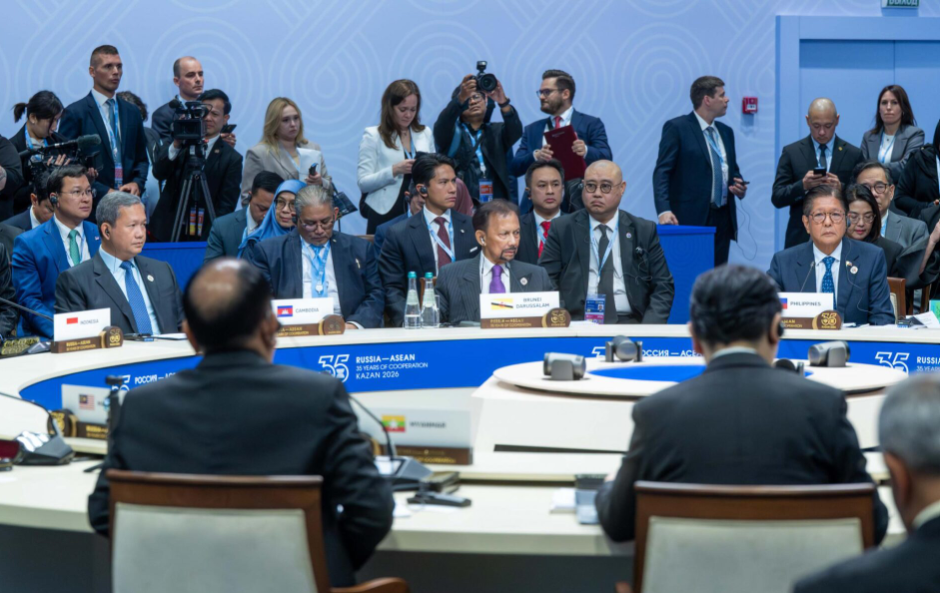
Sultan Hassanal Bolkiah of Brunei has underscored the strategic importance of deepening cooperation between Asean and Russia, emphasising their shared interests in navigating an increasingly complex global landscape. Speaking at the Asean-Russia Commemorative Summit held in Kazan, Russia on June 18, the Sultan acknowledged the warm reception extended by Russian President Vladimir Putin and the local government and people of Kazan, whilst also extending condolences to Thai Prime Minister Anutin Charnvirakul following the death of Princess Bajrakitiyabha. The summit, which brought together Asean leaders and Russian officials at the Kazan Expo International Exhibition Centre, marks a milestone in the two sides' relationship that has spanned three and a half decades.
The 35-year Asean-Russia Dialogue Partnership has proven remarkably resilient despite shifting geopolitical dynamics, according to the Brunei monarch. He characterised the relationship as one that has demonstrated growing strategic value amid transformative global changes, noting that engagement has broadened substantially across all three pillars of the Asean Community framework—the political-security, economic, and socio-cultural dimensions. This multifaceted approach reflects a recognition that contemporary challenges require integrated solutions spanning diplomacy, trade, and people-to-people connections. The Sultan's remarks suggest that both sides view this partnership not merely as a bilateral arrangement but as a mechanism for pursuing shared prosperity and stability in a multipolar world.
Concrete benefits have already flowed from this partnership, the Sultan indicated, citing improved coordination on security matters, expanded commercial ties, and strengthened cultural exchanges. These tangible outcomes have created a foundation of trust that allows both sides to engage on sensitive issues with greater mutual understanding. For Asean members, the relationship with Russia offers counterbalance in their external relations and provides alternative perspectives on regional and global affairs. Russia, meanwhile, has demonstrated interest in remaining engaged with Southeast Asia despite broader geopolitical tensions elsewhere, viewing the region as economically dynamic and strategically significant.
Looking forward, the Sultan placed particular emphasis on the alignment of Asean-Russia cooperation with Asean's Vision 2045 blueprint, which outlines the bloc's aspirations for regional integration, economic development, and resilience. He stressed that addressing contemporary global challenges—ranging from political volatility and economic fragmentation to climate crisis and technological disruption—requires coordinated international responses. In this context, Asean and Russia possess complementary strengths. Russia brings energy resources and technical expertise in certain sectors, while Asean offers market access, demographic dividends, and geographic positioning along critical maritime routes.
Energy security emerged as a particularly pressing domain of cooperation. The Sultan highlighted the mutual benefits of strengthened collaboration in this area, reflecting the reality that global energy markets remain volatile and developing nations across Asia seek reliable and diversified supply channels. Russia's substantial hydrocarbon reserves and Asean's growing energy consumption create natural incentives for deeper engagement. Similarly, food security preoccupies many developing nations in the region, where agricultural productivity faces mounting pressures from climate change and population growth. Joint initiatives in agricultural research, technology transfer, and supply chain coordination could yield significant benefits for both sides.
Climate action and disaster management represent other critical cooperation areas. Asean countries, particularly in Southeast Asia, face acute vulnerabilities to extreme weather, sea-level rise, and environmental degradation. Russian expertise in disaster preparedness, coupled with potential cooperation on carbon reduction technologies and clean energy development, offers practical value. The Sultan's articulation of these shared challenges reflects a pragmatic approach to international relations that transcends traditional Cold War binary frameworks, positioning Asean and Russia as partners addressing problems of mutual concern.
The Sultan further underscored the importance of investing in human capital development to sustain and deepen the partnership. Educational exchanges, professional training programmes, and youth engagement initiatives were identified as essential mechanisms for building the human foundations necessary for long-term cooperation. Such investments create networks of individuals with direct experience of both cultures and regions, facilitating understanding and enabling practical collaboration across sectors. This emphasis on people-to-people connections recognises that governmental agreements, whilst important, require grassroots support and institutional continuity to endure.
The summit produced four major outcome documents, reflecting the breadth of the partnership. The Kazan Declaration 2026 sets the overarching political framework, whilst the Comprehensive Plan of Action for 2026–2030 provides operational specificity. Dedicated joint statements on energy cooperation and cultural exchange signal priority areas where both sides expect tangible progress. These documents represent commitments that extend beyond the summit itself, creating institutional structures and timelines for implementation. The adoption of multiple outcome documents signals serious intent on both sides to move beyond ceremonial engagement toward substantive collaboration.
The subsequent working lunch session on Eurasian integration processes broadened the discussion beyond bilateral Asean-Russia affairs to situate this partnership within larger regional architecture. Participation from the Shanghai Cooperation Organisation and the Eurasian Economic Commission reflects recognition that Asean-Russia ties exist within a complex web of regional and continental relationships. For Southeast Asian nations, understanding developments in Eurasian integration matters considerably, as these processes can influence investment patterns, technology flows, and security dynamics affecting the broader region.
The Asean-Russia Business Forum, held as a side event on June 17, complemented the government-level engagement by facilitating private sector dialogue. This track-two component acknowledges that sustainable bilateral relations require not merely government commitment but also commercial interest and investment. Businesses from both sides have opportunities to identify joint ventures, technology partnerships, and market entry strategies. The forum's inclusion in the summit programme reflects mature understanding that economic relations constitute a vital pillar of contemporary international cooperation.
For Malaysia and other Asean members, the outcomes of this summit carry particular significance. As the region navigates competing great-power influences and seeks to maintain strategic autonomy, balanced engagement with major powers including Russia becomes increasingly important. The Sultan's emphasis on Asean centrality and consensus-building approaches aligns with longstanding regional preferences for non-alignment and pragmatic engagement. By demonstrating that Asean can deepen ties with Russia whilst maintaining other crucial partnerships, the region strengthens its negotiating position and reduces dependency on any single major power.
The commemorative nature of this summit also holds symbolic weight. Celebrating 35 years of dialogue partnership affirms continuity and forward-looking commitment, distinguishing this relationship from transactional or episodic engagement. For Asean, maintaining such partnerships with major powers outside the immediate region—whether Russia, China, India, Japan, or Western nations—forms part of a hedging strategy designed to preserve maneuverability and maximise beneficial cooperation across multiple domains. The Sultan's articulate articulation of cooperation imperatives, balanced with acknowledgment of mutual respect and diversity, exemplifies the diplomatic sophistication that has allowed Asean to punch above its weight in international affairs.

