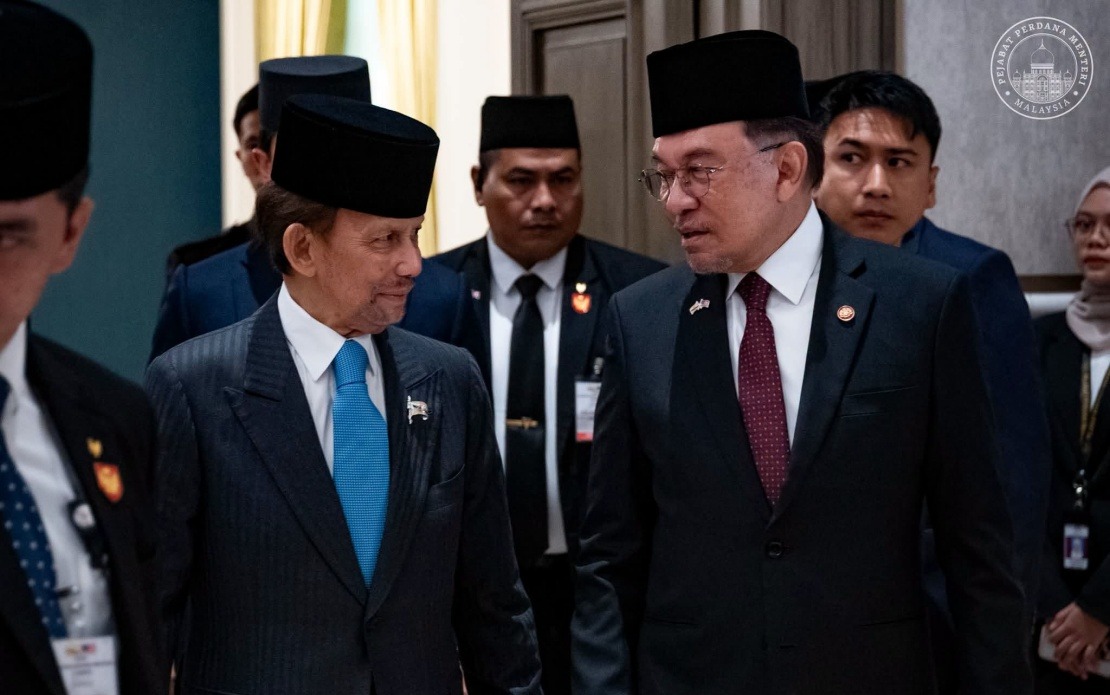
Prime Minister Datuk Seri Anwar Ibrahim received a telephone call from Sultan Hassanal Bolkiah of Brunei Darussalam on August 12, with the Bruneian monarch expressing his concern for the Malaysian leader's health and offering prayers for his swift recovery. Anwar subsequently took to social media to publicly acknowledge the gesture, extending his reciprocal wishes to the Sultan and reaffirming the personal bonds between the two neighbouring leaders.
The exchange reflects the strong diplomatic ties that bind Malaysia and Brunei, two nations separated by geography but linked through historical, cultural, and religious commonalities. Such direct communication between heads of state, particularly during moments of personal health challenges, underscores the depth of bilateral relations and the mutual respect that characterises their interactions. For Malaysia's regional standing, the gesture demonstrates that despite occasional bilateral challenges, the foundational relationship remains solid and cordial at the highest levels.
Anwar's recent medical intervention involved an elective laparoscopic procedure to address a para-umbilical hernia, a routine surgical matter that required intervention but posed no extraordinary risks. The procedure was performed on Monday, August 9, and the Prime Minister has since remained under continuous observation by his medical team of specialists to ensure optimal recovery. The transparency with which this health matter was disclosed to the public reflects contemporary practice among Malaysian political leaders, contrasting with historical precedents where such matters were often shrouded in official silence.
The timing of Sultan Hassanal Bolkiah's call carries particular significance given the scheduled bilateral engagement between the two nations set for the following week. Anwar indicated that he would travel to Bandar Seri Begawan for an audience with the Sultan in connection with the 27th Annual Leaders' Consultation between Malaysia and Brunei, a regular forum designed to strengthen cooperation and address matters of mutual concern. This scheduled diplomatic visit assumes added importance as it demonstrates Malaysia's commitment to regional engagement despite the Premier's temporary health vulnerability.
The Annual Leaders' Consultation represents a cornerstone of Malaysia-Brunei relations, providing a structured platform for the two nations to discuss bilateral, regional, and international issues at the highest level. These consultations have historically covered trade and economic cooperation, security matters, maritime issues, and broader Southeast Asian concerns. The continuation of this engagement, notwithstanding Anwar's recent procedure, signals the robustness of the bilateral partnership and the priority both nations attach to maintaining regular strategic dialogue.
From a broader Southeast Asian perspective, the interaction between Anwar and Sultan Hassanal Bolkiah exemplifies the informal yet substantive networks that characterise ASEAN diplomacy. While formal structures and protocols govern official relations, the personal relationships between leaders often prove equally consequential in navigating regional complexities and maintaining the organisation's cohesion. The Sultan's proactive gesture of concern, conveyed through direct telephone communication, reflects the increasingly personalised nature of leadership diplomacy in the region.
Brunei's position as a smaller ASEAN member has historically been one that prioritises stability, consensus-building, and maintaining harmonious relationships with all regional partners. Sultan Hassanal Bolkiah's outreach to Anwar aligns with this diplomatic tradition, emphasising solidarity among Southeast Asian leaders and the mutual support networks that transcend formal governmental structures. For Malaysian observers, the call serves as a reminder of the Prime Minister's integration into regional leadership circles and his acceptance as a credible voice within ASEAN's deliberative processes.
The medical procedure itself, while routine, highlighted once again the attention that Malaysian public opinion pays to the health and stability of the nation's chief executive. The government's relatively transparent approach to reporting Anwar's surgery contrasted with earlier eras of Malaysian politics, where such matters were often handled with greater discretion. This openness reflects evolving expectations around governmental transparency and public disclosure, particularly regarding matters affecting national leadership and continuity.
Looking forward, Anwar's recovery trajectory will likely proceed without significant complications given the elective and non-acute nature of the procedure. The maintenance of regular diplomatic engagements, such as the planned audience with Sultan Hassanal Bolkiah, serves both practical and symbolic functions. Practically, it ensures that Malaysia's regional diplomatic agenda continues uninterrupted; symbolically, it reinforces to both domestic and international audiences that the government apparatus remains stable and fully functional. The bilateral consultation scheduled for the week following the Sultan's call will provide an opportunity to advance Malaysia-Brunei cooperation on multiple fronts, from trade facilitation to maritime cooperation and security matters.
The exchange between Anwar and Sultan Hassanal Bolkiah, while outwardly a matter of personal courtesy between two neighbouring leaders, carries deeper implications for how Malaysia positions itself within Southeast Asia's evolving political landscape. The solicitude demonstrated by Brunei's monarch reflects Malaysia's continued relevance as a key regional actor and Anwar's standing as a leader whose health and stability matter beyond Malaysia's borders. In the context of ongoing regional transformations and shifting geopolitical alignments, such demonstrations of solidarity and continued engagement remain crucial for maintaining the diplomatic equilibrium that ASEAN seeks to preserve.

